Two major events this summer – the Blue Economy and Finance Forum (BEFF) in Monaco, and the third United Nations Ocean Conference in Nice – reflected the growing recognition that protecting the ocean is not only an environmental issue, but also a political, economic, financial, and social imperative.
The challenge now is to translate this rapidly emerging consensus into concrete, sustained action.
Covering over two-thirds of our planet and accounting for 97% of its biosphere, the ocean is a critical ally in our efforts to tackle climate change, ensure food security, and support livelihoods.
Without a healthy ocean, sustainable development will remain a distant dream.
But protecting and restoring marine ecosystems costs money, and financial flows are falling far short of need. To close this gap, ocean protection must be regarded not as charity, but as an opportunity – a high-value investment in our collective future.
The vision of a thriving ocean economy that offers both short-term profit and long-term value in terms of food security, employment, and resilience galvanized the political leaders, entrepreneurs, investors, philanthropists, and representatives of multilateral organizations and civil society at the BEFF.
The event delivered on its goal of unlocking funding for ocean-positive projects, including through innovative instruments like blue bonds and blended-finance vehicles, which combine public, private, and philanthropic resources.
It thus represented an important first step toward anchoring ocean protection where it counts: within the financial industry.
A pipeline of investable projects
But the new “blue” investment announced by public, private, and philanthropic actors at the BEFF – amounting to some €8.7 billion ($10.1 billion) – represents only a fraction of what is needed to meet global targets.
Moreover, isolated commitments, however ambitious, do not necessarily lead to the sustained, coordinated investment that scaling the blue economy demands.
A more strategic approach, which focuses on leveraging public and philanthropic capital to de-risk investment in ocean-positive projects and attract long-term private finance, is urgently needed.
Three imperatives stand out. The first is to create a robust pipeline of investable projects.
Many promising initiatives remain stuck at the pilot stage
As it stands, many promising initiatives remain stuck at the pilot stage. A lack of early-stage financing, technical assistance, or enabling policies means that they never get to a point where they are appealing to private investors.
Monaco is doing its part to bridge this gap. The ReOcean Fund – an ocean-focused private equity fund, co-managed by the Prince Albert II of Monaco Foundation (of which I am president) and Monaco Asset Management – has raised $73 million to invest in companies pioneering technologies that promise to advance critical goals like restoring marine ecosystems and decarbonizing shipping.
But the responsibility for sustaining a pipeline of bankable projects ultimately falls to governments and development banks, which must use public finance to redefine investment risk so that it reflects the real economic returns of protecting marine ecosystems.
Governments must lead by example
The second imperative is to create enabling conditions for investment.
If ocean-relevant sectors – such as shipping, fisheries, coastal infrastructure, and tourism – are to align their activities with the blue-economy vision, they must be guided (and constrained) by net-zero and nature-positive targets that are ambitious and credible.
Governments must not only develop and enforce the right rules of the game, including regional marine spatial plans, but also lead by example.
That means eliminating poorly designed and harmful government subsidies, such as those driving exploitation of overfished stocks, and using those public resources to finance ocean-positive projects and cover transition costs for ocean-dependent sectors.
Public development banks must do their part to strengthen investor confidence and catalyze market-wide change
With WTO Agreement Fish 1 now in force, the world has taken a historic first step toward curbing illegal, unreported, unregulated fishing and protecting vulnerable stocks, while negotiations continue over Fish 2, which will tackle overfishing capacities.
Public development banks must also do their part to strengthen investor confidence and catalyze market-wide change.
At the BEFF, more than 20 public development banks endorsed the Finance in Common Ocean Coalition joint statement, which articulated a collective ambition to scale up ocean finance, align portfolios with a regenerative and sustainable blue economy, and support pipeline development by sharing tools and methodologies.
These institutions must follow through on these commitments, and their peers must join them.
The ocean economy is beginning to take shape
Finally, financial flows throughout the economy must be aligned with climate, biodiversity, and equity goals.
For governments, this means integrating environmental and social externalities into public budgets, with national accounting systems factoring in both the value of ecosystem services and the financial risks arising from environmental degradation.
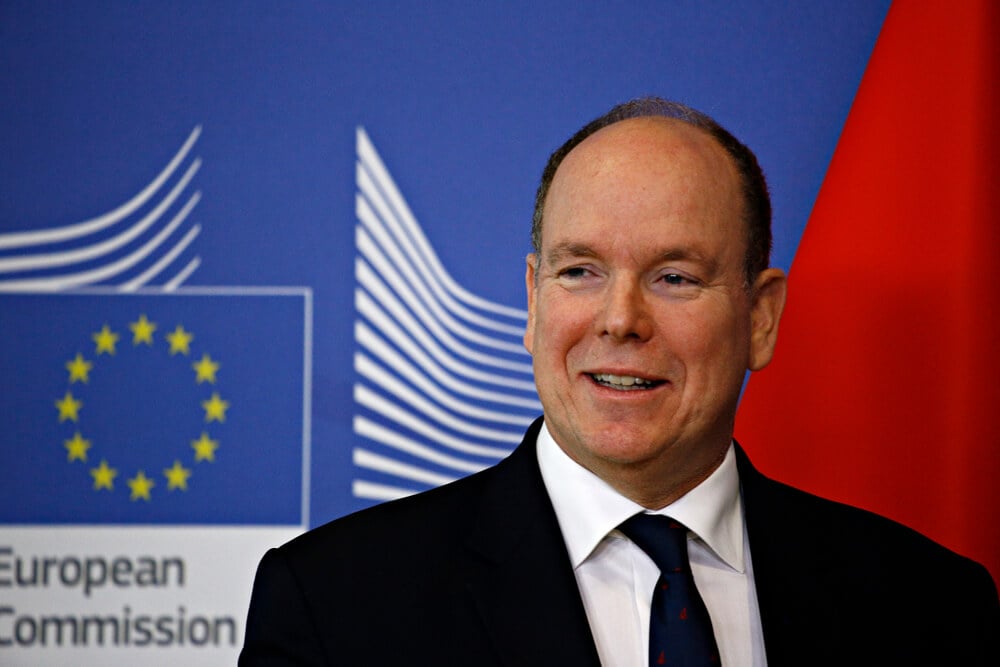 The momentum from the summer must not be squandered. It must be translated into a clear and coordinated strategy for the decade - Prince Albert II
Financial actors – including institutional investors, corporations, asset managers, and insurers – also have a critical role to play, not only as funders, but also by stepping up as core architects of a regenerative and sustainable blue economy.
To this end, they must create clear taxonomies and metrics, which support consistent decision-making and prevent greenwashing.
Blended-finance mechanisms and biodiversity credits and certificates can help provide the right incentives, aligning private finance with measurable sustainability outcomes.
The ocean economy is beginning to take shape. The BEFF laid important foundations, and promising instruments – such as venture capital funds targeting ocean innovation, guarantee facilities supporting small and medium-sized enterprises dedicated to delivering ocean-positive outcomes, and sovereign blue bonds – are gaining traction.
But the momentum from the summer must not be squandered. It must be translated into a clear and coordinated strategy for the decade.
Albert II has been the Sovereign Prince of the Principality of Monaco since 2005.
