The latest sign that the yen problem is no longer purely Japan’s issue came this weekend from the Federal Reserve Bank of Kansas City’s annual symposium in Jackson Hole, Wyoming, one of the most important gatherings of central bankers and finance ministers.
European central bankers were unsettled to learn that the US Department of the Treasury, during its recent intervention to support the yen, had also sold euros without the usual prior notice to European partners.
The transaction itself was small relative to the global foreign exchange market, but its significance was not. Washington intervened in an operation traditionally regarded as the domain of the Japanese authorities because it judged that an uncontrolled weakening of the yen could become a broader financial stability problem.
US Treasury Secretary Scott Bessent elaborated on that assessment in a letter dated 27 August, responding to Senator Elizabeth Warren, who had requested an explanation of US participation in the joint intervention with Japan.
Bessent warned that a sharp, disorderly fall in the yen could force the closing of financial positions, spread disruption to other markets, and raise borrowing costs for US companies and households. This effectively confirmed that Washington no longer regards movements in the yen as exclusively a Japanese problem.
The United States and Japan jointly intervened on 31 July after the yen fell to about 164 per dollar, a level not seen for roughly four decades.
Following the intervention, the currency recovered, but the effect quickly faded, and, by the end of August, the yen was again hovering around 160 per dollar.
Washington therefore faces a risk it cannot eliminate with a single yen intervention, while Tokyo finds it increasingly difficult to treat the currency’s weakness as a temporary deviation in the foreign exchange market.
Record intervention, limited impact
Japan’s Ministry of Finance announced on 28 August that between 30 July and 26 August it had spent 15.3993 trillion yen, about $96.5 billion, to support the currency.
It was a record intervention, but by the end of the month the yen had once again approached the levels at which investors had begun to expect a new intervention in the foreign exchange market.
This shows how limited the impact of such interventions is. They can temporarily halt a sharp decline in the currency, force some speculators to close their positions, and buy time for the central bank and the government, but they can hardly change the direction of the exchange rate permanently if the reasons for the yen’s weakness persist.
A weak yen raises the price of imports and fuels inflation, while faster interest rate rises increase pressure on Japan’s sovereign debt market
The main reason the yen continues to weaken is the large gap between interest rates in Japan and the United States.
The Bank of Japan has continued to raise interest rates gradually throughout 2026 and stated in its July report that it will increase them further if the economy and inflation develop in line with its expectations.
At the same time, the central bank estimates that consumer price growth from the second half of fiscal year 2026 will be above two per cent, partly because of the weak yen.
For Tokyo, this is a particularly awkward combination. A weak yen raises the price of imports and fuels inflation, while faster interest rate rises increase pressure on Japan’s sovereign debt market and on an economy that has operated for decades on ultra-cheap money.
Foreign exchange intervention is therefore not a substitute for monetary policy, but a way to give monetary authorities more room to make adjustments without being dictated to by foreign exchange markets.
Why the yen matters far beyond Japan
The yen’s special role emerged during the decades when Japan had the cheapest money among the major developed economies. Investors could borrow in yen at very low cost, convert those funds into dollars or other currencies, and invest in higher-yielding assets.
As a result, the yen has become one of the main currencies for the so-called carry trade, a strategy in which investors borrow in a low-interest-rate currency, such as the yen, and invest in countries and assets that offer higher returns.
It is not possible to reliably calculate the exact volume of these transactions, because much of the borrowing and investment takes place through complex financial operations that cannot simply be added up.
Therefore, estimates of the total value of the yen carry trade should be treated with caution, as the Bank for International Settlements (BIS), the Basel-based institution that brings together central banks, has repeatedly warned.
Selling can quickly sweep across markets, while increased buying of yen pushes its value even higher
The problem arises if the yen suddenly strengthens. An investor who has borrowed cheaply in yen and invested that money in US bonds, shares or other assets then has to set aside more money to buy yen and repay the debt.
As a result, they may be forced to sell the assets in which they have invested. If a large number of investors do this at the same time, selling can quickly sweep across markets, while increased buying of yen pushes its value even higher.
In May 2026, the BIS warned that large short positions in the funding currency could amplify the effects of monetary tightening, in particular through the forced closing of leveraged carry trade positions.
That is the essence of Bessent’s warning. What matters is not only how much the yen is worth against the dollar, but also what happens to large portfolios around the world when the price of their funding changes.
Why the US Treasury became involved
American participation in the 31 July intervention has broader significance than simply the exchange rate movement that day. Washington very rarely joins coordinated currency interventions, so this decision shows that the US Department of the Treasury has judged that a disturbance in the yen market could also be transmitted to the US government debt market.
 Disruption in the yen could lead to higher borrowing costs in the United States - Scott Bessent
Japan is the largest foreign holder of US Treasury bonds. According to US data, Japanese investors held about $1.117 trillion in US government debt at the end of June.
This fact in itself does not mean that Tokyo is preparing a massive sale of US bonds, but it shows how much weight Japan’s capital allocation decisions carry and how significantly they can affect financial conditions in the United States.
As yields on Japanese government bonds rise, it becomes more profitable for Japanese banks, insurance companies and pension funds to keep more money in Japan.
This reduces their need to invest in US bonds purely for higher returns. However, with fewer such buyers, the US government will find it harder and more expensive to raise money to finance its debt.
This is precisely why the yen has become a concern for the US Treasury. Higher government bond yields feed into the cost of mortgages, corporate financing and much of the US credit market. The relationship between Tokyo and Washington is no longer just a matter of market models.
Bessent acknowledged this publicly when he explained that disruption in the yen could lead to higher borrowing costs in the United States.
The Bank of Japan has no painless way out
For the Bank of Japan, the most straightforward solution would be to raise interest rates quickly enough for markets to stop treating the yen as an almost free funding currency.
Such a policy would simultaneously support the currency and ease inflationary pressure from imports, but the cost of this move would be high.
Japan is entering this phase with extremely high public debt and a government bond market that has operated for years under a strong central bank presence. Higher interest rates are gradually increasing debt-servicing costs.
The Finance Ministry is already seeking a record ¥36.64 trillion, about $229 billion, in debt-related spending for fiscal 2027 as rising yields drive up the cost of new borrowing.
Raising interest rates too slowly could push the yen back into extreme weakness
The BOJ must therefore normalise policy quickly enough to maintain control of inflation and the currency, but cautiously enough to avoid a sharp rise in yields and disruption to domestic financial conditions. In this framework, intervention by the Ministry of Finance acts as a temporary shock absorber between two requirements that are difficult to reconcile.
This is the central paradox of the current situation. Raising interest rates too slowly could push the yen back into extreme weakness, while raising them too quickly could accelerate the closing of carry-trade positions and produce exactly the kind of international market volatility that Washington is trying to contain.
September will reveal how limited the room for manoeuvre is
The next significant moment comes in September. The Bank of Japan meets on 17 and 18 September, and, following the joint US–Japanese intervention, market expectations have increased that the central bank will raise rates again.
Before that meeting, financial officials from the major economies will gather at the G20 summit in North Carolina, where Japanese monetary policy and the movement of the yen will almost certainly be the subject of bilateral discussions.
The yen is likely to remain under pressure, with occasional attempts by Tokyo and Washington to stem sharp declines. The joint intervention showed that both sides want to avoid a return to previous extremes without failing to respond.
If the yen were again to weaken rapidly towards 164 per dollar, with yields on Japanese government bonds rising at the same time, the likelihood of another coordinated intervention would increase significantly, even though no government has announced an exchange rate it considers a threshold for action.
The publicly declared goal is not a fixed exchange rate, but the prevention of disorderly market adjustments
More lasting stabilisation, however, cannot rely on interventions alone. If the BOJ continues to raise rates, the gap between Japanese and US yields will gradually narrow and some of the pressure on the yen will ease.
Another type of risk will then emerge, as the market will have to assess how quickly global investors can reduce yen-financed positions without being forced to sell assets in other markets.
Therefore, a series of controlled moves is more likely than one large shift. Tokyo will seek to combine gradual interest rate increases with interventions when the yen moves too quickly, and Washington will support this approach as long as it judges that sharp exchange rate moves threaten US yields and wider financial stability.
The publicly declared goal is not a fixed exchange rate, but the prevention of disorderly market adjustments.
The place where the next shock could come from
The most important consequence of recent events is already visible: Japan is no longer a peripheral case of monetary policy slowly returning to normal. After decades of ultra-cheap capital, developments in Japan could affect financing costs, portfolio structures and capital flows far beyond its borders.
This does not mean that a global financial shock originating in Japan is inevitable. Neither the current level of the yen nor the gradual rise in Japanese interest rates, in themselves, constitutes a crisis.
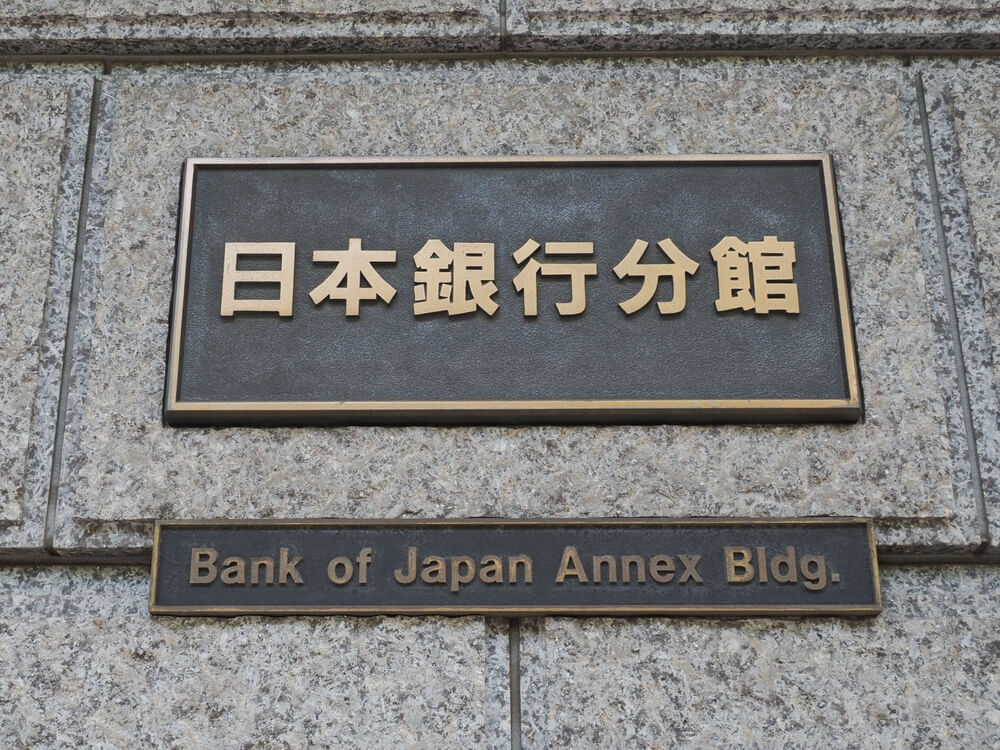 What began as Japanese monetary normalisation could become an international liquidity and asset price problem - Bank of Japan
The danger lies in the speed of change and in the fact that a large number of investment decisions around the world are based on assumptions formed during a period when Japanese money was almost always cheap.
If those assumptions change gradually, markets have room to adjust. If the yen strengthens sharply, Japanese bond yields rise rapidly and, at the same time, more yen-financed positions begin to be closed, the consequences would quickly spill over into US and other global assets.
What began as Japanese monetary normalisation could then become an international liquidity and asset price problem.
The 31 July joint intervention showed that Washington and Tokyo no longer regard the weakening yen as an isolated foreign-exchange problem. By the time the US Treasury Department estimated that movements in the Japanese currency could increase borrowing costs in the United States and disrupt other markets, the problem had already extended beyond national boundaries.
If the yen weakens sharply again, followed by a rapid reversal with rising Japanese yields and a large-scale closure of yen-financed positions, Japan could be the source of the next major disruption in global financial markets. This is no longer a theoretical possibility but a risk that both Washington and Tokyo have begun to treat as real.
