The International Monetary Fund is conducting a Review of Program Design and Conditionality, its first major evaluation since 2019, before the COVID-19 pandemic.
With so many countries suffering from macroeconomic imbalances and debt distress that are severely weakening their development prospects, the IMF guidelines for program design, while always important, are more salient than ever.
The IMF review should address at least three critical features of IMF program design—with a view to reforming all of them.
Policy conditionality
The first is policy conditionality. IMF financing is supposed to play a stabilizing role, meaning that it should enable countercyclical macroeconomic policies in countries that do not have access to other sources of financing. It should never be used to meet payments on unsustainable debt.
The IMF’s own rules establish that, in order to access Fund resources, a country’s debt must be sustainable, or else the country must commit to efforts to restore debt sustainability through debt restructuring.
The IMF’s policy on lending into arrears allows the Fund to lend while a country is in arrears to other creditors, thereby facilitating the restructuring process.
What we should not see is IMF financing supporting programs that include contractionary fiscal policies—for example, cuts to investment in public infrastructure, education, and health—while the government continues repaying debts to the private sector or to other creditors that refuse to provide financing to roll over those debts.
This has become a worrying pattern in many developing countries, as explained last year in the Vatican’s Jubilee Report for Pope Francis.
Multilateral financing for developing countries seems to have supported an outflow of funds to the private sector, rather than an expansion of domestic investment
In some recent years, multilateral financing for developing countries seems to have supported an outflow of funds to the private sector, rather than an expansion of domestic investment.
IMF-financed programs should also prevent future destabilizing capital movements.
When left unregulated, these flows tend to be procyclical in developing economies, in turn fueling exchange-rate volatility and uncertainty, thereby undermining investment.
And IMF lending should never be used to finance capital flight. There is a clear role for capital-account regulations that discourage speculative carry-trade flows and prevent the misuse of IMF financing during the stabilization period.
Contingency plans
The second feature of program design concerns contingency plans. Programs are based on baseline assumptions, but reality is uncertain, and there can be significant deviations from those assumptions—all the more so in a global environment that has become highly unpredictable.
Program design should protect critical investments for medium-term growth—which is essential to ensure long-term stabilization and avoid the trap of successive IMF programs aimed merely at refinancing debt to the Fund.
Investments in knowledge and infrastructure, in particular, have frequently borne a disproportionate share of the cuts when programs are adjusted after failing to meet their baseline projections.
The Fund should be particularly sensitive to policies and procedures that undermine democratic processes and accountability
There should be contingency plans for such circumstances. While a significant number of IMF programs have not been as “successful” as hoped, programs can fall short of their goals for many reasons, including a failure of implementation, flaws in the model underlying the program, or a new adverse shock. The contingency plans need to reflect the source of the failure.
When it comes to contingency plans, the Fund should be particularly sensitive to policies and procedures that undermine democratic processes and accountability—including anything that smacks of a lack of transparency and full disclosure.
For example, the Fund should not reach deals with a country—say, Bolivia, to cite a potentially relevant upcoming case—and announce only the policies under the baseline scenario, while signing a confidentiality side letter as part of the agreement with the government stipulating an increase in the value-added tax in the event of fiscal underperformance.
The purpose of IMF programs
The third feature of program design that the Fund must address is ownership. This is a critical criterion for IMF exceptional-access lending—that is, lending above certain limits.
IMF loans bind successive governments and even generations. Ownership should mean genuinely broad political and social support, not merely the incumbent government’s assent, or even commitment, to implement the agreed-upon policies.
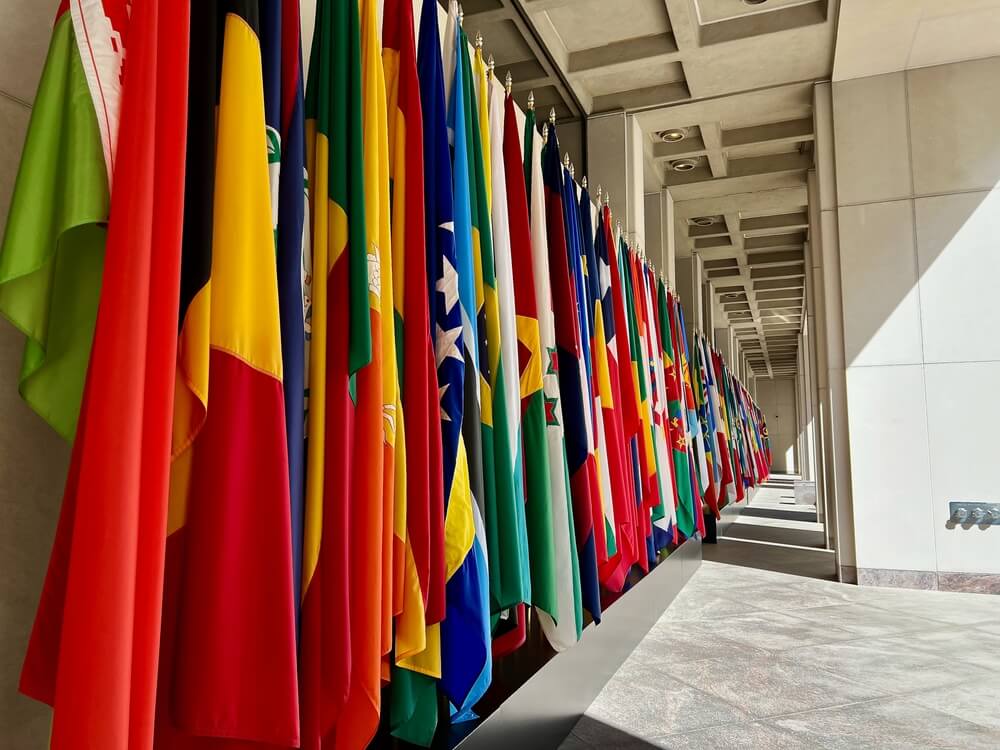 The purpose of IMF programs must always be to improve countries’ social and economic indicators
After all, the government’s agreement may be based on a calculus of its own survival, rather than the country’s long-run well-being.
We have seen cases where politics has seemed to influence lenders as well, even the IMF.
One possible criterion of ownership would be parliamentary approval of the agreement reached between a government and the IMF.
In an era marked by democratic backsliding, transparency, public accountability, and ownership are especially important today.
Ultimately, the IMF’s success should be judged by the impact of its financing programs on distressed debtors’ stabilization and economic recovery, and on the well-being of the population, including those in poverty.
The purpose of IMF programs must always be to improve countries’ social and economic indicators, not to avert the adverse effects of a short-term default on other creditors—and even less to influence domestic electoral outcomes.
Martín Guzmán, a former minister of economy of Argentina, is a professor at the School of International and Public Affairs at Columbia University and a member of the Pontifical Academy for Social Sciences and of the Jubilee Commission at the Vatican.
Joseph E. Stiglitz, a Nobel laureate in economics and University Professor at Columbia University, is a former chief economist of the World Bank (1997-2000), former chair of the US President’s Council of Economic Advisers, former co-chair of the High-Level Commission on Carbon Prices, and lead author of the 1995 IPCC Climate Assessment. He is Co-Chair of the Independent Commission for the Reform of International Corporate Taxation.
