The decision by the Donald Trump administration to introduce the firing squad as a federal method of execution is not a technical issue of criminal policy. It is a political signal, carefully timed and clearly directed.
On 24 April, the US Department of Justice announced a package of measures called Restoring and Strengthening the Federal Death Penalty. Acting Attorney General Todd Blanche stated that "the duty to seek and enforce lawful death sentences is being restored." This wording is intended for the public, not for legal argument.
The Federal Bureau of Prisons has been ordered to reinstate the pentobarbital protocol and extend it to include the firing squad. Pentobarbital is a powerful sedative from the barbiturate group, used in medicine to induce sleep; in this context, in high doses, it causes loss of consciousness and cessation of breathing.
The construction of a facility to enable the use of these methods is also under consideration. At the same time, there are plans to shorten the period between the verdict and the execution of the sentence, which in the American system often lasts for decades.
There are three convicts on federal death row: Robert Bowers, Dylann Roof, and Dzhokhar Tsarnaev. They are the perpetrators of mass murders and terrorist attacks with a large number of victims – a synagogue in Pittsburgh, a church in Charleston, and the Boston Marathon.
The Biden administration previously commuted the sentences of most of those convicted, keeping the number minimal. The new administration has already approved seeking the death penalty in dozens of new cases. The policy focus has clearly shifted to future cases.
Not a technical issue, but a political signal
The firing squad has never been part of the federal penitentiary system. According to the Death Penalty Information Center, only a few states allow this method, while at the federal level, executions have been limited to lethal injection. The introduction of a new method alters current practice.
Lethal injection was introduced to make execution appear as a medical procedure, reducing public resistance and softening perceptions of the act.
The firing squad does the opposite; it clearly exposes what the state is actually doing. The decision to introduce such a method is not a technical issue, but a consciously chosen shift in approach.
Between July 2020 and January 2021, there were 13 federal executions – the highest number in modern US history over such a short period
At the end of the previous term, then Attorney General Merrick Garland withdrew the pentobarbital protocol due to concerns about its effects and the potential to cause additional suffering.
That protocol has now been reinstated without new expert findings to address these concerns. The change is political, not professional.
On the first day of his second term, Donald Trump signed an executive order calling for the consistent application of the death penalty.
The decision of 24 April continues this approach. In the explanation, the previous administration is accused of failing to protect citizens adequately. This makes the death penalty a matter of political opinion rather than legal judgment.
Data from the first term show a pace that this administration considers acceptable. Between July 2020 and January 2021, there were 13 federal executions – the highest number in modern US history over such a short period.
After that, a moratorium was introduced, which has now been lifted. At the same time, the number of cases in which the prosecution requests the death penalty is increasing.
Sufficient support keeps the topic politically viable
The legal framework allows this. The Eighth Amendment prohibits "cruel and unusual punishment," but the Supreme Court of the United States has not banned methods such as the firing squad.
With the current composition of the court, there are no clear indications that such measures would be overturned. The administration relies on this.
Criticism comes from familiar sources. Amnesty International and Human Rights Watch have highlighted problems with the implementation of the death penalty in the US for years, without influencing state policy. In domestic public opinion, support remains at about half of voters, which is sufficient to keep the topic politically viable.
The United States uses human rights issues as a tool to exert pressure in relations with other countries
The official explanations do not address how the death penalty is applied. Data from several states show that the outcome is not always determined by the severity of the crime.
There is a measurable difference in the likelihood of receiving the death penalty depending on the race of the accused and the race of the victim. These findings are documented in case law and academic analysis, but they are not considered in current policy.
The external dimension is also significant. The United States uses human rights issues as a tool to exert pressure in relations with other countries. Such decisions do not change this policy, but they weaken its impact where it depends on consistency.
Tangible consequences for Europe
For Europe, the consequences will be tangible. Courts in Germany, France, and Spain already refuse extradition when there is a real possibility of the death penalty. As the number of federal cases in which it is sought increases, so does the number of cases in which cooperation will be restricted.
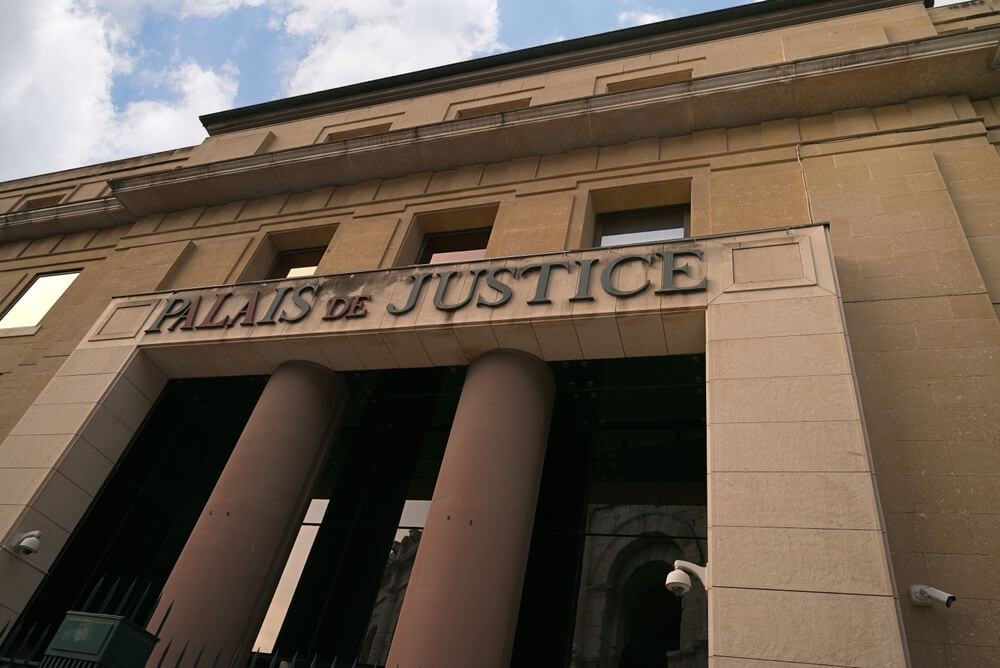 Courts in Germany, France, and Spain already refuse extradition when there is a real possibility of the death penalty
This is a practical problem that will emerge in the coming years. The Ministry of Justice justifies this policy by citing the need to ensure justice for victims. This is a standard explanation and does not address the substance of the changes.
The essence lies in changing the practice. New methods are being introduced, deadlines are being shortened, and the number of cases in which the death penalty is sought is increasing. This alters the way the state uses this penalty.
The decision is not technical; it determines how the death penalty will be applied in the coming years.
If this policy is implemented, the effects will quickly become apparent. There will be more indictments requesting the death penalty and a shorter path to its execution, meaning courts will more often make decisions under time pressure and in a politically sensitive environment.
In relations with Europe, the issue of extradition will be resolved not through political agreements, but through court proceedings and conditions. This will slow down specific cases and complicate cooperation.
At the same time, the death penalty will increasingly be used as part of a broader security policy, not only as the final stage of criminal proceedings. This will result in greater political pressure when making decisions and more disputes before the courts regarding implementation.
