On December 3, the European Commission finally added Russia to its list of high-risk countries with insufficient controls against money laundering and terrorist financing.
The long-awaited decision means that European banks and firms are now legally obligated to perform enhanced due diligence on clients with a Russian nexus.
The aim is not to encourage Russian President Vladimir Putin, a brutal dictator, to undertake compliance reforms, but rather to restrict further the Kremlin’s access to the European economy. Will this punitive measure work?
To answer this question, we should first ask why it took the European Union so long to conclude that Russia has “strategic deficiencies” in its anti-money laundering (AML) and counter-terrorist financing (CTF) frameworks.
While that seems laughably obvious, the story is more complex. The EU’s assessment criteria revolve around countries’ internal AML/CTF controls.
And Russia, as the Financial Action Task Force (FATF, an international agency that oversees a global blacklist) declared in a glowing 2019 report, has enacted policies that “appropriately address” such risks.
But these assessment standards do not contemplate the possibility that countries themselves are criminal actors.
Russia’s well-resourced financial intelligence unit, Rosfinmonitoring, is indeed capable of extensive oversight.
But it uses these tools against those the Kremlin defines as bad actors, including political opponents and what the Russian Supreme Court has labeled the “international LGBT public movement.”
Kremlin’s continued influence
Russia’s friends constitute another obstacle. Ukraine has long lobbied the FATF to add Russia to its blacklist, providing substantial evidence of its violations.
But China, India, South Africa, and other countries sympathetic to the Kremlin have repeatedly rebuffed this demand, exploiting the FATF’s consensus decision-making.
While the FATF suspended Russia for invading Ukraine, it allowed the country to remain an active member of its Eurasian affiliate
While the FATF suspended Russia for invading Ukraine, it allowed the country to remain an active member of its Eurasian affiliate, all but assuring the Kremlin’s continued influence.
Given these constraints at the global level and the fracturing of the transatlantic alliance, the EU ended up exercising its independent listing powers.
The empirical evidence on these measures’ efficacy is mixed but does indicate that their market enforcement mechanisms can induce governments to implement domestic reforms.
But that is not what the EU hopes to accomplish. Instead, the bloc wants to increase pressure on Russia to end its invasion of Ukraine, especially as Putin seeks to leverage his camaraderie with US President Donald Trump to settle the war on his terms.
But many European banks and financial institutions already treat clients with Russian connections as high-risk to avoid exposure to sanctions, suggesting that these measures – which only require that private firms perform enhanced due diligence – will not significantly alter their operations.
The EU’s decision will close a loophole
Nevertheless, the EU’s decision will close a loophole. The harsh glare of regulatory scrutiny may incentivize large institutions to reduce their exposure to Russia-connected clients, but smaller players – including auditors, lawyers, corporate service providers, real-estate agents, digital-currency platforms, and providers of gambling services – have less mature compliance controls.
Russia’s exclusion from the FATF and the EU’s lists has enabled some of these actors to accept unsavory clients. But the new legal obligations clamp down on such activities.
While the EU’s listing may be felt in the Kremlin, it will also cause substantial collateral damage to innocent Russian civilians, including dissidents living in Europe who actively oppose Putin’s regime.
Russian émigrés, the vast majority of whom are not oligarchs, have long complained about their inability to access basic banking services
Russian émigrés, the vast majority of whom are not oligarchs, have long complained about their inability to access basic banking services because of sanction fears.
Many have sued, joining a growing chorus of expats, politicians, and high-risk business operators from around the world claiming to have been “debanked” because of AML standards.
In addition to entrenching exclusionary practices, this will most likely push those affected to alternative payment systems like digital currencies or hawala, where AML/CTF requirements are less robust.
It is better to target specific actors
Placing countries on a money-laundering blacklist is a blunt instrument that effectively creates legal obligations for banks and other regulated firms to scrutinize more closely certain people simply because of their jurisdictional connections.
Should Haitian, Kenyan, and Vietnamese clients automatically be considered at higher risk of engaging in terrorist financing simply because their governments lack robust CTF frameworks?
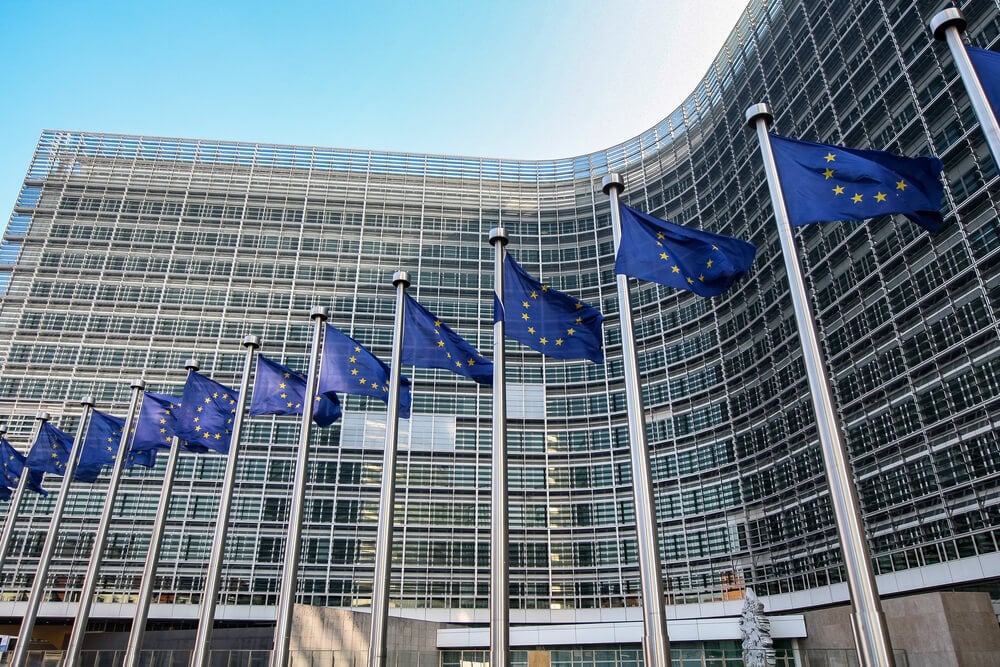 Blacklisting Russia will marginally improve the EU’s pressure campaign by closing loopholes in the AML system
The logical answer is no. And yet, the market enforcement mechanisms do not make such distinctions.
Blacklisting Russia will marginally improve the EU’s pressure campaign by closing loopholes in the AML system.
And the symbolism of exercising independence from the FATF is important, even if it took far too long. But policymakers have not solved the problem of collateral damage.
In the sanctions domain, governments learned the hard way – for example, when sanctions against Iraq in the 1990s caused severe spikes in infant mortality – that it is better to target specific actors than to impose country-wide restrictions.
But authorities have not absorbed this lesson when it comes to AML/CTF. Until they do, the EU’s ability to list high-risk countries will remain a painful tool of economic statecraft.
Miles Kellerman is Assistant Professor of International Organization and Multi-level Governance at Leiden University, where he researches economic crime.
