India held foreign exchange reserves of $785.7 billion on 4 September and $734.6 billion four weeks later.
During that period, the exchange rate remained close to 97 rupees to the dollar, a level the market has known since the Indian currency’s record decline in May.
According to estimates by market analysts, the central bank sold about $30 billion during September, and the rest of the fall in reserves came from changes in the value of gold and other currencies.
On 10 October, the Reserve Bank of India announced a measure that, starting on Monday, will change how the country’s biggest refiners buy dollars for oil imports.
The central bank has reserves sufficient for approximately eleven months of imports.
Since June, however, it has raised $143.5 billion through contracts that require the later return of these funds to banks.
India is now spending foreign exchange to stabilise the exchange rate while taking on obligations that will fall due in a few years.
Oil that bypasses the foreign exchange market
Indian Oil, Bharat Petroleum and Hindustan Petroleum, the three largest state-owned oil companies, will no longer buy dollars on the foreign exchange market from 12 October.
Instead, they will obtain them directly from India’s central bank, the Reserve Bank of India, with the funds channelled through several authorised commercial banks.
The central bank will sell them as many dollars as they need each day to pay for oil, and has not announced any upper limit or end date for this arrangement.
Previously, when these three companies bought dollars on the market, their heavy daily demand pushed up the dollar’s price and weakened the rupee.
Once that demand is removed from the market, the pressure on the rupee should ease.
The dollars that the central bank sells to the oil companies come directly from its foreign exchange reserves
The dollars that the central bank sells to the oil companies, however, come directly from its foreign exchange reserves.
About 89 per cent of the crude oil that India consumes is imported. According to central bank data, the average price of oil purchased by India rose from $82 per barrel in July to $90.20 in August and $116.10 in September.
In two months, the price of the same barrel increased by more than 40 per cent, and each further weakening of the rupee raises its price in local currency.
The pressure comes from the Persian Gulf, where restricted tanker passage through the Strait of Hormuz and attacks on Saudi Arabia’s East–West pipeline have hampered supplies, while the diesel market is particularly tight.
The new measure applies only to three state-owned companies. Two large private refineries, Reliance and Nayara, will continue to buy oil dollars on the foreign exchange market.
Reliance is in a stronger position because a large part of the fuel it produces is sold abroad and thus earns its own dollars.
With this measure, the central bank has removed the largest single buyer of dollars from the market, but this only changes from whom the oil companies buy dollars.
The price of oil cannot be affected. A barrel will cost India as much as it costs other buyers in Asia, such as China, Japan and South Korea, which compete with Indian refineries for the same tankers from the Persian Gulf.
The 2013 decision had a repayment deadline
India implemented a similar measure on 28 August 2013. The three state-owned oil companies then spent $8 billion to $8.5 billion a month on about 7.5 million tonnes of crude oil.
At that time, the central bank only lent them dollars. The companies later had to buy dollars on the market and return them to the bank under pre-agreed conditions.
The central bank sells dollars and companies have no obligation to return them, so each sale permanently reduces foreign exchange reserves
This time, the central bank sells dollars and companies have no obligation to return them, so each sale permanently reduces foreign exchange reserves.
Since oil is more expensive today than in 2013, the central bank will probably have to sell more dollars than it did then.
In September 2013, the central bank also encouraged banks to attract dollar deposits from Indians living abroad by offering favourable terms.
In this way, the banks collected about $34 billion, mostly through three-year term deposits.
When those deposits matured at the end of 2016, more than $23 billion left the banks in just three months. This year’s programme is about four times larger.
Dollars collected today, obligations through 2031
From 8 June to 18 September this year, $143.5 billion flowed in through the Reserve Bank’s favourable arrangements.
Almost $133 billion came from foreign currency deposits of Indians living abroad.
The banks surrendered the dollars to the central bank and received rupees in return, under an agreement to receive the same amount of dollars again on the due date at a predetermined exchange rate.
Deposits included in the programme have terms of three to five years, so the banks should get the dollars back between 2029 and 2031.
The Reserve Bank itself bears the cost of protection against the weakening of the rupee, estimated at 2.8 to 3 per cent a year. On $133 billion in deposits, that is roughly $4 billion a year.
In the 2013 programme, banks paid 3.5 per cent a year for the same protection.
The exchange itself carries no exchange rate risk as long as the dollars remain in reserves.
The risk arises when the central bank spends them, which is exactly what it is doing by selling dollars to oil companies.
The dollars the central bank sells today at an exchange rate close to 97 rupees will have to be provided again by 2031, at whatever exchange rate applies then
The dollars it sells today at an exchange rate close to 97 rupees will have to be provided again by 2031, at whatever exchange rate applies then.
At the end of August, the central bank had assumed obligations to pay out about $200 billion more than it will collect under those contracts in the coming years, through various arrangements.
When that amount is subtracted from the reserves from early October, about $535 billion remains unencumbered by future obligations. These obligations do not fall due all at once.
They will be settled gradually, on different dates, so the central bank still has the full amount of reserves at its disposal today.
A more stable rupee makes money more expensive
The pressure does not end with the oil bill. Foreign investors have withdrawn approximately $29 billion from Indian shares since the beginning of the year, including about $2.5 billion in the first seven days of October alone.
On 7 October, the Reserve Bank raised the key interest rate from 5.25 to 5.5 per cent for the first time since 2023, while simultaneously increasing the economic growth forecast for this financial year to 7.1 per cent.
For the quarter from October to December, it expects inflation of 6 per cent. For 13 October, the central bank has announced the sale of government bonds worth 250 billion rupees, about $2.6 billion.
Banks will pay for the bonds with money they could otherwise lend, so there will be less money available in the economy
Banks will pay for the bonds with money they could otherwise lend, so there will be less money available in the economy.
The fact that the central bank is raising interest rates and withdrawing money from banks despite expecting strong growth shows how worried it is about inflation and a weakening rupee.
Companies that pay for goods abroad can agree in advance with their bank on the exchange rate at which they will buy dollars, so they are not caught out by a subsequent fall in the rupee.
Until now, such contracts could be concluded for up to $100 million without any evidence that they actually had payments to make abroad.
The central bank has lowered that limit to $5 million because some companies were using those contracts to buy dollars purely to profit from the fall in the rupee, without any corresponding foreign payment.
It has also banned the practice of a company cancelling such a contract when the exchange rate is favourable, pocketing the difference and immediately entering into a new one.
For contracts worth more than $2 million, under which importers buy foreign currency in advance, the bank must now leave one fifth of the contract’s value in rupees with the central bank until the contract expires.
That money sits unused during that period, so the banks will probably pass the cost on to their clients, and protection against a fall in the rupee will become more expensive for importers who are not speculators.
Banks are also obliged to keep part of their deposits with the central bank as a mandatory reserve.
Until now, they were allowed to keep slightly less than the prescribed amount every day, at least 90 per cent, provided they met the obligation on average over two weeks.
From 16 October, they will have to keep at least 99 per cent every day, so they will have less money available for loans.
How much does peace in the market cost?
Expensive oil is already weighing on state-owned oil companies. The government effectively sets fuel prices at the pump, so companies sell diesel for less than it costs them.
In the three months to the end of September, they lost an average of about 16.7 rupees on every litre of diesel sold, nearly a sixth of the retail price in Delhi, according to an estimate by the Indian brokerage Emkay.
At the same time, they made money from refining and other businesses. Brent, the global benchmark oil price, ended September near $120 a barrel.
If it stays that high, diesel losses will rise again, and the government will have to choose between pump-price increases, losses at state-owned companies, and budget-funded bailouts.
The US Energy Information Administration expects Brent to average $105 a barrel by the end of the year.
With such a price and the continued departure of foreign investors, the central bank will probably sell dollars to oil companies for months to come.
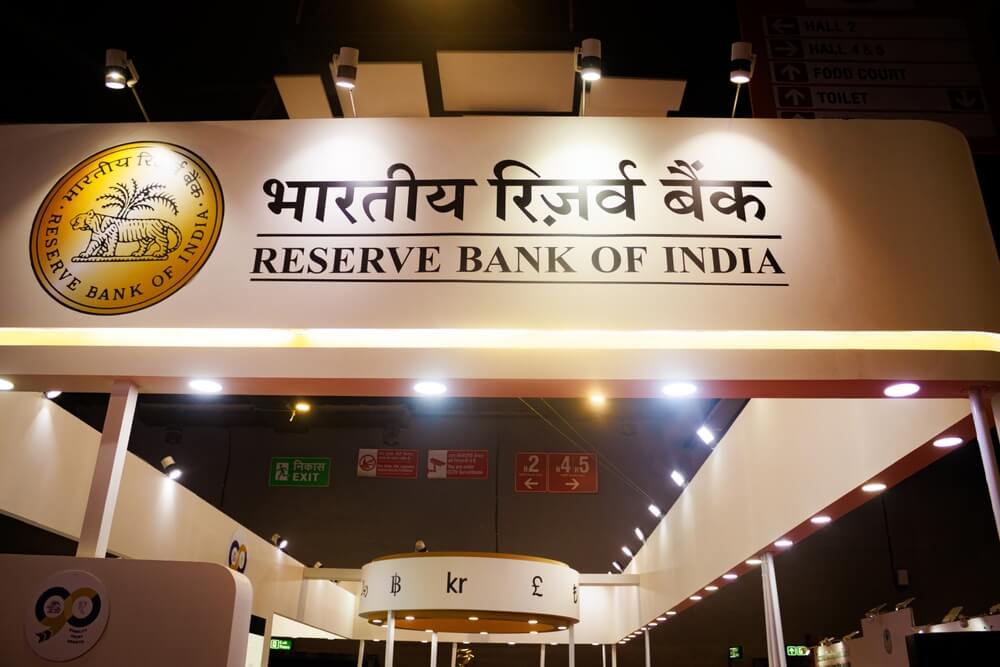 The rupee is likely to stay close to 97 to the dollar, but citizens and companies pay for that stability through more expensive loans
Reserves will continue to fall, and another interest rate rise in December is increasingly likely.
The rupee is likely to stay close to 97 to the dollar, but citizens and companies pay for that stability through more expensive loans, state oil companies through diesel losses, and the central bank through obligations due in 2029.
Today, India pays for expensive oil with dollars that it has borrowed from its citizens abroad through banks and that it must repay to the banks by 2031.
The rupee has lost an average of nearly 4% of its value a year against the dollar over the last ten years.
At the same rate, a dollar that the central bank sells for 97 rupees today will cost around 113 in 2030.
On the $133 billion it owes to the banks, this would cost the central bank about $20 billion more, roughly two-thirds of the profit it paid into the state budget this year.
The money with which India defends the rupee today could be missing from its budget in a few years’ time.
The government would have to cover that gap by borrowing more or by reducing investment in roads, railways and energy, and that in the very years when the central bank will be returning dollars.
India would thus pay for today’s expensive oil twice: once at the pump and in interest, and a second time through the budget.
