This week’s coup attempt in the small West African country of Benin underscores the increasing fragility of democracy on the continent.
Multiple factors are driving this trend, but chief among them are the decimation of opposition political forces through legal and constitutional maneuvers designed to favor incumbents; broad-based governance failures; and the expansion of jihadist terrorism across the Sahel (which covers much of West Africa).
Clearly, the heady days of the early 1990s are long gone. Following the Soviet Union’s collapse, many of its former client states, including Benin, pivoted from military dictatorships to formal electoral democracies.
The end of the Cold War had ushered in a unipolar world, dominated by an American hegemon that was keen to export Western-style multiparty democracy – often tying it to the provision of development aid.
But the rituals of periodic election cycles have proved more performative than substantive.
Autocratic high-handedness and constitutional manipulation by several leaders, including Benin’s current president, Patrice Talon, suppressed opposition parties and movements and ultimately sowed the seeds of internal dissent.
Coup Belt
That is why there have been five successful military takeovers in West Africa since 2020. This “coup belt” – comprising Burkina Faso, Guinea, Guinea-Bissau, Mali, and Niger – sits uncomfortably alongside relatively robust democracies such as Ghana and Senegal, as well as more flawed ones like Nigeria and Côte d’Ivoire.
As in Benin under Talon’s presidency, key institutions in Côte d’Ivoire and Nigeria have been steadily weakened.
Incumbent leaders have increasingly exploited sectarian (ethnic and religious) cleavages and broad-based poverty to hold on to power in countries already burdened by the task of state formation.
This is a fundamental challenge across much of Africa, where different tribes with vastly different worldviews have been lumped together within political borders arbitrarily drawn by past colonial powers.
Western-style liberal democracy has largely deepened, rather than mitigated, social divisions in Africa
In the absence of leaders capable of crafting a unifying consensus for their societies – think of America’s founders, Deng Xiaoping in China, or Lee Kuan Yew in Singapore – Western-style liberal democracy has largely deepened, rather than mitigated, social divisions in Africa.
Perhaps more importantly, consistent governance failures have undermined democracy’s promise, especially in West Africa.
The problem is not only corruption and ineffective public and social services. In many cases, disfavored groups have been denied access to political power, and governments have failed to protect their national territory and citizens from external and internal threats.
Terrorism threats
The most potent of these threats is terrorism, which has been on the rise in the West African Sahel.
The Benin coup plotters explicitly cited terrorist attacks in the country’s northern region, and what they saw as the government’s ineffective response, as grounds for removing Talon.
Similar rationales were also given by the putschists in Burkina Faso, Mali, and Niger, all of which have left the Economic Community of West African States regional trade group, mainly to escape French neocolonial influence in the region.
Had the Benin coup succeeded, it would have had severe implications for Nigeria, the de facto regional hegemon
Had the Benin coup succeeded, it would have had severe implications for Nigeria, the de facto regional hegemon.
So, it is no surprise that Nigeria – with subsequent military support from Ghana and Côte d’Ivoire, as well as political support from France – intervened to help crush the effort.
Nigeria itself has had a long-running conflict with jihadists such as Boko Haram and other groups, including various al-Qaeda affiliates, in its own northern region. Increased terrorist attacks in recent months have struck a blow to national morale, weakening Nigerian President Bola Ahmed Tinubu’s government.
Nigeria’s own recent coup scare has not helped matters. In October, Tinubu replaced the heads of the country’s armed forces following rumors that senior officers had been plotting to overthrow him.
While a military takeover in Nigeria remains unlikely, the country has been on high alert, especially now that US President Donald Trump has threatened a military intervention to protect Nigerian Christians, whom he describes as victims of state persecution.
Homegrown options
With conditions so combustible, the Benin coup attempt does not bode well for democracy in the region.
Not only will Talon crack down harshly on the plotters and anyone he can tie to them; he may also be tempted to use the occasion to extend his rule beyond 2026, when his term is supposed to end.
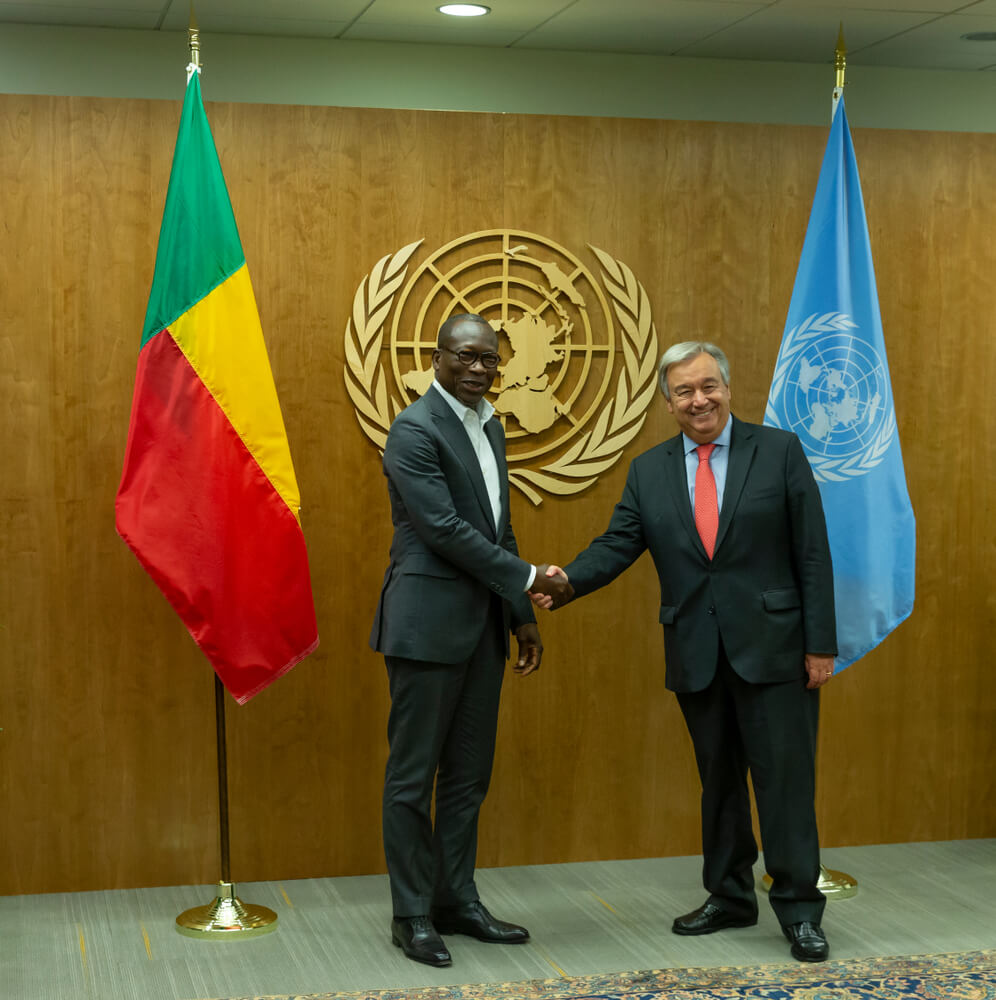 President Patrice Talon may be tempted to use the occasion to extend his rule beyond 2026, when his term is supposed to end
More fundamentally, the instability raises a stark question. Can West African societies practice Western-style liberal democracy as it is meant to be practiced, with transparent vote counts, strong electoral umpires, and educated citizens who can make informed democratic choices?
Or should they opt for more original, “homegrown” approaches to organize themselves politically?
Either way, West Africans should stop pretending that today’s civilian autocracies are a genuine form of democracy.
Neither path will be easy. It remains unclear what homegrown options are available, and whether they would be effective.
But the recent explosion of coups suggests that something will have to change.
Democracy is not dead in Africa. But the continent does seem to be heading toward a future of greater political variety.
The “democratic” monolith has long been deeply flawed, and now its days are numbered.
Kingsley Moghalu, a former deputy governor of the Central Bank of Nigeria, is President of the Institute for Governance and Economic Transformation.
