In recent weeks, the US Department of Commerce has been slowing the issuance of export licences for aircraft parts destined for China, Reuters reported on 1 October, citing multiple sources familiar with the administration’s decisions.
According to the same report, Washington is also considering regulations that would make it easier to restrict the export of certain components, including landing gear, and one version of the draft introduces a new licence requirement for aircraft hydraulic fluid.
The volume of parts approved for COMAC, the Chinese state-owned manufacturer seeking to become a third competitor alongside Boeing and Airbus, is already being restricted to prevent the company building up large inventories.
The US government has not announced a new blanket ban on exports or publicly confirmed any decision to cut off supplies more broadly.
The timing is not accidental. Xi Jinping visited Washington at the end of September, and the only tangible economic outcome of the visit was a two-month extension of the trade truce until 10 January 2027.
Beijing had requested a much longer period. The slower issuance of permits for aircraft parts is therefore preparation for negotiations that must be concluded before that date.
This is the political value of this move. Washington does not need to cut off supplies to increase pressure on Beijing; it only needs to retain the ability to speed up permits when negotiations make progress and slow them down when they stall.
Civil aviation thus enters the same trade conflict in which China is already using its strong position in rare-earth processing, while the United States is looking for areas where the Chinese economy is more dependent on US suppliers than US companies are on Chinese customers.
Two hundred planes are not the solution for the next twenty years
The best illustration of the problem can be seen in the agreement that was expected to show the American–Chinese economic relationship was stabilising a few months ago.
In May, during Trump’s visit to Beijing, China agreed to an initial purchase of 200 Boeing aircraft, its first major commitment to the American manufacturer since 2017.
The US presented the purchase as an important export success and Boeing's return to a market where it had not secured large new orders for almost a decade.
However, experience suggests caution. The 300-plane deal announced during Trump’s 2017 visit did not represent 300 brand-new firm orders; Bloomberg later determined that a large part of the package related to previously agreed work and obligations.
At the time, the Chinese Ministry of Commerce stated that the agreement included US guarantees for the supply of engines and spare parts.
If there is no approved spare part, the plane stays on the ground, regardless of what it is worth or how many more years it could remain in service
A US public document on the same agreement confirmed the purchase of 200 aircraft but did not specify such an obligation.
That very issue is now again at the centre of the negotiations. Beijing has asked to receive spare parts for the 200 planes several years in advance, while US officials are reluctant to give guarantees because they see the parts as a tool for future concessions.
For Chinese buyers, this is not a minor clause in the contract. An airliner can remain in service for two or three decades and, during that time, it requires constant access to spare parts, repairs, engines, approved equipment, software updates and technical support.
Customs duties can make it more expensive, but if there is no approved spare part, the plane stays on the ground, regardless of what it is worth or how many more years it could remain in service.
The C919 does not yet have domestic replacements for everything it needs
COMAC’s C919 is now in regular service, and Beijing sees it as the basis for future domestic competition with Boeing and Airbus.
However, the fact that the aircraft is designed and assembled in China does not mean its supply chain is Chinese.
The C919 currently uses the LEAP-1C engine from CFM International, a joint venture between the American GE Aerospace and the French Safran, with American suppliers also providing avionics and other systems.
COMAC is gradually increasing the share of domestic components, but there is still no rapid replacement for many foreign systems.
COMAC delivered only 15 C919s in 2025, well below the originally planned 75
In passenger aircraft, changing suppliers is not a straightforward industrial procurement.
An engine, a component of the steering system or other critical equipment cannot simply be swapped overnight for another company's product.
A new component must be developed and tested, integrated into an existing aircraft, approved by the relevant aviation authorities and then supported throughout years of operation.
Even with strong political backing and large investments, such a process takes years.
COMAC delivered only 15 C919s in 2025, well below the originally planned 75. According to industry estimates, the domestic CJ-1000A engine could receive Chinese approval in 2027 or 2028, with series production not expected until around 2030.
The pressure, moreover, does not stop with COMAC. Chinese airlines operate large fleets of Boeing and Airbus aircraft that also use American engines, systems and spare parts.
Airbus estimates that China will take delivery of about 9,570 new aircraft over the next two decades, while the value of the Chinese market for maintenance and other aircraft-related services could grow to nearly $64 billion a year by 2044.
In a market of that size, reliable access to parts throughout the operational life of an aircraft becomes a more important issue than any single order or trade agreement.
Beijing has already demonstrated the value of hard-to-substitute goods
The US move has a clear background. Since April 2025, China has required special permits to export more rare earth elements and products made from them.
China’s dominance in processing them gives Beijing the ability to disrupt supply to the automotive, electronics, energy and aerospace industries with a single administrative decision.
Beijing, after all, used the same instrument in aviation before Washington did. In April 2025, following US tariffs of 145 per cent, it ordered its airlines to stop taking Boeing aircraft and to stop buying US parts and equipment.
China’s demand for guarantees today shows how one-sidedly costly the measure has been. Delivery of a new aircraft can wait, but a fleet already flying cannot wait for parts.
Washington resorted to a similar measure last year. At the end of May 2025, licences for GE Aerospace engines intended for COMAC, Honeywell navigation systems and other aviation equipment were suspended.
The value of US leverage is measured by the number of months that Chinese airlines and COMAC can operate without new deliveries
When the two governments agreed in early July to ease some of their mutual restrictions, engine deliveries were reauthorised.
In October, after a new Chinese move regarding rare earth elements, Trump also threatened to limit the export of parts for Boeing aircraft.
That sequence explains why spare parts are more useful to Washington as a tool to increase and ease pressure than as the focus of a permanent ban, which would deprive American manufacturers of market access and revenue.
However, that advantage has a limited shelf life. Beijing is ordering parts several years in advance, and Washington is keeping the quantities authorised for COMAC low precisely so that stocks do not accumulate.
The value of US leverage is measured by the number of months that Chinese airlines and COMAC can operate without new deliveries.
Any slowdown in permits therefore pushes Beijing to build reserves and accelerate domestic substitution, which will weaken that leverage in the next dispute.
Boeing could pay part of the bill
For Boeing, this problem is particularly inconvenient. If Chinese airlines come to believe that buying an American aircraft involves a political risk to supply throughout its working life, Boeing will enter Chinese tenders with a handicap unrelated to the aircraft’s quality or price.
Airbus is in a stronger position, but largely for political reasons. In April, it received an order for 137 A320neo aircraft from China Southern and its subsidiary Xiamen Airlines, and in mid-September the second final assembly line in Tianjin delivered its first aircraft.
The European manufacturer does not offer China independence from American technology
However, the A320neo is also powered either by LEAP-1A engines from the same American–French company or by American Pratt & Whitney engines.
The European manufacturer does not offer China independence from American technology; it simply offers a lower risk that the purchase of an aircraft will become subject to political bargaining.
The risk is shifting from new orders to the existing fleet
The tariffs affect aircraft that have not yet been sold. The controls on parts affect aircraft that have already been purchased and therefore change the calculation for any future contract.
For deals that involve decades of maintenance, Beijing will increasingly insist that the availability of parts, service and technical support be settled before signing, rather than left to the uncertainties of future political relations with Washington.
Thus, an issue that until now has mainly belonged to commercial contracts between producer and buyer becomes the subject of negotiations between states.
It also alters the position of American companies. Boeing, GE Aerospace, Honeywell and other suppliers may have a technological advantage, but in major Chinese deals they will increasingly depend on assurances that the US government can provide.
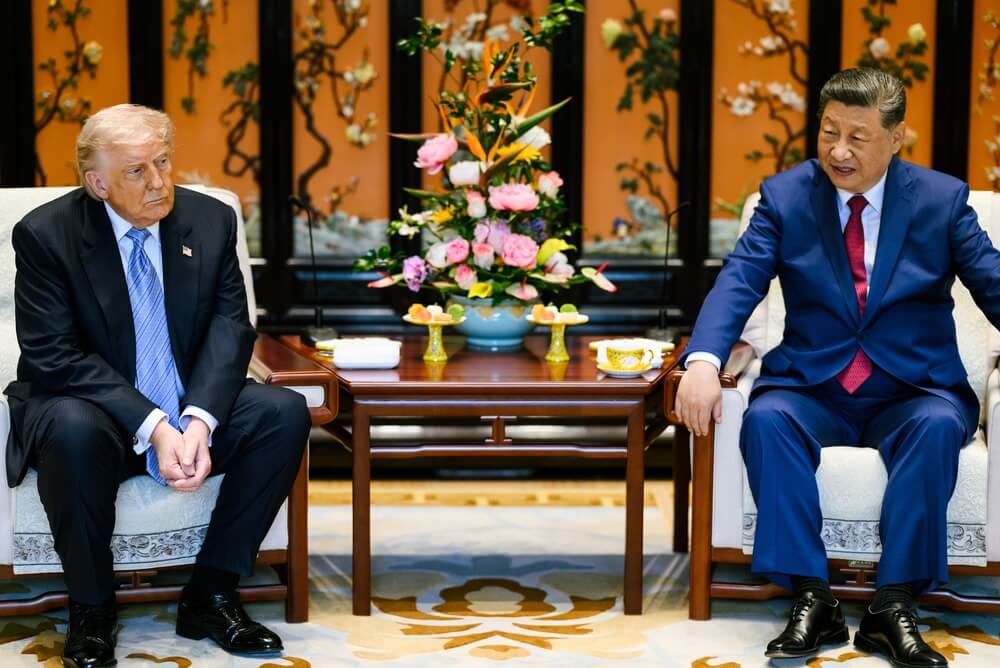 An issue that until now has mainly belonged to commercial contracts between producer and buyer becomes the subject of negotiations between states
While Washington reserves the right to use export licences as a negotiating tool, no American manufacturer can, on its own, guarantee a Chinese buyer that equipment sold today will receive uninterrupted support fifteen years from now.
The first test will be negotiations over the fate of the trade truce that Trump and Xi agreed in Busan in October 2025.
Under that agreement, Washington eased some tariffs and Beijing postponed expanding controls on exports of rare earth elements.
The truce expires on 10 January, by which time the two sides must decide whether to extend it again or replace it with a broader agreement.
If Beijing then receives written guarantees on parts, Washington will show that this leverage is negotiable.
If it does not, Chinese airlines will have grounds to keep the 200-aircraft order on paper and direct the bulk of future purchases to Airbus and COMAC.
Today’s dispute could therefore leave a more lasting mark on the global civil aviation market than the relatively limited number of permits that Washington is currently delaying might suggest.
Large countries will increasingly assess the political reliability of the states from which they buy complex equipment.
If that pattern becomes a permanent feature of US–China relations, competition between Boeing, Airbus and COMAC will not only be about who makes a better or cheaper aircraft; it will depend more on which aircraft the customer regards as the safer choice for the next twenty years.
