South Korea has emerged as one of the biggest beneficiaries of the global AI boom. Its semiconductor industry is growing rapidly, lifting exports, corporate profits, and national income.
But this success makes for an acute vulnerability: the stronger South Korea’s leading industry becomes, the more dependent the economy is on a single global technology cycle.
The pace of the semiconductor industry’s growth remains consistently high. In the first ten months of 2026, South Korea’s merchandise exports surged by more than 60% year on year, reaching $930 billion, with semiconductors accounting for nearly 43% of the total.
Stronger chip demand and rising export prices have helped push economic growth well above expectations.
The International Monetary Fund raised its 2026 growth forecast from 1.9% in January to 3.3% last month, and to 3.9% this week.
This is more than an ordinary semiconductor upturn. Massive investments in AI data centers have fueled demand for advanced high-bandwidth memory (HBM) chips, where South Korean manufacturers hold a strong competitive position.
Expectations of continued progress on AI adoption suggest that demand for computing power and memory could continue expanding for years.
But the benefits of South Korea’s semiconductor boom are unevenly distributed.
Gap between the chip industry and the rest of the economy
Chip manufacturing requires enormous capital investment but generates relatively few new jobs.
Higher profits and wages are concentrated among leading firms and skilled workers in a single industry, leaving small businesses, service providers, and lower-skill workers behind.
Although increased spending by semiconductor employees and suppliers can support local consumption, the gap between the chip industry and the rest of the economy remains substantial.
South Korea’s dependence on semiconductors increases its vulnerability to global shocks
Moreover, South Korea’s dependence on semiconductors increases its vulnerability to global shocks—in particular, anything resembling a bubble collapse in the AI sector.
The technology’s transformative potential does not guarantee that the current investment boom will continue uninterrupted.
The Economist estimates that AI would need to generate $3 trillion in annual revenue by 2030 to justify the planned investments in data centers and computing infrastructure.
Political and regulatory pressures in the United States could make a downturn more likely.
In the recent midterm election, US voters overwhelmingly backed more restrictions and even outright moratoria on data centers, over concerns about data centers’ electricity consumption, water use, and effects on local communities.
Slowdown in US investment
Higher financing costs, disappointing revenues, tighter regulations, or delays in infrastructure construction could slow AI investment in the US, weakening demand for South Korean semiconductors at a time when chipmakers are expanding capacity. Shortages would quickly turn into oversupply and falling prices.
The Bank of Korea estimates that a slowdown in US investment in 2027 could cause South Korean semiconductor exports to fall by up to $100 billion below earlier projections, reducing Korea’s GDP growth by approximately 0.4 percentage points.
Falling corporate earnings could depress stock prices, weaken business investment, and reduce corporate tax revenues
Falling corporate earnings could depress stock prices, weaken business investment, and reduce corporate tax revenues.
An AI bust could also threaten global financial stability. With tech firms increasingly reliant on private credit and entangled in complex circular-financing arrangements, a downturn could have far-reaching financial consequences.
The US Federal Reserve’s latest Financial Stability Report identified AI as the most frequently cited financial-stability risk among surveyed market participants.
Trade tensions
Trade tensions are another challenge. South Korea’s merchandise trade surplus reached nearly $295 billion in the first ten months of 2026, more than five times the level recorded a year earlier, a $102 billion surplus with the US.
Already, US President Donald Trump’s administration has used tariffs to wrest concessions from countries running surpluses with the US, including South Korea. The possibility of another round of US demands cannot be dismissed.
South Korea also risks being collateral damage in the US-China rivalry. South Korea’s semiconductor industry sits at the intersection of American technology, Taiwanese advanced manufacturing, and Chinese electronics production.
Samsung and SK Hynix operate manufacturing facilities in China, which is a major destination for Korean chip exports.
But the US has long sought to restrict China’s access to advanced technologies. The recent scandal involving Nvidia’s now-reinstated CEO, Jensen Huang, has added momentum to efforts to tighten export controls.
New US restrictions have already forced Samsung and TSMC to suspend some chip shipments to Chinese customers
New US restrictions have already forced Samsung and TSMC to suspend some chip shipments to Chinese customers.
Further restrictions could disrupt not only South Korean chip sales to China, but also the maintenance and upgrading of factories there.
In the longer term, such restrictions will motivate China to develop its own advanced chip sector.
Already, Chinese memory producers are expanding their capacity and investing in more sophisticated chips.
Though South Korea’s firms retain a considerable technological advantage today, particularly in advanced memory, China might gradually catch up, thanks to its large domestic market and substantial government support.
As a result, South Korea could face heightened competition in conventional memory and, eventually, higher-value products.
South Korea must lead on AI adoption
To remain competitive, South Korea must continue to strengthen its semiconductor leadership.
Innovation in HBM, advanced packaging, chip design, and manufacturing equipment requires skilled workers, reliable infrastructure, and predictable regulation.
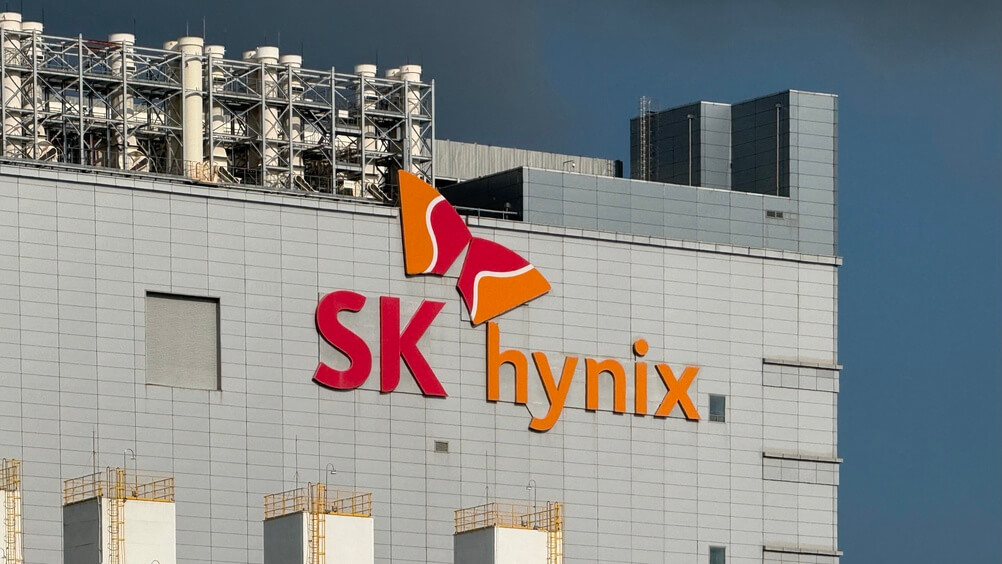 South Korea’s semiconductor boom is an extraordinary opportunity, not a guarantee of long-term prosperity
But strengthening an already dominant industry cannot, by itself, resolve the economy’s structural vulnerabilities.
The larger task is translating semiconductor success into productivity gains across the economy.
To this end, South Korea must lead on AI adoption, particularly in manufacturing, health care, finance, logistics, and other services.
Progress on this front will require investment in human capital, greater labor-market flexibility, support for entrepreneurship, and regulatory reform.
The fiscal windfall from the semiconductor boom should support productive long-term investments and strengthen fiscal buffers, rather than finance permanent spending commitments.
South Korea’s semiconductor boom is an extraordinary opportunity, not a guarantee of long-term prosperity.
The true measure of its success will be whether the South Korean economy continues to thrive when the chip cycle eventually turns.
Lee Jong-Wha, Professor of Economics at Korea University, is a former chief economist at the Asian Development Bank and a former senior adviser for international economic affairs to the president of South Korea.
