While Saudi Arabia suffers the consequences of the wars in Yemen and Iran, it is unlikely that Crown Prince Mohammed bin Salman known as MBS is thinking about the more than 250,000 people who have been displaced from their homes in Yemen since last month.
As defence minister in 2015, MBS hoped to settle the Yemen conflict and cement his command when he oversaw a massive military onslaught on the country with an accompanying heavy humanitarian toll.
Under his direction, close courting of President Donald Trump was also supposed to help seal his country’s security.
On the economic front, he aimed to turn Saudi Arabia into a global hub for finance, sport and entertainment.
All this looks increasingly vulnerable amid cancelled events and western advisories warning against travel to the kingdom.
Few of the crown prince’s ambitions are paying off and the kingdom faces a plummeting security and economic outlook as the Yemen and Iran conflicts take their toll.
Until recently, it had looked as though MBS had turned a corner and achieved reputational rehabilitation after the 2018 murder of journalist and dissident Jamal Kashoggi, who was brutally killed in the Saudi consulate in Istanbul.
But regional events are boxing in the leader’s ability to act amid Trump’s erratic and seemingly limited attention span.
Hopes for a diplomatic end to the US and Israeli-led war on Iran that started on 28 February are fading. There is speculation the war’s intensity may increase after Israeli elections on 27 October, even though such a move is unlikely to shift the positions of either Iran or its opponents.
Trump has even admitted he is considering use of the largest non-nuclear bomb at his disposal – the Massive Ordnance Air Blast. His musings, together with Houthi attacks on Saudi Arabia and Russian attacks on Ukraine, propelled oil prices up by 2% this week.
But the US administration has failed to respond to Saudi calls for US air strikes against the Houthis even though his war in Iran rekindled the Yemen conflict.
Asymmetric power
Houthi rebels, together with their Iranian backers, have illustrated their asymmetric power over supposed technologically advanced forces. Houthi attacks have included multiple strikes on Riyadh’s airport.
On Wednesday, two people were killed in an attack on King Fahd International Airport in the eastern city of Dammam. Earlier in the day, two people were killed after Saudi air defences intercepted a drone that was attempting to hit a facility at Saudi Aramco’s Shaybah oilfield.
By the time of a temporary ceasefire in 2022, the coalition had failed to dislodge the Houthis from most of their territory
MBS may be drawing some comfort from signs of healing in a rift with the United Arab Emirates, which has agreed to re-enter the Houthi conflict by resuming payments to some Yemeni government forces fighting against the rebels.
The UAE had been part of the coalition formed with Saudi Arabia and others in 2015 to restore the Yemeni government’s authority.
But by the time of a temporary ceasefire in 2022, the coalition had failed to dislodge the Houthis from most of their territory.
Conspicuously absent
Saudi-UAE rivalry burst into the open last December when Saudi Arabia bombed the home region of Aidarous al-Zubaidi, the leader of a UAE-backed faction in Yemen called the Southern Transitional Council, which has been pushing for an independent state in southern Yemen. In January, the UAE quit operations in Yemen and cut funds to southern forces.
It was unknown how Saudi Arabia or the UAE will now respond to demands by the southern separatists for a referendum on secession, which would restore the 1967-1990 borders, when Yemen was two separate states.
The US has been conspicuously absent and has failed to help Saudi Arabia in any meaningful way so far
Meanwhile, Yemen’s UN-recognised government, based in Aden, has declared a counteroffensive to drive Houthi forces from the capital, Sanaa, but has achieved limited success.
The US has been conspicuously absent and has failed to help Saudi Arabia in any meaningful way so far. Instead, the UK announced this week it would deploy fighter jets to help protect Saudi Arabia from Houthi attacks.
London insisted its role will be defensive, not offensive. It was only in 2019 that a UN report said that the UK, US and France may have been complicit in committing war crimes in Yemen by selling weapons and providing support to the Saudi-led coalition, which was accused of using the deliberate starvation of civilians as a tactic of war.
Disregard for human suffering
Coalition air strikes alone killed or maimed more than 19,200 civilians, including over 2,300 children, between March 2015 and April 2022. At least 4 million people were displaced.
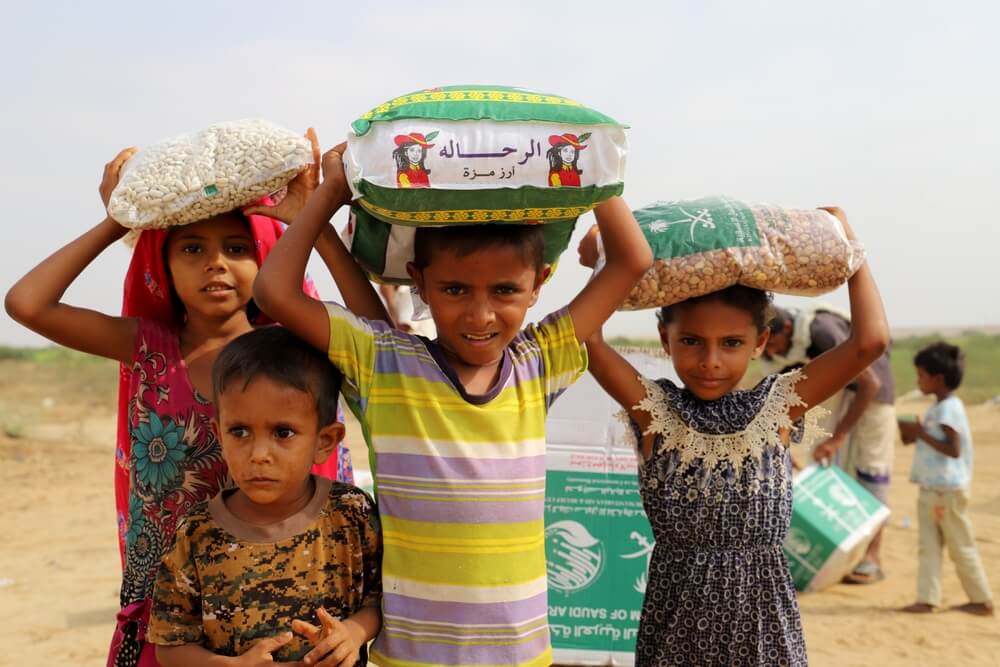 Efforts to address Yemen's general humanitarian crisis were severely underfunded, with only 22% of necessary funds secured
The Houthis have also shown little disregard for human suffering. Their closure of the only supply route linking Taiz to Aden is putting civilians at risk and cutting off essential supplies, the UN said this week.
Healthcare is taking a further battering amid a shortage of funds. “We see pregnant women who have not had access to a single antenatal care consultation and who had to deliver in unequipped and unsanitary places,” said Itta Helland-Hansen of Médecins Sans Frontières.
According to the World Health Organisation only $3.78 million has been secured of the $31 million needed to fund a 90-day emergency response in Yemen.
Even before the latest military escalation, efforts to address Yemen's general humanitarian crisis were severely underfunded, with only 22% of necessary funds secured, says MSF.
But few will be holding their breath that either the Saudis or their backers will step up soon.
