Discussion of economic inequality usually focuses on disparities across countries or the divide between rich and poor households within them.
But greater attention is now being devoted to domestic regional differences, whether between the capital city and the rest of the country (as in South Korea and the United Kingdom), between northern and southern regions (as in Italy), or between coastal cities and inland areas (as in China and the United States).
This form of inequality has a particular, and often potent, political impact. US President Donald Trump did not rise to power because Americans were broadly fed up with the growing concentration of wealth in the hands of the ultra-rich.
He tapped into the frustration of certain regions—especially former industrial hubs, such as the Rust Belt—blaming their struggles on what he deemed a “pro-globalization” agenda favored by coastal elites.
Beyond the US, such left-behind regions have been bastions of support for populist politicians, particularly on the right.
But governments that have devoted resources to tackling regional disparities have achieved limited success.
Unequal distribution of wealth
Consider South Korea, where rapid economic growth has brought an increasingly unequal distribution of wealth across regions.
The share of national GDP generated by the capital—comprising the Seoul metropolitan area and two surrounding jurisdictions—grew from 48% in the 1990s to more than 50% in the 2010s.
The average income of other regions, relative to the capital, has declined steadily, from 90% in 2000 to 83% in 2022.
This has spurred migration toward the capital region, causing the population share of non-capital regions to decline from 56% in 1992 to 50% in 2022.
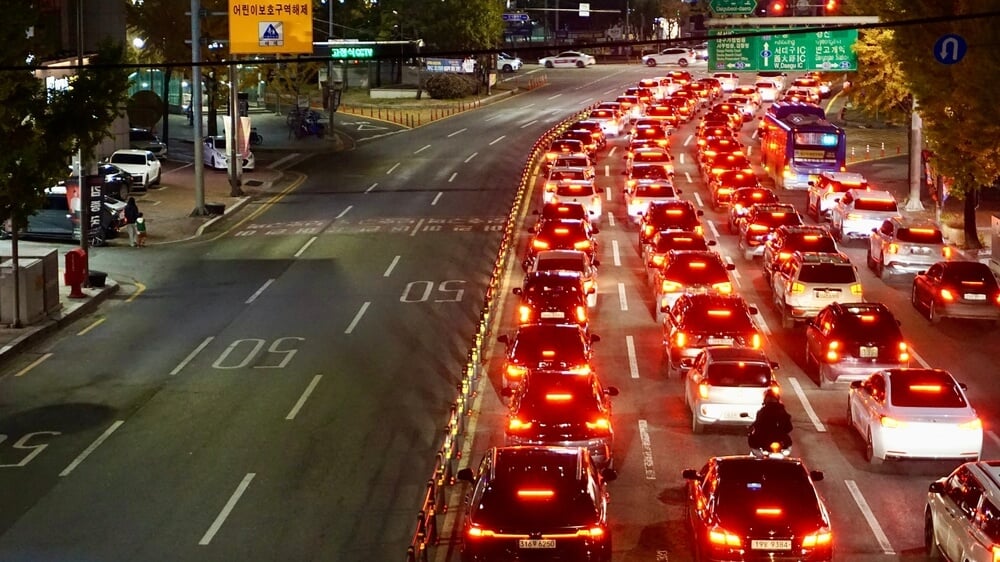
The resulting overcrowding has serious consequences, including congestion, higher living costs, and lower marriage and birth rates.
To address these imbalances, investment in South Korea’s peripheral regions is crucial.
In recent decades, the authorities’ investment decisions have been guided, first and foremost, by politics
But in recent decades, the authorities’ investment decisions have been guided, first and foremost, by politics.
In an intensely competitive political system, dominated by two parties, regional funding allocations are an expedient way to attract votes, so leaders often poured investment into areas with little potential.
Across non-capital regions, per capita expenditure was 11.8 times higher in small cities and rural areas, and 3.8 times higher in medium-size cities, than in large cities between 2011 and 2021.
From an economic perspective, this investment was largely wasted. While it might have given some local economies a short-term boost, it has failed to generate long-term growth momentum or curtail out-migration.
High-productivity regional hubs
Though higher spending is generally correlated with stronger growth, the effect is diminished when the investment ratio crosses a certain threshold.
Many small cities and rural areas in South Korea appear to receive investment above this level—far more than is warranted by their economic scale.
Meanwhile, most large non-capital cities fall well below it, even though they have the greatest potential to relieve the pressure on the capital region.
The key is to create high-productivity regional hubs, which offer good jobs, higher incomes, and low living costs
Increased investment causes less increase in congestion in large non-capital cities than it does in Seoul, and produces larger positive spillovers for neighboring cities.
Moreover, a higher investment ratio in non-capital cities is positively correlated with higher population growth rates.
The key is to create high-productivity regional hubs, which offer good jobs, higher incomes, and low living costs.
Imbalanced investment
As labor is reallocated and productivity in large non-capital cities rises, overall growth will increase—by an estimated 1.3% for every 1% increase in productivity.
Investment in small towns cannot deliver equivalent outcomes. The conclusion is clear: to build a more geographically balanced economy, South Korea must pursue targeted—or “imbalanced”—investment.
 Pursuing targeted investments in large peripheral cities promises to deliver major economic and social returns
This lesson applies beyond South Korea. As governments explore investment and innovation policies aimed at reducing inequality across regions, they must consider the economic (efficiency-oriented), social (equity-oriented), and political dimensions of their decisions.
Pouring public investment into towns across the periphery might be politically beneficial, but the economic returns of indiscriminate largesse would be minimal.
Investment in the core regions might bring economic benefits, but with potentially diminishing returns, owing to intensifying overcrowding.
But pursuing targeted investments in large peripheral cities promises to deliver major economic and social returns, which could, in the longer term, prove politically beneficial. The choice for policymakers should be clear.
Keun Lee, a former vice chair of the National Economic Advisory Council for the President of South Korea, is Professor of Economics at Seoul National University.
