Ukraine is entering its fifth winter of war with its most severe budget crisis since the start of the Russian invasion in 2022, and Russian strikes in recent months are increasingly hitting factories and ports – the parts of the economy whose taxes and exports finance the war.
The latest such attack, on 5 October, hit industrial and port facilities in the Odesa region.
The most serious consequences are in Kryvyi Rih, one of the largest industrial centres in central Ukraine, where the country’s largest steel plant is located.
Its owner, ArcelorMittal, informed the Ukrainian government on 25 September that, after four missile attacks in five weeks in which five workers were killed, it could no longer safely continue production at the plant, which employs about 12,500 people.
During the war, ArcelorMittal has invested more than $700 million to keep the plant operating and now expects to write off about $1 billion of its value in its financial statements.
Metinvest and Interpipe have also suspended production, so none of the three largest Ukrainian steel producers is currently operating.
Before the current wave of suspensions, the steel sector accounted for about 15 per cent of Ukraine’s exports.
When the country’s largest foreign industrial investor suspends production, it sends a serious warning to any foreign company considering investing in Ukraine.
Six days of war and years of lost growth
In the first nine months of this year, Ukraine spent more than $44 billion on defence and collected about $42 billion in taxes.
The chair of the budget committee of the Ukrainian parliament, Roksolana Pidlasa, announced that the state collected 49.5 billion hryvnias – approximately $1.1 billion – less than planned in that period, and cited constant Russian attacks on the economy as the main reason.
She stated that one day of war two years ago cost Ukraine about $140 million, and today it costs approximately $190 million.
The lost taxes therefore correspond to the cost of roughly six days of war, and the budget can absorb such a loss.
Factories that are not built will not employ anyone or pay taxes, and the state will feel the impact for years
Much greater damage occurs when companies postpone investments and reduce production because of the constant danger, as this is reflected in the state coffers only later, through slower economic growth.
Vasyl Khmelnytskyi, the founder of the industrial park in Bila Tserkva near Kyiv, has abandoned the construction of three new factories, explaining that the risks are currently too great for both businesses and people.
Factories that are not built will not employ anyone or pay taxes, and the state will feel the impact for years.
When the ports cease operations, the main source of foreign exchange dries up
Ukraine is suffering an even harder blow in the south, where for three years it has been exporting grain through the maritime corridor it established along the Black Sea coast.
In July, Russia began systematically attacking ports in the Odesa region and effectively halted those exports.
In that month alone, 57 attacks on ships were recorded, 35 in ports and 22 at sea, along with 67 attacks on port infrastructure, and shipowners completely stopped sending vessels to those ports for almost two weeks.
Grain exports in September were 36.6 per cent lower than a year earlier, hitting agriculture hardest
Grain exports in September were 36.6 per cent lower than a year earlier, hitting agriculture hardest, the sector that brings Ukraine the most export revenue.
Only about 50 to 55 per cent of the volume previously handled by the Black Sea ports can be transported via the Danube and overland, and Russia is attacking those routes as well.
Economy Minister Oleksandr Kravchenko estimates that the broader economic cost of port blockades and strikes on other infrastructure this year amounts to about 1.5 per cent of GDP, while around $40 billion in export revenue is at risk.
Some of these goods will probably later reach customers by other routes, but this estimate also shows how dependent Ukraine is on a small number of Black Sea ports.
European funds are awaiting a vote in Kyiv
Ukraine's domestic budget revenues are now almost entirely devoted to defence, while foreign partners cover a large part of the state's civilian expenditure, from public sector salaries to pensions.
Prime Minister Serhiy Koretsky stated at the end of September that the government needs $27 billion to ensure the army has sufficient funds at the beginning of 2027.
The government intends to provide around $7 billion by postponing some expenditure and reallocating money from other budget items, and is negotiating with partners for the remainder.
The European Union has approved a loan of €90 billion for 2026 and 2027 for Ukraine, of which €60 billion is intended for defence and €30 billion for regular budget expenditure.
Up to €45 billion is available for 2026, but the money will be paid out only after agreed reforms.
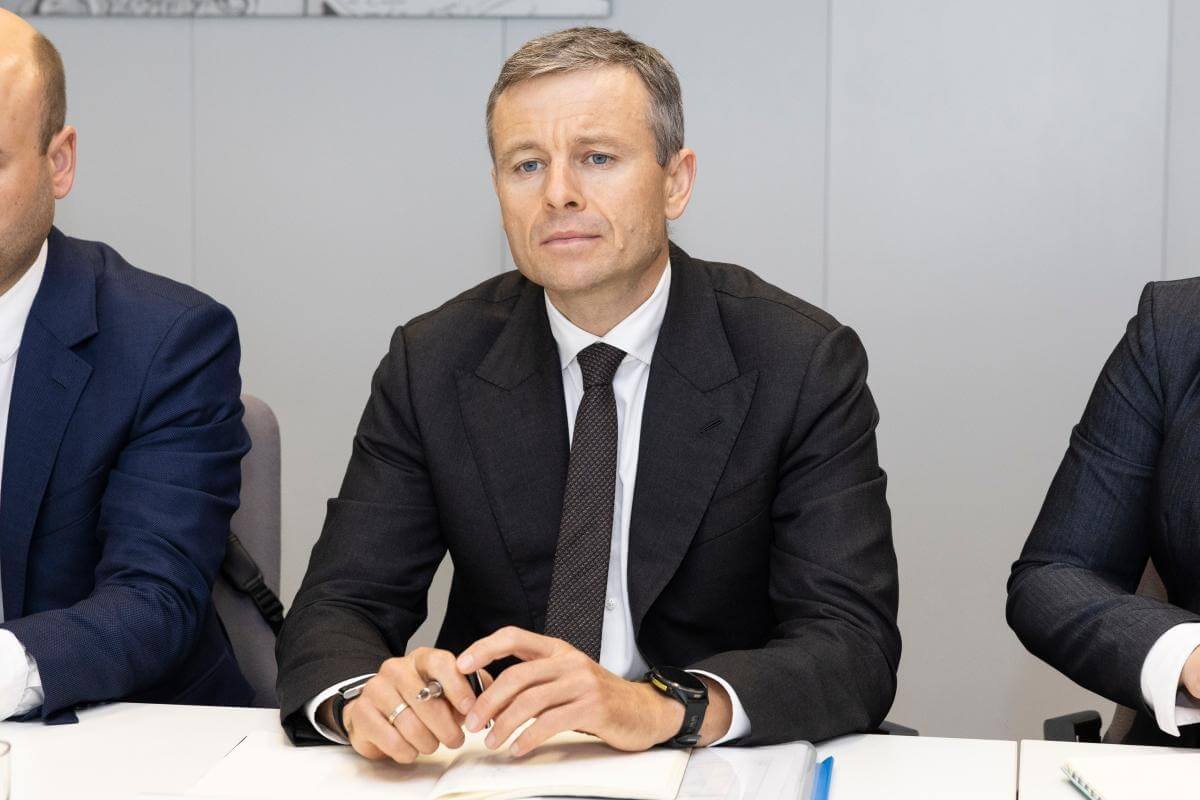 The draft budget for 2027 envisages about $110 billion for security and defence, almost 44 per cent of expected GDP - Finance Minister Serhiy Marchenko
By the beginning of October, Ukraine had received €15.7 billion from that loan, and Brussels rejected Kyiv’s request to draw in advance part of the funds planned for 2027.
Prime Minister Koretsky warned that, due to the delay in the law, a total of $29.5 billion in aid from the European Union and the IMF remains at risk.
While waiting for that money, the government has postponed about $900 million of planned public investment until December.
One of the disputed laws concerns VAT on goods worth up to €150 that citizens buy through large foreign online platforms.
On 1 September, the Ukrainian Parliament rejected the earlier proposal, but on 16 September it adopted the new text at first reading. One more vote is needed before final adoption.
The proposed model would transfer the obligation to calculate VAT to foreign electronic platforms and abolish the current tax exemption for goods worth up to €150 purchased from abroad.
More important for the budget now is how quickly Parliament can complete the reform package, as the Russian strikes simultaneously reduce the domestic tax base and the delay in the law holds back money that should cover the shortfall.
Next year will be even more difficult, because the draft budget for 2027 envisages about $110 billion for security and defence, almost 44 per cent of expected GDP, and Ukraine will need $52.6 billion in foreign aid.
Finance Minister Serhiy Marchenko estimates that the source of $32.6 billion of that sum has not yet been confirmed.
The IMF pays money to Ukraine only after checking whether it has fulfilled the agreed conditions, and it can approve the next payment by the end of the year only if Western partners provide reliable guarantees that the hole in the Ukrainian budget will be covered.
Ceasefire at sea in exchange for peace for Russian refineries
Ukraine is retaliating with attacks on Russian refineries and ports. Three Russian terminals on the Black Sea and the Sea of Azov, which account for around a fifth of export capacity in that part of Russia, have been badly damaged, and most of the others are out of operation because of the risk of further strikes, although they could quickly resume activity if the attacks stopped.
Before the escalation, these routes carried about 70 per cent of Russian grain exports.
The war is increasingly affecting the Russian budget, whose deficit in the first eight months reached about $68 billion, or 2.5 per cent of GDP, although a deficit of 1.6 per cent was planned for the whole year.
Finance Minister Anton Siluanov now expects the annual deficit to reach 3 per cent of GDP.
As long as foreign aid covers a large part of Ukraine’s fiscal deficit, Kyiv has little reason to give up one of the few instruments it has to increase Russia’s war expenditure
The difference is that Moscow can cover that deficit through domestic borrowing and state reserves, while Ukraine depends on decisions by the parliaments of the countries that support it, as well as on its own assembly.
To a large extent, the outcome depends on which side can afford to pay for the war for longer.
Moscow is also using these strikes as a means of pressure. Zelenskyy said in August that Russia would agree to a ceasefire for grain ships only if Ukraine stopped attacking Russian refineries and pipelines.
For Kyiv, such an exchange is costly because the maritime corridor brings tax revenues and foreign currency to Ukraine, while attacks on Russian energy infrastructure directly affect the income with which Moscow finances the war.
As long as foreign aid covers a large part of Ukraine’s fiscal deficit, Kyiv has little reason to give up one of the few instruments it has to increase Russia’s war expenditure.
The bill for 2027 arrives at European governments’ doors
Funding Ukraine in 2027 is likely to become as significant a political issue in Europe as arms deliveries.
European governments will have to decide whether to increase joint borrowing again or draw on around €210 billion of frozen assets belonging to the Russian central bank.
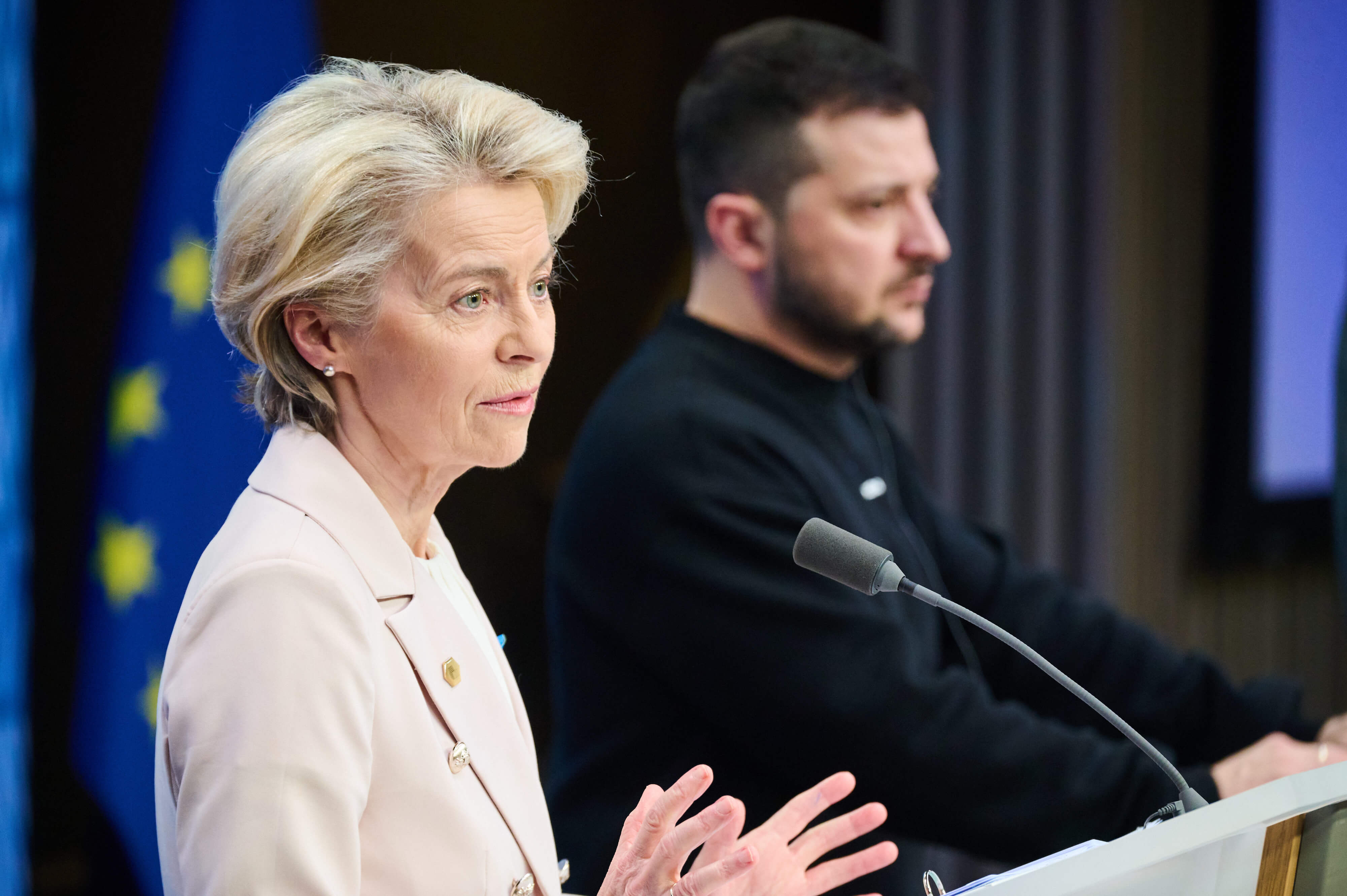 Funding Ukraine in 2027 is likely to become as significant a political issue in Europe as arms deliveries
The European Commission reopened the discussion in September. A previous reparations-loan plan collapsed in December 2025 after Belgian legal and financial objections, so the EU then turned to a capital-markets loan.
With elections approaching in France and Poland, European governments are unlikely to make major commitments several years in advance, so money for Ukraine will probably continue to be negotiated hastily whenever a new gap appears in its budget.
After more than four years of war, Ukraine has shown that it can maintain its state under extreme pressure.
The coming months will be more difficult because Russia is now attacking exactly what Ukraine depends on to survive and to pay for the war, and air defence is weaker than before, since, according to Ukrainian data, deliveries of missiles to shoot down Russian missiles this year have fallen to a third of last year’s.
By 15 October, the government expects parliament to adopt the laws on which European money depends; on the same day, the European Council meets in Brussels, where Ukraine is one of the main topics.
The decisions taken in Kyiv and Brussels in those days will have a greater impact on whether Ukraine survives the year 2027 than any single Russian strike on Odesa or Kryvyi Rih.
