The visit of US officials to Myanmar earlier this month to secure the release of a US businessman held in custody was a rare engagement by a western country with Mynamar’s junta, which presides over one of the world’s most repressive and violent conflicts.
The US citizen Adam Castillo had faced financial impropriety charges but the US State Department intervention led to his release last week.
It also raised speculation among Myanmar watchers about whether the Trump administration might be considering an easing of sanctions on Naypyidaw as it eyes the country’s rare earth minerals currently exported to China.
In recent months, Myanmar’s military rulers have been on a diplomatic push mostly in its own backyard that they hope may lead to a lessening of their international isolation.
In turn, neighbouring countries hope to make progress on curbing the outflows of heroin and refugees that have become markers of Myanmar’s deepening immiseration.
Next week, at least 1,500 Myanmar refugees are expected to return home from Malaysia under a voluntary repatriation programme put in place by Kuala Lumpur after rising tensions with locals.
Anwar Ibrahim, Malaysia’s prime minister, announced in July that Myanmar had agreed to take 5,000 members of the Rohingya community.
War crimes, crimes against humanity, and the suffering of civilians
But Human Rights Watch and other groups accuse the Myanmar military of war crimes and crimes against humanity in a civil war involving multiple ethnic rebel groups and pro-democracy groups.
Nine years ago, following what UN experts say likely constitutes a genocide, more than 700,000 Rohingya were forced to flee Myanmar, mostly to Bangladesh, where about 1 million of them remain, many in impoverished refugee camps.
Min Aung Hlaing – coup leader and Myanmar’s president has been on a diplomatic push in recent months
Min Aung Hlaing – coup leader and Myanmar’s president since elections last December and January that were deemed neither free nor fair – has been on a diplomatic push in recent months. He has visited Vietnam, Cambodia, India, China, Russia, Laos, Thailand, Kazakhstan and Belarus.
He has won a small lessening of his isolation from Malaysia. Anwar last week offered to invite him to speed up the Rohingya refugee repatriation.
Min Aung Hlaing is also hoping Thailand will welcome Myanmar back into the Association of Southeast Asian Nations when Bangkok in 2028 assumes the one-year chairmanship of the bloc, which has barred Myanmar’s military rulers from senior level meetings since the coup.
“An encouraging invitation”
But recognition by Washington is the main prize. In his desperation to curry favour, in July last year Min Aung Hlaing even called it an “honour” to receive a letter from US President Donald Trump announcing new trade tariffs on Myanmar’s exports.
According to the state media Global New Light of Myanmar, the letter was received with “sincere appreciation” and was an “encouraging invitation to continue participating in the extraordinary Economy of the United States,” Min Aung Hlaing was quoted as saying.
Later that month, the US lifted some sanctions on several allies of the ruling generals and their businesses without giving any reason for its move but made a point of saying it was not connected to Min Aung Hlaing’s response to the tariffs. This failed to convince many.
The US has also ended temporary legal status for Myanmar citizens in the US, saying the junta’s elections point to improvements in the country.
Since the coup toppled the government of Nobel laureate Aung San Suu Kyi, civil war has killed some 10,000 people and displaced over 3 million.
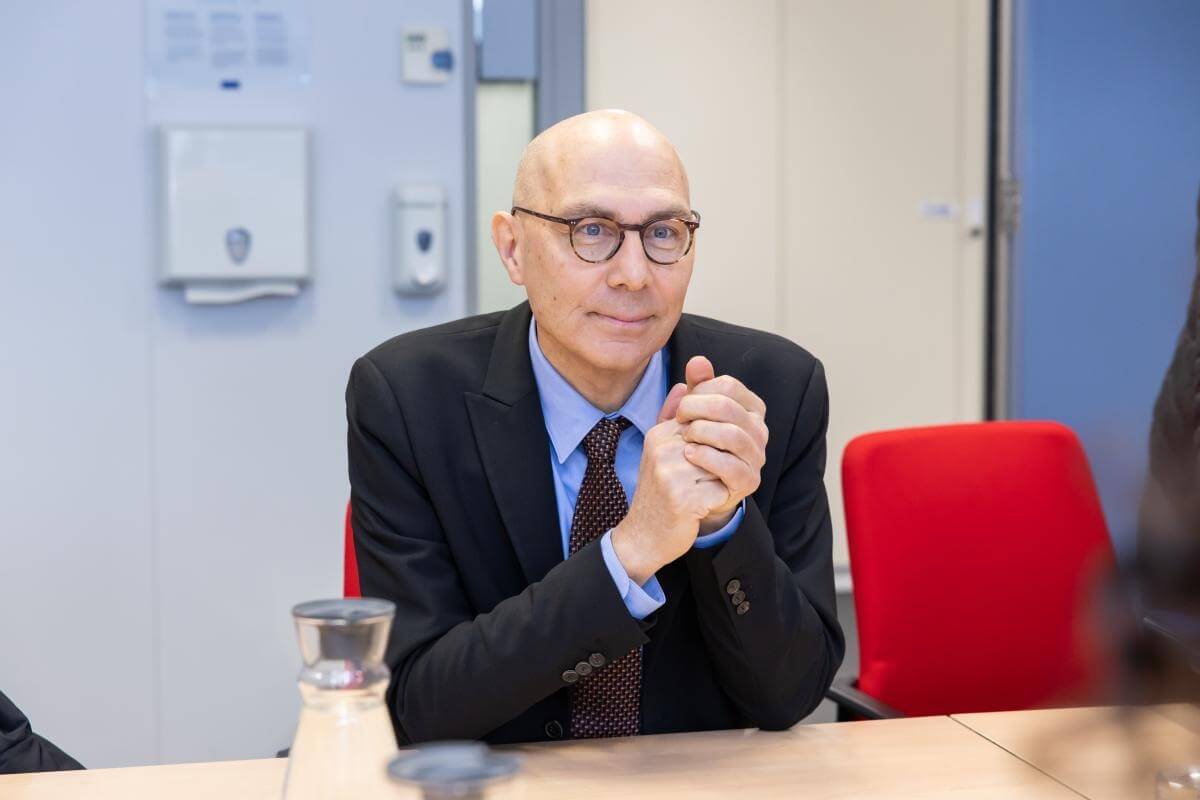 Volker Turk, UN High Commissioner for Human Rights, has called on states and companies to reconsider their involvement in Myanmar
Myanmar has also become the world’s largest producer of opium and synthetic drugs, is home to a multibillion-dollar scam industry, and has an unregulated mining sector of rare earth minerals.
Myanmar's military has carried out “a sustained campaign of deliberate attacks on civilians – including air strikes on homes, schools and camps for displaced people, alongside arbitrary detention, torture and sexual violence,” says the UN Human Rights Office.
The suffering of civilians has deepened as the military rulers tighten their control while also seeking legitimacy, the UN says. Volker Turk, UN High Commissioner for Human Rights, has also called on states and companies to reconsider their involvement in the state.
The corporate risks of investing in Myanmar are illustrated by Norway’s charging of the state-controlled telecoms company Telenor on September 15 for complicity in crimes against humanity and breaching sanctions.
The company had handed sensitive customer data to the military junta following the 2021 coup. Telenor, which has written off its $782 million investment in Myanmar, said it would co-operate fully with the investigation.
Western shunning
Wider western shunning of Myanmar looks unlikely to end soon. The US, EU and others do not have any ambassadors in Naypyidaw and limit their contact with the regime.
After Castillo’s release, the State Department said in a statement that the US “has and will continue to raise the need to cease violence, allow humanitarian access, and release political prisoners as part of efforts to bring about conditions for durable peace.”
Trump’s ad hoc policy-making has raised the unease of pro-democracy advocates who have watched a lobbying drive for Myanmar’s rulers in Washington
But Trump’s ad hoc policy-making has raised the unease of pro-democracy advocates who have watched a lobbying drive for Myanmar’s rulers in Washington, where officials have heard about a chance to divert rare earth minerals away from China in return for improving relations with Myanmar.
“Myanmar’s pro-democracy forces, both domestic and in exile, must be prepared for this shift and recognise that a policy of relying on US support for democratic change and human rights belongs to the past,” said a recent opinion piece in The Irrawaddy web site based in Thailand.
