The European Parliament has adopted a resolution supporting the "Military Schengen" initiative, in which MEPs call for the removal of administrative obstacles to the movement of troops and military equipment across the EU, as well as for investment in transport infrastructure capable of bearing the weight of military assets.
The resolution sets out objectives, such as transferring forces within three days in peacetime and within 24 hours in crisis situations.
For years, the European Union shaped its security policy on the assumption that a major war on the continent would not occur again.
Even after 2014 and the Russian annexation of Crimea, the focus remained on drafting strategies and political plans, while real readiness and response time were relegated to the background. The war in Ukraine rendered that approach unsustainable.
It has become clear that deterrence depends not only on military equipment or the number of units but also on the ability to move those forces rapidly to where they are needed.
In this context, military mobility is no longer a secondary issue within EU security policy. It has become an indicator of the Union's real readiness to act in crisis conditions.
Administrative barriers, inconsistent standards, and infrastructure not adapted to modern military requirements have proved to be serious weaknesses.
Borders that for decades symbolised integration have, in practice, remained regulatory obstacles to the movement of troops and equipment.
When bureaucracy becomes a security risk
The current discussion in Brussels and among member states is not theoretical. Concrete experiences on NATO's eastern flank have demonstrated that the measurement of reaction speed is not in days, but in hours.
In such an environment, differences in national licensing rules, cargo weight limits, equipment classification, and infrastructure responsibilities directly affect security outcomes.
Debates on military mobility within the EU are often misrepresented as steps towards the militarisation of the Union. In reality, it is an acknowledgement that existing rules and procedures are inadequate in crisis conditions.
The EU is not seeking to assume military command or replace NATO. The question now is straightforward: how can administrative and infrastructural obstacles, which are tolerable in peacetime but in emergencies directly threaten the ability to respond, be removed?
The most sensitive aspect of this process is not technical but political. Any acceleration of procedures requires redefining the relationship between national sovereignty and shared security.
Although member states retain control over their militaries, different rules prevent rapid joint action. Rather than addressing this problem, it was ignored for years.
Infrastructure is a particularly problematic issue. Much of Europe’s roads, bridges, and railway corridors are designed for civilian use. The weight of modern military equipment often exceeds the technical limits of existing infrastructure.
The war in Ukraine has clearly shown that the European members of the alliance must be able to act more quickly and in a more coordinated manner
Adjusting these capacities requires long-term investment, as well as a political decision to include security criteria in civil planning. This change has consequences for budgets, priorities, and public debate.
The administrative dimension of the problem is equally complex. Different systems of permits, deadlines, and jurisdictions mean that moving forces through several countries requires coordination that may fail in a crisis.
The EU faces a choice: either maintain the existing model and accept limited reaction speed or attempt to establish a minimum set of shared rules to reduce uncertainty.
In this context, military mobility becomes a political litmus test. This is not because it necessitates spectacular decisions, but rather because it exposes the true level of trust among member states.
The willingness to harmonise and accelerate procedures reflects a willingness to subordinate some control to the shared interest. Refusing to take this step means accepting structural weakness.
This discussion does not take place separately from existing security frameworks. NATO remains the main pillar of Europe's defence.
However, the war in Ukraine has clearly shown that the European members of the alliance must be able to act more quickly and in a more coordinated manner.
Military mobility is an area where this responsibility cannot be shifted to the United States. If European states are unable to move forces and equipment rapidly within their own territory, their ability to contribute to shared defence remains limited.
From ad hoc responses to permanent policy
This is precisely why, within the EU, there is increasing discussion about the need to treat military mobility as a permanent policy rather than an ad hoc response to crises.
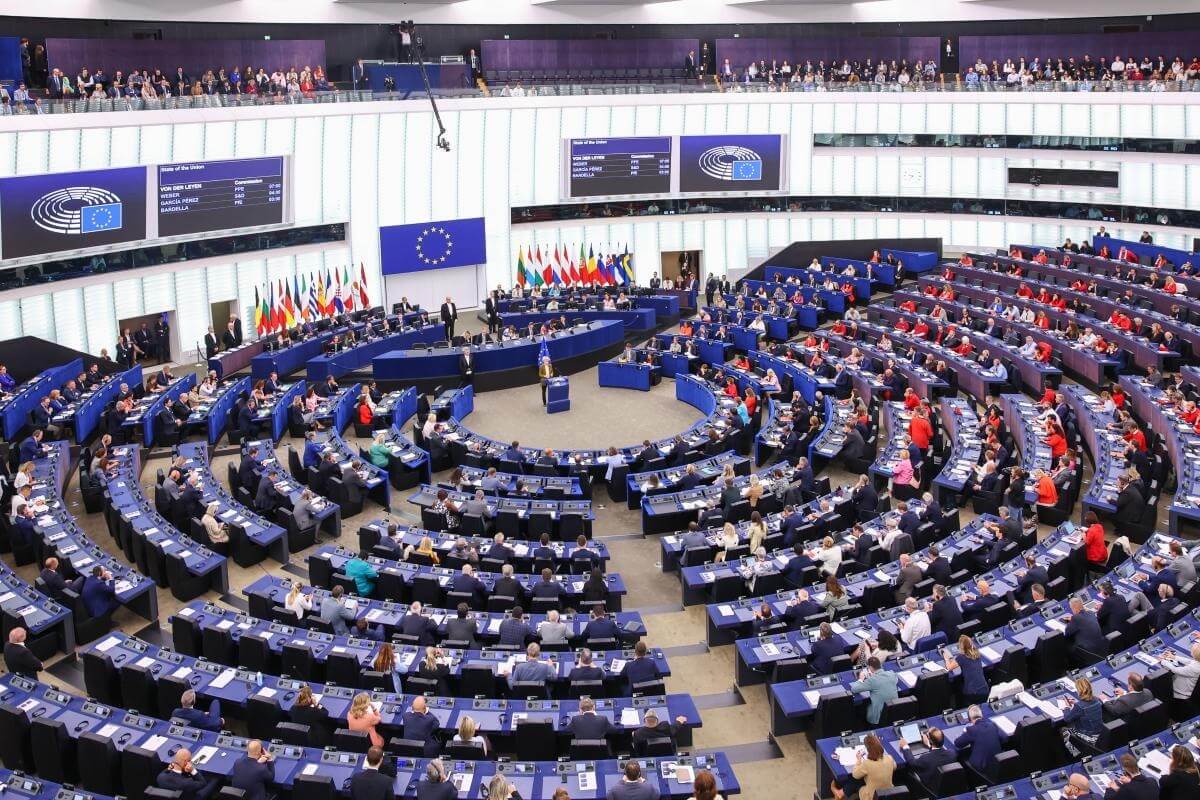 Without removing the fundamental obstacles, European security remains dysfunctional - European Parliament
This requires long-term planning, stable funding, and clear institutional responsibility. Short-term initiatives can alleviate the problem, but they do not resolve it.
Resistance to this approach is significant and varies between countries. In some member states, there is strong political reluctance regarding the movement of foreign forces and issues of territorial control.
In others, security risks are still not perceived as immediate. These differences make it difficult to agree on shared rules and slow any serious reform.
However, reality leaves little room for delay. Regardless of the pace of political agreement, the security environment has already changed.
Military mobility is no longer a hypothetical scenario but a concrete requirement. Any crisis in which reaction time is crucial would again expose the same weaknesses.
This is a test of the ability to act. Without removing the fundamental obstacles, European security remains dysfunctional.
Military mobility, in this respect, is more than a technical issue. It reflects the political maturity of the EU. Without rapid mobility, European security does not exist in practice.
