The Caribbean has become an increasingly dangerous zone after the latest intervention by an outside power.
In a remarkable move, El Salvador bilaterally deployed 2,000 troops and military hardware in Haiti where four of its soldiers were abducted last month amid rising gang violence, which also forced the government to announce last week it was delaying elections due next month until next year.
Meanwhile, the Trump administration has shown no let up in its strikes on boats allegedly smuggling drugs, killing at least 244 people since September last year in the Caribbean and eastern Pacific.
It remains unknown how much the Democrats may be able to temper US military actions when it takes control of Congress in January following their stunning success in midterm elections this week.
But the outlook in the Caribbean remains bleak in the near future.
There is escalating violence in Colombia, which later this month marks 10 years since a peace accord was reached between the government and rebels.
In Venezuela, a date for fresh elections has yet to be announced amid wrangling over the release of political prisoners almost a year after US forces abducted former president Nicolas Maduro. Cuba faces a deepening humanitarian crisis under a US blockade.
Gather your gangs: Bukele’s military intervention
But a particularly violent challenge remains Haiti, where more than 5,700 people have been killed this year. Nayib Bukele, president of El Salvador, is defiantly proud of his military intervention. “Gather your gangs so we can go fight with them,” Bukele wrote on X this week.
Bukele has a bloody background, having imprisoned more than 80,000 gang members since taking office in 2019. He has managed to dramatically decrease El Salvador’s homicide rate and cut gang activity but at a high price.
Arbitrary arrests and human rights abuses were widely reported under a state of emergency that suspended civil liberties and led to allegations of torture and enforced disappearances.
The UN this week urged all security interventions in Haiti to be carried out under international law. It noted that most of the 2,000 Salvadorean troops sent last week are not deployed under the UN Security Council-backed Gang Suppression Force (GSF).
The GSF is supposed to have about 5,500 soldiers but has only about 3,500 soldiers to take on Haiti’s gangs. It started operations in April and replaces a Kenyan-led international police mission that failed to curb violence.
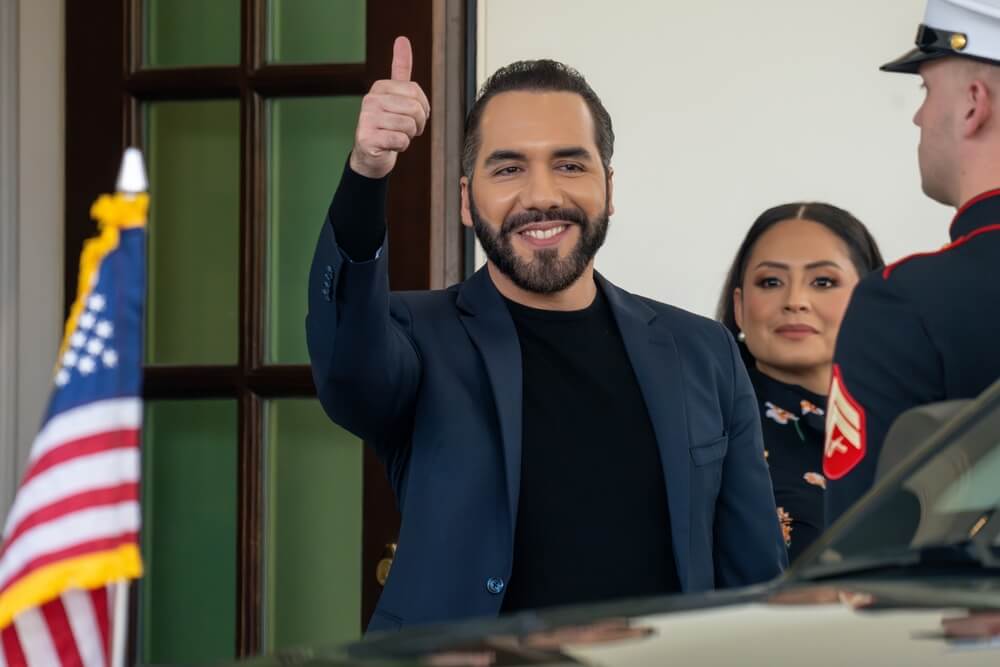 The UN this week urged all security interventions in Haiti to be carried out under international law - Nayib Bukele
“What is important is that any security operation be done within the framework of international human rights law, of international law, and that people’s rights need to be respected as you conduct security operations,” said Stephane Dujarric, UN spokesman.
However, Alix Didier Fils-Aimé, Haiti’s prime minister of a transitional government, welcomed the Salvadorean troops, saying they “did not come to replace the state. They came to support it, to reinforce our capacity.”
To tackle the gangs, the Haitian government has yet another force on hand that it hired last year. Vectus Global is a mercenary firm run by Erik Prince, founder of Blackwater that rose to notoriety for unlawful killings in Iraq.
Vectus has met with very limited success in curbing violence in Haiti and now has to operate alongside not just the GSF but the Salvadorean troops.
“The Salvadoran deployment remains opaque” in terms of the rules of engagement, chain of command, objectives and duration, and co-ordination with the GSF, the Haitian police or Vectus Global, Roman Le Cour Grandmaison, director of the Haiti Observatory at the Global Initiative against Transnational Organised Crime, wrote on X. “Are we witnessing yet another model of deployment, parallel to the multilateral?”
Don’t forget the civilians
The intervention prompted one Haitian gang leader to request international mediation to find peace. Wilson Joseph, also known as “Lanmò Sanjou” and leader of the 400 Mawozo gang, sent a letter to the UN expressing concern about a further rise in violence – something he is familiar with.
He is under UN sanctions and is accused of killings, kidnappings, sexual violence and the recruitment of children. The UN has yet to respond to his outreach.
Almost 6 million Haitians, more than half the population, live with acute hunger but aid deliveries are regularly disrupted by gangs that control key roads and have forced one in eight Haitians to leave their homes.
A UN report released in September said the US air strikes breached international law and could constitute crimes against humanity
“We fear that this armed conflict will claim even more victims, and displace even more people in the coming days, particularly with the arrival of additional international security forces,” Davina Hayles, MSF head of mission in Haiti, said in a statement.
Humanitarian and human rights considerations have also not been a feature of the US campaign against alleged drug traffickers. A UN report released in September said the US air strikes breached international law and could constitute crimes against humanity.
US officials have not offered any evidence that the vessels targeted since September 2025 are actually involved in drug trafficking. Meanwhile, the campaign called “Southern Spear” grinds on. Five people were killed in the 72nd strike carried out on 27 October.
With many eyes on Iran amid speculation about whether the US will resume attacks, don’t forget the civilians caught up in US and Salvadorean strong-arm manoeuvres in the Caribbean.
