It has been almost a year and a half since Claudia Sheinbaum succeeded her mentor, Andrés Manuel López Obrador (AMLO), as Mexico’s president.
Together, they have achieved something amazing: turning Mexico’s political clock back 30 years.
Their party, Morena, has commanding majorities in both houses of Congress and holds power in 24 of the country’s 32 states, including Mexico City – a situation reminiscent of the seven decades of rule by the Institutional Revolutionary Party.
With a near-monopoly on power, Sheinbaum recently carried out a radical judicial reform to dismiss all sitting federal judges and magistrates, including members of the Supreme Court.
Their replacements were then chosen in an election where turnout was a mere 13%, with extensive allegations of foul play.
Unfortunately, Morena has not used its power to address the country’s core economic challenge: boosting growth.
Economic performance was already disappointing before AMLO’s arrival in power in December 2018, and it has only weakened since then.
From 2000 to 2018, per capita growth averaged 0.41% per year, only to fall to 0.15% per year under AMLO, and to approximately (-) 0.1% in Sheinbaum’s first year.
Mexico’s dismal productivity
This malaise is not the result of macroeconomic instability, weak investment, insufficient labor, or poor export performance.
From 2000 to 2024, credit agencies rated Mexico’s external debt as investment grade, and the country’s investment-to-GDP ratio comfortably exceeded that of the United States (22% vs. 18%), while its labor force grew more rapidly (1.7 vs. 0.7% annually).
Under the US-Mexico-Canada Agreement (USMCA, which replaced the North American Free Trade Agreement), manufacturing exports increased steadily, reaching 35% of GDP in 2024.
Today, Mexico exports more manufactured goods than the rest of Latin America combined
Today, Mexico exports more manufactured goods than the rest of Latin America combined.
Yet Mexico is still falling behind the US, rather than catching up. Whereas Mexico’s GDP increased by 43% between 2000 and 2024, cumulative US growth reached 64%.
The problem lies in Mexico’s dismal productivity, which actually fell by 7% over the same period.
Large informal sector
The main cause of this is the economy’s persistently large informal sector, which accounts for as many as 55% of workers and 90% of firms – percentages that have barely changed since 2000.
The economy’s segmentation stems from poorly designed social-security, labor, and tax laws and low-quality services; but it has been worsened by weak enforcement of existing laws and contracts.
Even though one peso invested in a formal firm produces 40% more value added than if invested in an informal one, informal firms survive; and when they die, they are replaced by new, equally unproductive ones.
No country can prosper if it persistently underutilizes the talent of half of its workers and channels a significant share of its savings to unproductive firms.
Since 2000, policymakers have wrongly assumed that if investment increased, informality would fade away
Yet since 2000, policymakers have wrongly assumed that if investment increased, informality would fade away.
They have failed to realize that informality is not the result of insufficient resource accumulation, but rather a signal that resources are being used inefficiently.
Mexico’s growth prospects have now deteriorated even further, both for domestic reasons and because of increased uncertainty about the future of the USMCA under US President Donald Trump’s second administration.
Legal protections are eroded
Domestically, Morena has amended the constitution to eliminate regulatory bodies and strengthen the dominance of state-owned enterprises in the energy sector; reduce the competition (antitrust) authority’s autonomy; eliminate the agency charged with ensuring transparency and access to information (whose functions have been transferred to the executive branch, so it can police itself); and weaken the Ley de Amparo, a constitutional statute guaranteeing due process protections for citizens and firms.
True, larger firms (with more than 50 workers) can devise mechanisms to live with these changes, such as by relying on contracts with private arbitration, agreements to settle disputes in New York courts, alliances with foreign firms, and so forth.
Despite a diminished Ley de Amparo, they still have some “voice” to defend themselves against potentially illegal government action.
But fewer than 1% of Mexican firms are large enterprises. The vast majority cannot rely on these mechanisms.
As legal protections are eroded, their growth potential will fall further, deepening the economy’s formal-informal segmentation.
To her credit, Sheinbaum has signaled that she is more open to private investment in energy than her predecessor.
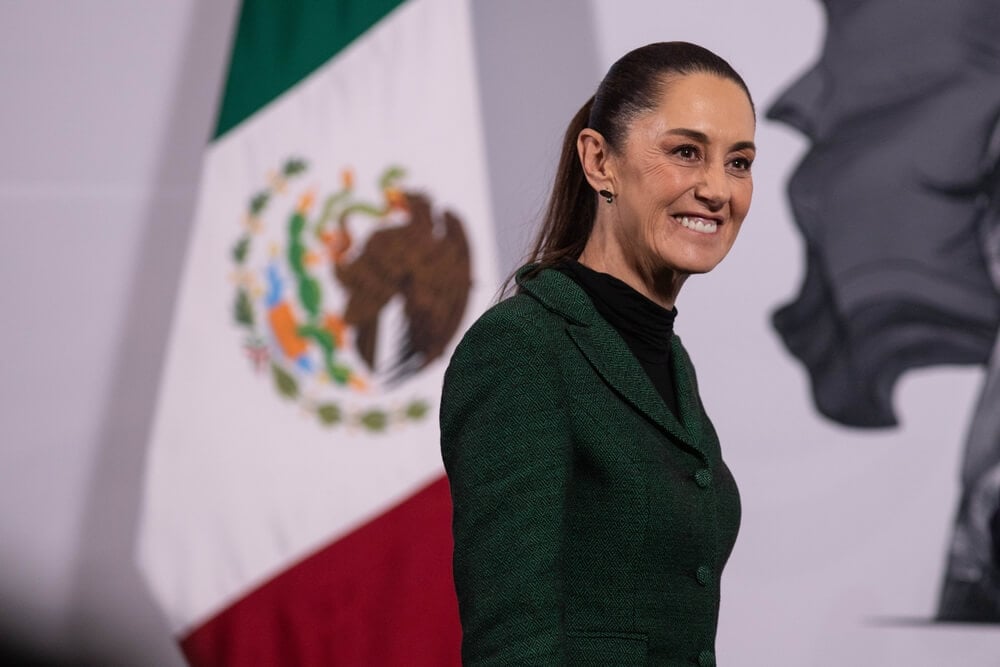 Mexico’s main problem is not a lack of investment; it is stagnant productivity, and Sheinbaum and her advisers have proposed no reform to tackle it
But such capital will be difficult to attract, because the regulatory framework has become more uncertain.
For example, contracts between businesses and state-owned enterprises cannot include provisions stipulating private arbitration or adjudication in international courts.
To accelerate growth, Sheinbaum and business councils representing large private firms have proposed measures, known as “Plan Mexico,” to promote investment and near-shore economic activity.
Such efforts are welcome. But the thrust of the plan reflects the same flawed thinking that has dominated over the last 25 years.
Again, Mexico’s main problem is not a lack of investment; it is stagnant productivity, and Sheinbaum and her advisers, or Plan Mexico for that matter, have proposed no reform to tackle it.
Sheinbaum needs to change course
Faced with stagnant real (inflation-adjusted) incomes, successive Mexican governments have increased social welfare through income transfers.
AMLO raised these substantially, particularly for those older than 65, and significantly increased the minimum wage. As a result, poverty fell substantially (though the magnitude is disputed).
Sheinbaum then launched a new transfer program for women aged 60-65 and raised the minimum wage, with the changes financed by stricter tax enforcement, lower public spending on health, education, infrastructure, and science and technology, and more debt.
The best that Mexico can hope for is a successful renegotiation of the USMCA and relative macroeconomic stability
Looking ahead, the best that Mexico can hope for is a successful renegotiation of the USMCA and relative macroeconomic stability.
And even then, growth will likely be lower than before, because the country’s labor force is growing less rapidly, domestic institutions have been eroded, and the international trading system is in flux.
Sheinbaum needs to change course. She could still do much more both to increase productivity and promote social welfare.
Alas, if she sticks with the same playbook, Mexico’s development prospects will remain dim.
Santiago Levy, a non-resident senior fellow with the Global Economy and Development Program at Brookings, is a former chief economist and a former vice president for Sectors and Knowledge at the Inter-American Development Bank.
