Amid the seasonal festivity at this time of year, a number of think tanks and aid agencies delivered a dose of reality and released their lists of conflicts and humanitarian hotspots to watch in the coming year.
People may be forgiven for wanting to hide their heads, perhaps along with a mince pie or two, as there is a palpable sense of growing danger and uncertainty when considering the global outlook.
A rising tide of nationalism and transactional politics is swiftly turning into a greater risk of inter- and intrastate violence.
Watchlists naturally reflect the concerns and priorities of particular organisations, but there is considerable overlap among them.
There is a broad consensus when it comes to their heightened concern about an apparently inexorable slide into even further entrenched antagonisms in a world without a clear global leader.
Conflict between Israel and the Palestinians, an intensification of the Russia-Ukraine war, escalation of US military operations against Venezuela, and growing political violence in the US all head the Council of Foreign Relations (CFR) latest conflict risk assessment.
The International Rescue Committee (IRC) speaks about a “new world disorder” replacing the post-Second World War system as global co-operation unravels and “conflict increasingly used as a tool for power and profit.”
This shift towards a more fractured world lies behind unprecedented humanitarian crises amid a collapse in global aid. Sudan, Gaza and the West Bank, South Sudan, Ethiopia and Haiti top its emergency watchlist.
Aid cuts threaten hundreds of thousands of lives
The Peace Research Institute Oslo (PRIO) has forecast which conflicts are likely to cause the highest battle-related death tolls, using an AI-driven system called the Violence and Impacts Early-Warning System (VIEWS) developed with Uppsala University.
In 2026, the number of deaths forecast in Ukraine is 28,300, in Israel-Palestine it is 7,700, in Sudan it is 4,300, in Pakistan it is 2,000, and in Nigeria it is 1,900. VIEWS correctly identified seven of the ten deadliest countries in 2024 and six of the top ten in 2023.
“Our forecast highlights where conflict intensity is most likely to surge next year, giving governments, the UN and aid organisations a stronger basis for early planning and saving lives,” said Håvard Hegre, the PRIO research professor who leads the VIEWS team.
“No one has died because of USAID [cuts]” - Marco Rubio
However, the UN and other aid groups have their work cut out amid severely slashed budgets, and the reduced spending is already taking a deadly toll.
The shutdown of the USAID development agency that had a multi-billion dollar budget earlier this year was forecast in June to contribute to between 500,000 and 700,000 additional deaths annually.
This was after Marco Rubio, US secretary of state, claimed: “No one has died because of USAID [cuts].”
Now, further analysis by the Centre for Economic Policy Research suggests that lives lost based on the decline in outlays (current spending) may be in the range of 500,000 to 1,000,000, and potential lives lost based on the decline in obligations (commitments to future spending) are between 670,000 and 1,600,000.
“A world succumbing to war”
It points out the prospect of other donors filling in the gaps left by USAID is slim given that foreign aid budgets are in decline in many other countries.
According to OECD estimates, this year saw an overall fall in development assistance of 9-17% and health spending could drop by about 20% from pre-pandemic levels.
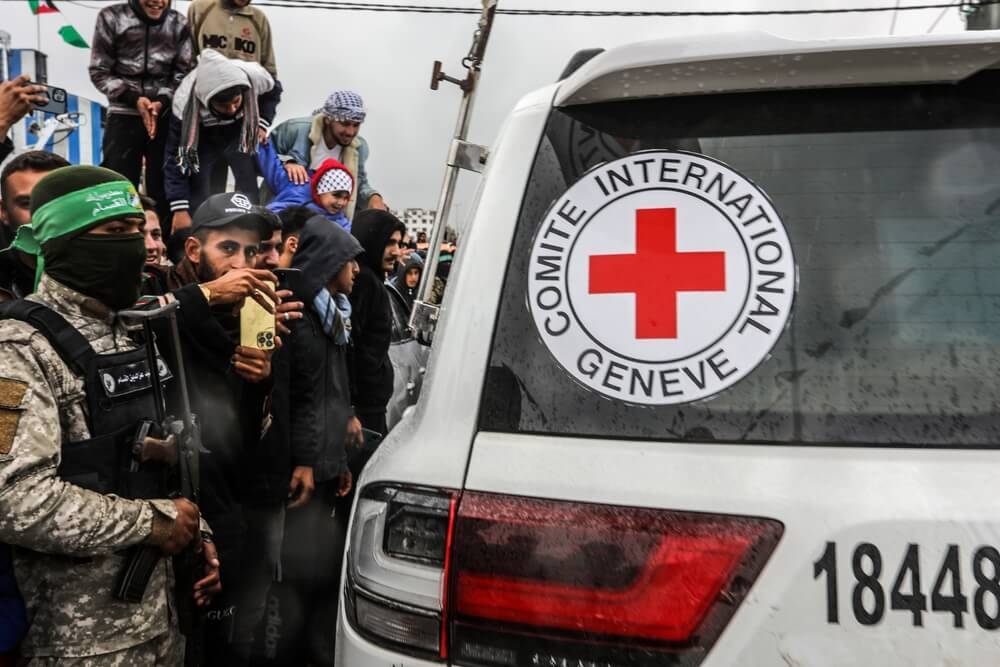 The International Committee of the Red Cross speaks of a world succumbing to war
ACLED, or the Armed Conflict Location & Event Data non-profit, listed 10 regions most at risk of escalation in 2026, including the Red Sea, Sahel, Myanmar and Syria.
“Many of the pressures that defined recent years — fragmented armed groups, stressed governments, and expanding criminal networks — are converging with fresh triggers, from contested elections to shifting regional alliances,” says ACLED.
The International Committee of the Red Cross (ICRC) speaks of “a world succumbing to war” while the rules and limits developed particularly since 1945 “are being stretched, ignored or dismantled”.
ICRC warns of four converging trends in its humanitarian outlook for 2026: dehumanisation, with many political leaders and their cheerleaders using language to justify violence; politicisation of aid and rising violence against humanitarian actors; weakening respect for international humanitarian law and a resurgence of hard power; and rising humanitarian need amid strained resources.
The experts consulted by CFR for its risk assessment displayed “an early vote of no confidence” in President Donald Trump’s peacemaking approach, given that several conflicts in which his administration has intervened are likely to resume next year. These include Gaza, Sudan and India-Pakistan. Fighting has already restarted in DRC.
Several organisations urged renewed and reinvigorated diplomacy including through the UN, better targeting of aid, and a greater emphasis on protecting civilians and fighting impunity.
But few will be holding their breath. You may want a stiff drink with those mince pies.
