On 8 November, the Israeli military announced that it had found weapons and facilities attributed to Hezbollah, a Shia organisation armed by Iran, in southern Lebanon, just 100 to 250 metres from the position of UN peacekeepers.
There is no independent confirmation of these allegations, but Israel presents them as new evidence that the UNIFIL mission failed to fulfil its mandate.
Four days earlier, the UN had warned that the withdrawal of the peacekeepers could leave the Israeli and Lebanese militaries without a mediator to prevent border incidents from escalating into conflict.
UNIFIL’s regular operations end on 31 December, and it is not yet known who will assume its most important responsibilities.
On 2 March, Hezbollah entered the war with attacks on Israel, following US–Israeli strikes on Iran. The Israeli military, which retained five positions in Lebanon even after the November 2024 ceasefire, expanded ground operations the next day.
After a new ceasefire on 16 April, dozens of villages remained under Israeli control, behind a line which, on the Israeli map published at the time, extended five to ten kilometres into Lebanon. A new map from 18 June showed that Israel’s military presence continued to expand inland.
The agreement between Israel and Lebanon, signed on 26 June with US mediation, links the gradual withdrawal of Israeli forces to the disarmament of Hezbollah and the deployment of the Lebanese military in the territory Israel is vacating.
Its security annex requires the removal of weapons to be verified by a third party accepted by both governments.
Implementation has stalled on that provision, because no agreement has yet been reached on who will independently confirm that the conditions for the next stage of withdrawal have been met, although Washington continues to maintain military coordination between the two sides.
Verification required under the agreement
The plan is for the Lebanese military to remove Hezbollah’s weapons, warehouses and military facilities from selected areas of southern Lebanon and to assume permanent responsibility for security. Once that outcome is verified, Israeli units would withdraw from surrounding positions.
The annex also envisages a military coordination group in which representatives of the two armed forces, with US mediation, exchange information and seek to prevent accidental conflict.
The group facilitates talks but does not resolve disputes when Beirut claims an area has been cleared of Hezbollah weapons and Israel cites contradictory intelligence.
Until early November, there was no agreement on who the independent verifier would be or which locations they would have access to. In the absence of such a determination, withdrawal is decided according to Israel’s threat assessment.
Hezbollah refuses to disarm while Israel holds positions in the south
An independent check would not, by itself, remove the political obstacles, but it would show which side is failing to meet its obligations.
Assaf Orion, a former Israeli general, argued in an analysis published by the Washington Institute that the main obstacle is the lack of political will within the Lebanese leadership to confront Hezbollah.
That assessment is sound, because observers cannot take the government’s place by confiscating weapons or arresting those responsible.
Hezbollah refuses to disarm while Israel holds positions in the south, and Israel refuses to withdraw further without evidence that the organisation has lost military capability.
An impartial finding would deprive both sides of the excuse of justifying the stalemate with their own assessments.
One village, weeks of negotiations
An attempt to implement the plan in the village of Zawtar el-Gharbiyeh in July highlighted how difficult the withdrawal would be. It took weeks of negotiations before Israeli forces left part of the area and allowed the Lebanese military to enter.
Israeli units remained in the area and fired warning shots when they judged that Lebanese soldiers had come too close. Returning residents found destroyed houses, and security on surrounding roads and at key positions had still not been restored.
Securing control of a village means little to its inhabitants if they cannot safely reach their homes and fields, deliver food or begin rebuilding.
While Israeli forces remain on nearby heights and armed groups may re-emerge, the Lebanese military is struggling to gain the trust of the people it is meant to protect.
Military talks between Israel, Lebanon and the United States failed to produce a verification agreement
If implementing the agreement in a single village took several weeks, applying it village by village across dozens of locations could take years.
Military talks between Israel, Lebanon and the United States, held in Tampa at the headquarters of United States Central Command on 20 and 21 October, failed to produce a verification agreement.
On 29 October, the Lebanese Armed Forces Commander, General Joseph Aoun, reiterated that the cessation of Israeli attacks, withdrawal, and the border issue remained unresolved.
By early November, none of the initial zones had received independent confirmation that commitments had been fulfilled. Each new stalemate gives Hezbollah time to consolidate its positions and Israel time to extend its presence in the occupied territory.
The void left by UNIFIL
UNIFIL has operated in southern Lebanon since 1978. After the 2006 war, it was given broader powers to monitor the cessation of hostilities and to assist the Lebanese military in the area between the Litani River, about thirty kilometres north of the border, and the Blue Line, established by the UN in 2000 to confirm the Israeli withdrawal.
Israel and Lebanon do not share a definitive land border, and the Blue Line serves as a practical basis for monitoring military movements. Peacekeepers record incidents, maintain communication between the two militaries and facilitate the passage of humanitarian aid.
Israel has grounds to question the mission’s performance, as Hezbollah has retained significant military capability despite UNIFIL’s presence.
However, UNIFIL’s mandate has never included forcibly disarming the organisation. The value of the mission lies in independent observers from both militaries reporting incidents and violations of the agreement.
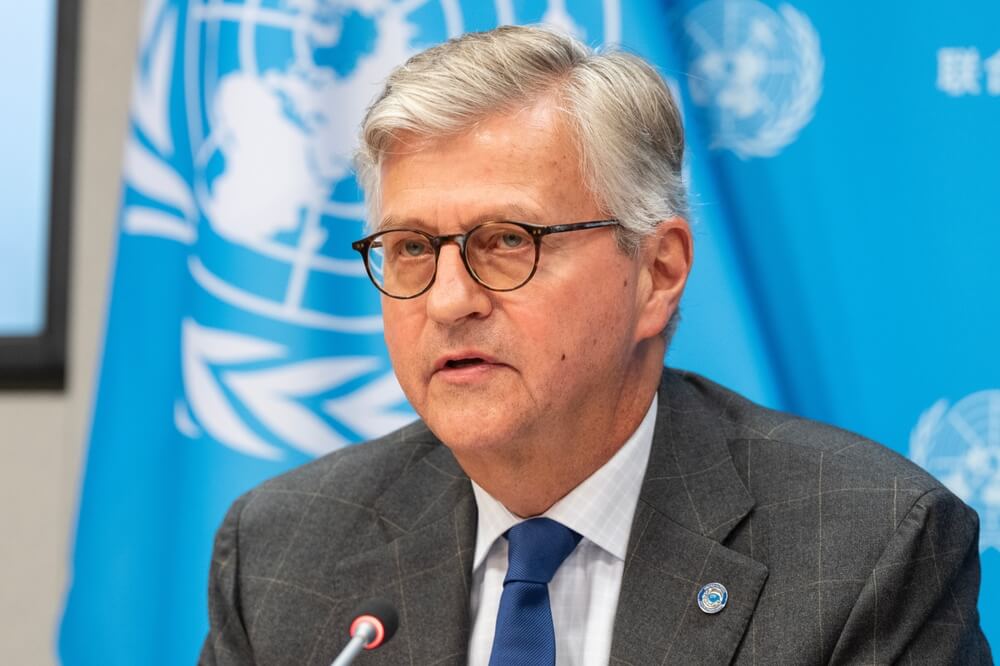 In the absence of international forces, local incidents could more easily escalate into fighting - Jean-Pierre Lacroix
Jean-Pierre Lacroix, the UN Under-Secretary-General for Peace Operations, warned that, in the absence of international forces, local incidents could more easily escalate into fighting. According to UN estimates, around 10,000 civilians live between the Blue Line and the Israeli forward defence line inside Lebanon.
UNIFIL personnel currently escort humanitarian convoys to those villages and report incidents. When they leave, another body will have to ensure that food and medicine reach those residents and that they can travel safely.
UN Security Council Resolution 2790 mandates that UNIFIL end regular operations on 31 December 2026 and withdraw its personnel over the following year.
The mission’s roughly 7,500 personnel will not depart simultaneously, but their responsibilities will be reduced primarily to protecting UN staff and equipment, assisting civilians and safely evacuating positions.
The phase-out provides time to negotiate a successor arrangement but does not guarantee that any party will assume mediation and independent reporting responsibilities.
Europe has no mandate to monitor the withdrawal
In June, France and Italy announced their readiness to lead international support for Lebanon after UNIFIL. At a meeting of defence officials in Paris on 17 September, the needs of the Lebanese military and the possibility of an international mission were discussed.
On 12 October, the European Union established EUSM Lebanon, its support mission to Lebanon, with an initial three-year mandate to train and advise the military and police, and to improve border and maritime security; its deployment on the ground will require a further EU decision.
That assistance may strengthen the Lebanese state, but the European mission lacks the authority to monitor Israeli positions or verify compliance with obligations under the June agreement.
That task requires a different mandate, including access to contested areas and the ability to scrutinise the actions of both sides.
Even a well-trained Lebanese military will not be able to persuade Israel to withdraw in the absence of independent confirmation of actions taken on the ground.
Beirut will have to demonstrate that it is removing Hezbollah’s weapons, and Israel will unilaterally decide whether this is sufficient to justify withdrawing its forces
In June, the UN Secretary-General proposed three options for future international involvement, ranging from a larger force capable of mediating incidents to a smaller observer mission, but the Security Council accepted none.
The US, which as a permanent member of the Council holds veto power, and Israel oppose a return to a framework they believe has failed to prevent Hezbollah from building its capabilities, while Lebanon and several European countries want international supervision to remain. Beirut has also proposed a temporary extension of the existing mandate.
The June agreement, concluded under US auspices, does not envisage any role for UNIFIL or a successor mechanism. If European support for the Lebanese military and US mediation continue without an independent verifier, the obligations of the two governments will be assessed according to different standards.
Beirut will have to demonstrate that it is removing Hezbollah’s weapons, and Israel will unilaterally decide whether this is sufficient to justify withdrawing its forces.
Withdrawal without a referee
The Security Council has called on Israel to withdraw from Lebanese territory and on Beirut to establish state authority across the whole country. Neither of these obligations should depend solely on the judgement of the other side.
Israel has a legitimate demand that Hezbollah must cease attacking its citizens, but the agreement loses its purpose if that demand becomes a pretext to delay withdrawal indefinitely, even from areas where disarmament has already been confirmed.
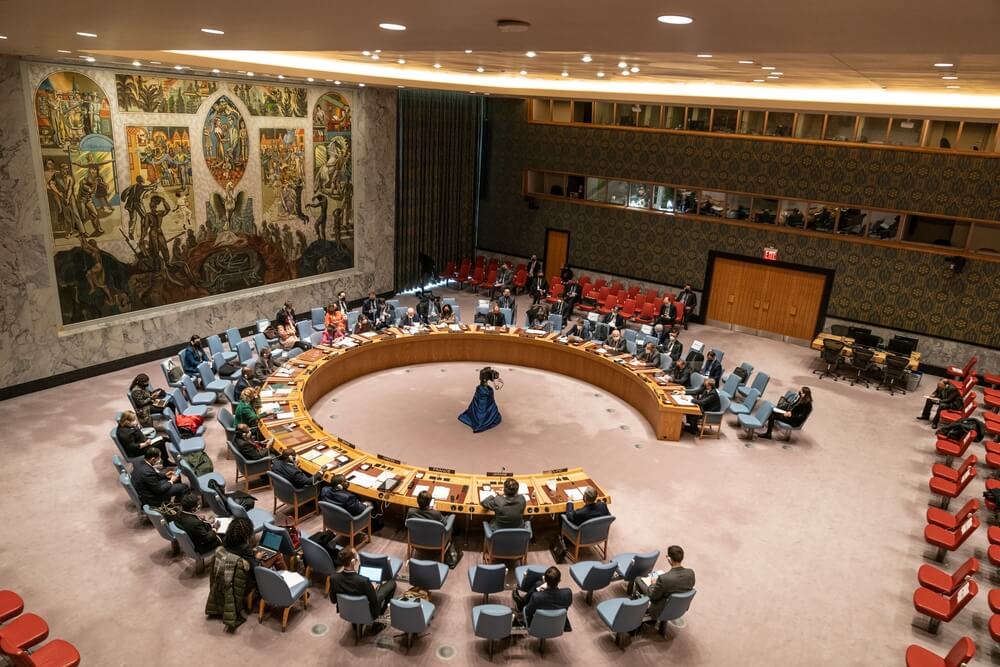 It is unrealistic to expect the Security Council to mandate a new mission with comparable powers before the end of the year
UNIFIL is most likely to begin withdrawing according to the existing plan, while Europe assists the Lebanese military and the US continues to broker individual arrangements.
It is unrealistic to expect the Security Council to mandate a new mission with comparable powers before the end of the year.
In the absence of an interim agreement on independent verification, Israeli forces will probably retain a number of their positions in the south during the first half of 2027, and the Lebanese military will assume control of the territory more slowly than political promises indicate.
The most expedient solution need not be a large international mission. A small team, acceptable to both governments and authorised to visit agreed sites, verify the removal of weapons and publish findings on each side’s compliance, could prevent each step from becoming a fresh political dispute.
For that to happen, Washington must secure consent from both parties for the deployment of such a team, along with a commitment to respect its findings.
If mediators fail, Israel will retain sole discretion over whether the conditions for its withdrawal have been met, while a prolonged military presence will further weaken the Lebanese government, which is being asked to disarm Hezbollah.
