On 20 May, the Israeli Knesset supported in a preliminary reading a bill to dissolve parliament, creating the first serious possibility of early elections since the war began in October 2023.
That does not mean elections are inevitable. Israel has experienced repeated coalition crises and unstable governments for years.
However, the timing is important. For the first time since the Hamas attack, the assumption that war automatically shields the government from internal political pressure is beginning to weaken.
Pressure on Benjamin Netanyahu now comes not only from the opposition, but also from parts of the security establishment, increasing international pressure over Gaza, mounting economic strain, and visible exhaustion within Israeli society after more than two and a half years of war and regional escalation.
In the first months after 7 October, Israeli politics effectively froze. The scale of the attack and the shock within the country created a broad understanding that bringing down the government during an active war would deepen instability and benefit Hamas, Hezbollah and Iran. That logic no longer carries the same weight.
As the conflict shifted from intensive military operations to a prolonged regional confrontation without a clear political end point, questions that were initially set aside returned to the centre of Israeli politics.
What is the long-term objective in Gaza? What will replace ongoing military operations? How long can Israel maintain simultaneous pressure in Gaza, Lebanon, and against Iran without serious political and economic consequences? And politically most dangerous for Netanyahu, who is responsible for the failures that allowed Hamas to breach Israeli defences on 7 October 2023?
Those questions are no longer limited to opposition politicians or liberal critics of the government. They have reached parts of the conservative electorate, senior military circles and sections of the broader security establishment that for years formed Netanyahu’s strongest political base.
The war no longer guarantees political stability
For years, Netanyahu’s greatest political advantage was the perception that he understood regional security threats better than his rivals and remained steadier during crises than a fragmented opposition.
The attack on 7 October seriously damaged that image.
Hamas exposed major weaknesses in a security system that much of Israeli society believed to be among the most effective in the world. The political consequences of that failure did not disappear once the war in Gaza began; they were temporarily set aside by the scale of the national shock.
Now they are returning.
The war no longer produces automatic political consolidation around the prime minister
That explains why political debate in Israel is gradually shifting away from the military operation itself towards broader questions of political responsibility, long-term strategy, and state preparedness.
Netanyahu still retains a loyal political base, and Likud remains one of the strongest parties in the country. However, the war no longer produces automatic political consolidation around the prime minister.
Recent polling reflects that shift. Netanyahu still commands substantial support, but forming a stable majority now appears much more difficult than earlier in the war. Meanwhile, Benny Gantz and parts of the political centre are trying to present themselves as a more sustainable alternative for a country trapped in a prolonged conflict without a clear exit.
That does not mean a change of government is imminent. Israeli politics remains deeply fragmented, and the opposition still lacks a coherent governing platform. However, for the first time since the war began, prolonging the conflict is starting to weaken the prime minister politically rather than reinforce his position.
The security establishment is becoming more outspoken
One of the most significant developments over the past year has been the increasingly public tone from parts of Israel’s security establishment.
In Israel, senior military commanders, intelligence officials, and former Shin Bet figures hold significant public authority. Disagreements between political leaders and security institutions have always existed, but during wartime they were usually kept from public view.
That is changing.
Public arguments about the lack of a long-term approach for Gaza, questions regarding operational priorities, and doubts about the sustainability of indefinite military pressure are now much more visible than earlier in the conflict.
Israel cannot maintain a stable regional posture if tensions between political leadership and parts of the security system continue to spill into public debate during an active war
This matters because Israel cannot maintain a stable regional posture if tensions between political leadership and parts of the security system continue to spill into public debate during an active war.
The issue is not that the military is turning against the government; rather, parts of the system increasingly appear unconvinced that the current political leadership has defined a realistic end point.
That creates uncertainty not only within Israel but throughout the region.
Washington has increasingly limited room to manoeuvre
Donald Trump’s administration has spent recent months trying to balance support for Israel with growing international pressure over Gaza and fears of wider regional escalation. The space for balancing is becoming increasingly narrow.
Trump does not want an open confrontation with Netanyahu while Israel is in conflict with Hamas, Hezbollah, and Iran-linked forces across the region.
At the same time, frustration within the American administration is becoming more visible due to the humanitarian situation in Gaza, the lack of a serious post-war plan, and the risk that the conflict could expand into a much broader regional confrontation.
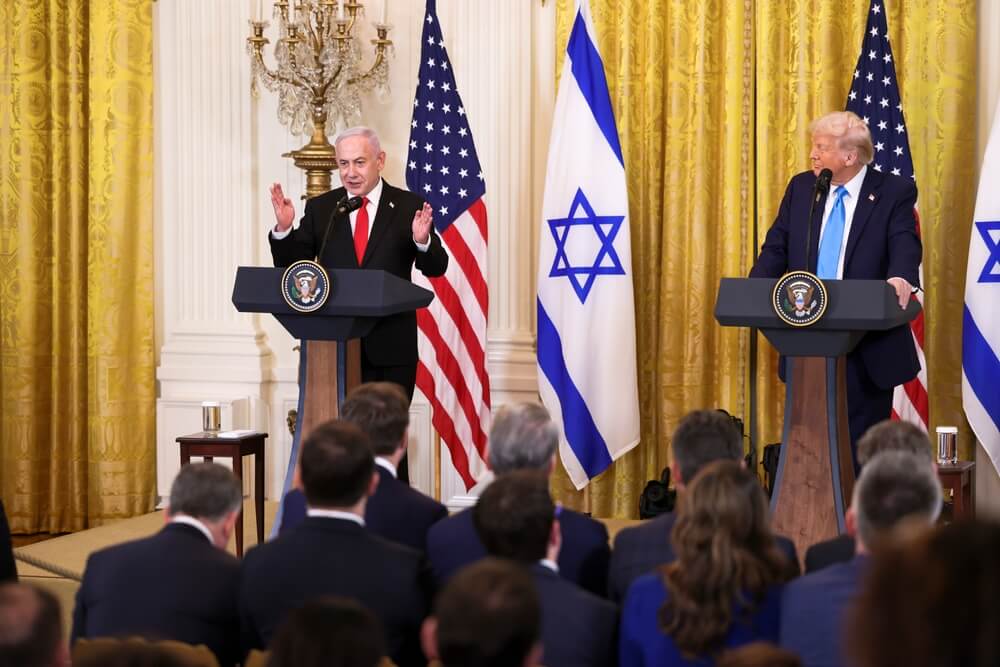 Internal political instability in Israel is starting to influence broader American calculations in the Middle East
For Washington, the problem is no longer confined to Gaza. Internal political instability in Israel is starting to influence broader American calculations in the Middle East.
An election campaign during an ongoing regional war would almost certainly drive Israeli decision-making further towards domestic political calculations.
This would complicate military operations, regional deterrence, relations with Washington, and future strategy regarding Gaza and Lebanon.
Iran and Hezbollah are observing this aspect of the situation very closely. For Tehran, the condition of the Israeli military is only one part of the picture. Political cohesion within Israel and the stability of relations between Washington and Jerusalem are equally important.
That is why elections in Israel during an active regional war would have consequences far beyond those of an ordinary domestic political change.
Israel is entering a period of political decline
The most realistic scenario in the coming months is neither a rapid collapse of the government nor a sudden stabilisation of the political system.
A more likely outcome is a prolonged period in which the government gradually weakens, internal divisions become more apparent, and coalition survival begins to shape strategic decisions more directly than earlier in the war.
That is a dangerous dynamic for a country simultaneously fighting in Gaza, confronting Hezbollah along the northern front, and remaining in direct confrontation with Iran across the region.
The war is no longer suppressing political divisions; it is deepening them
Throughout its history, Israel has generally managed to separate internal political instability from core national security decisions. The current situation is different. The war is no longer suppressing political divisions; it is deepening them.
That is the real significance of the preliminary Knesset vote.
It showed that the conflict no longer automatically unites Israeli politics behind the government. The divisions that existed before 7 October are returning, but now they are unfolding in the midst of an active regional war.
