Early this century, as India was emerging as one of the global economy’s shining stars, a shadow darkened its heartland: a violent Maoist insurgency.
For a decade and a half, the area known as the Red Corridor gradually expanded, as revolutionary communist doctrine found a receptive audience in poverty-afflicted communities.
The result was, according to former Prime Minister Manmohan Singh, “the single biggest internal security challenge” that India had “ever faced.”
India has proven to be up to the challenge. The Red Corridor has shrunk dramatically, from its 2013 peak of 126 districts to a mere 11 last year, signaling a decisive, albeit incomplete, victory for the Indian state.
Home Minister Amit Shah has declared that the “Naxalite” insurgency – named for the Bengal village of Naxalbari where it emerged in the 1960s – will be eradicated within the next few months.
India does not owe this progress to the kind of cataclysmic violence that Sri Lanka’s then-President Mahinda Rajapaksa unleashed in 2009 to defeat the Tamil Tigers, thereby ending a 40-year civil war.
Nor did it employ the brutal tactics that Peru’s Alberto Fujimori used to crush the Maoist Sendero Luminoso guerrillas in the 1990s.
Instead, India’s government devised a sophisticated strategy, which accounted for both the causes and consequences of the insurgency.
A legacy of landlessness
The story begins with a legacy of landlessness, economic deprivation, and lack of access to government services for marginalized communities, particularly the tribal (“Adivasi”) populations living in remote, resource-rich forests.
This fueled a peasant revolt against exploitative landlords, with the rebels adopting the Maoist military strategy of a “people’s war,” whereby rural “revolutionaries” draw their “enemies” into the countryside.
In 2004, the insurgency’s various factions coalesced into the Communist Party of India (Maoist), which sought to overthrow Indian democracy and establish a “New Democratic State” based on Marxist-Leninist-Maoist ideology.
Capitalizing on administrative and security vacuums in remote areas, the CPI (Maoist) offered a semblance of parallel governance in these districts and positioned itself as a protector of the oppressed against capitalist exploitation. It drew a steady stream of recruits, especially disillusioned youth.
But this “protective” agenda was often pursued through violence and financed through robbery and extortion.
In June 2009, India’s government labeled the CPI (Maoist), along with its front organizations, a terrorist entity
In June 2009, India’s government labeled the CPI (Maoist), along with its front organizations, a terrorist entity and banned the group under the Unlawful Activities (Prevention) Act.
The Maoists responded with more violence. In 2010, they carried out their deadliest-ever attack on Indian paramilitary forces, killing 74 members of the Central Reserve Police Force and two police officers in Chhattisgarh state.
Three years later, when the group was at its peak, a Maoist ambush wiped out a convoy carrying much of the same state’s Congress party leadership.
A new approach
India’s government, then controlled by the Congress-led United Progressive Alliance, knew it needed a new approach, which addressed both the security threat and the economic grievances that were fueling the insurgency.
The crackdown the UPA government initiated gained momentum after the 2014 election, when Prime Minister Narendra Modi’s new government implemented a comprehensive, multilayered strategy that accounted for both security and development.
On the security side, the government invested heavily in strengthening the capabilities of the police, delivering modern weapons, better communication tools, and specialized training for jungle warfare and counterinsurgency operations.
Moreover, the government established hundreds of new forward operating bases in previously inaccessible areas, thereby shrinking the Maoists’ “safe” zone and impeding their movement. It also targeted the Maoists’ extortion networks and other illegal revenue streams, and intensified efforts to capture or neutralize the central and regional leadership.
The government’s “iron fist” could not have worked without a “velvet glove”
But the government’s “iron fist” could not have worked without a “velvet glove”: a focused “hearts and minds” campaign comprising anti-poverty and development initiatives.
This included investment in critical infrastructure in the affected districts. Roads, bridges, and cell towers facilitate development through commerce and connectivity, and prevent the Maoists from isolating villages.
The strategy also included welfare schemes, such as subsidized food, housing, and health care, that bypassed Maoist parallel governance.
These initiatives gave once-hopeless communities, especially the Adivasi youth, a viable alternative to the gun.
Development-driven approach
Now, a large-scale insurgency has been reduced to isolated pockets of extremist activity.
The CPI (Maoist) leadership is severely degraded, and the organization is reportedly struggling with recruitment and funding.
After CPI (Maoist) Central Committee member Mallojula Venugopal Rao surrendered to the police, along with 60 of his comrades, in October 2025, he admitted that the movement had significantly underestimated the state’s power.
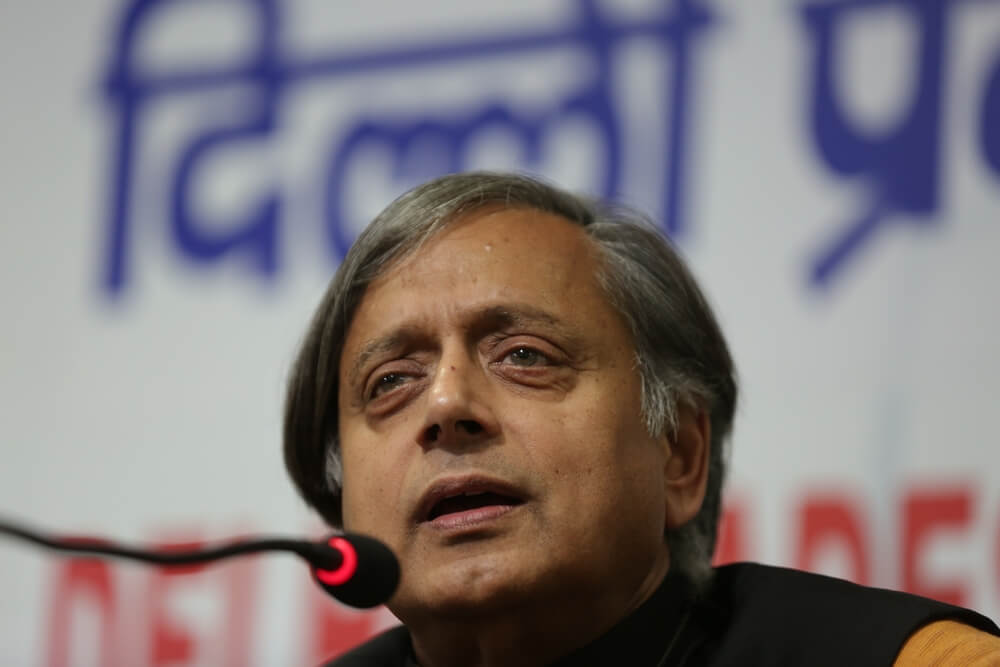 Continued progress on sustainable development, including reliable, permanent service delivery, is essential to keep the Maoists at bay - Shashi Tharoor
The armed struggle has failed, he wrote in his resignation letter; the Maoists should dissolve their militant wings, reconstitute themselves as a formal political party, and move into electoral politics.
But the battle is not over. Continued progress on sustainable development, including reliable, permanent service delivery, is essential to keep the Maoists at bay.
Furthermore, the 11 districts that remain under CPI (Maoist) influence are located in particularly difficult-to-penetrate areas, often deep within forests. Delivering services and opportunities to them will not be easy.
Ultimately, a lasting solution requires systemic change. The government must protect local claims over water, forest, and land resources.
Economic development must be redefined to respect traditional rights. And to avoid triggering fresh cycles of unrest, exploitative enterprises, whether public or private, should avoid trying to “remote-control” life in tribal areas.
India’s success in subduing the Naxalite insurgency attests to the power of a holistic and persistent development-driven approach to addressing complex internal security challenges.
The government’s final victory will be marked not by the last bullet fired, but by the day the state’s reach – in the form of schools, hospitals, jobs, and justice – becomes more reliable and compelling than any Maoist promise.
Shashi Tharoor, a former UN under-secretary-general and former Indian Minister of State for External Affairs and Minister of State for Human Resource Development, is an MP for the Indian National Congress and Chairman of the Parliamentary Standing Committee on External Affairs.
