For decades, the Indian Space Research Organization has been the crown jewel of India’s scientific establishment.
In the global space community, the ISRO is a David that regularly surpasses the world’s Goliaths.
With the Mars Orbiter Mission, known as Mangalyaan, India became the first country to reach Mars orbit in its maiden attempt, and with the Chandrayaan-3 mission, it became the first to land a lunar rover on the Moon’s south pole.
It did all this with budgets that would barely cover the marketing for a Hollywood space epic.
But over the past year, the ISRO’s storied record has been overshadowed by three high-profile mission failures, including two consecutive launch failures for the Polar Satellite Launch Vehicle (PSLV).
For a program built on the twin pillars of “frugal innovation” and “unshakeable reliability,” this is more than a technical setback; it is a reputational crisis, which threatens India’s position in a crowded commercial market.
The PSLV has been the workhorse of India’s space program for nearly 30 years. It carried India to the Moon and Mars, and has successfully deployed nearly 400 foreign satellites, earning India a lucrative slice of the global launch market.
But recent anomalies in the third stage during the PSLV-C61 (May 2025) and PSLV-C62 (January 2026) missions resulted in the loss of Earth-observation and strategic satellites.
A robust system of satellites
These mishaps might partly reflect a growing gulf between the ISRO and its original mission.
At its inception, India’s space program was grounded in the needs of India’s people.
By harnessing satellite technology for development the program would transform lives, power the economy, and redefine India’s place in the world
By harnessing satellite technology for development, the logic went, the program would transform lives, power the economy, and redefine India’s place in the world.
The ISRO delivered on this vision, building a robust system of satellites that became a lifeline for millions of Indians.
The Indian National Satellite System and, later, the Geosynchronous Satellite series brought connectivity to remote villages, enabling telemedicine for underserved populations and remote learning for students who might otherwise be left behind.
In the fields of Punjab and Tamil Nadu, farmers use data from Earth-observation satellites like Resourcesat to monitor crop health and manage water resources.
During cyclone season, early warnings from ISRO satellites help evacuate vulnerable communities and save lives. This is space technology with its feet firmly planted in everyday life.
India reduced its dependence on foreign technology
The space sector further bolsters the economy by employing thousands of scientists, engineers, and technicians, and indirectly supports countless others in industries ranging from manufacturing to software development.
Studies show that this sector contributes billions of dollars to the Indian economy, not just through direct value addition, but by boosting productivity in sectors that rely on satellite data.
India’s space program was advancing Prime Minister Narendra Modi’s “Atmanirbhar Bharat” (Self-Reliant India) vision long before Modi rose to power.
By developing its own launch vehicles, like the PSLV, India reduced its dependence on foreign technology
By developing its own launch vehicles, like the PSLV, India reduced its dependence on foreign technology.
This spurred broader innovation, helping to create a thriving ecosystem of startups, private companies, and research institutions.
Moreover, launches of foreign satellites by the ISRO’s commercial arm, NewSpace India Limited, have generated significant revenue and showcased India’s spacefaring prowess.
India has emerged as a reliable, cost-effective player in the global space market, proving that frugality and excellence can go hand in hand.
India’s achievements have given it diplomatic leverage, enabling it to engage with superpowers as an equal partner in space exploration and research.
As missions like Mangalyaan and Chandrayaan-3 elevate India on the world stage, they also inspire a generation of young Indians to dream bigger, to believe they can compete with the best, and to pursue careers in science and technology.
Strategic reset
But recent stumbles suggest that the ISRO’s growing ambition – including the pressure to commercialize innovations rapidly, advance prestige programs, and send Indian astronauts into space – is straining quality control and supply chains.
The problem comes down partly to resources: the budget with which India managed to deliver its past achievements was impressive precisely because it was a major constraint.
As space – once a theater for scientific curiosity or a platform for advancing development objectives – becomes the ultimate high ground for national security, this constraint is becoming impossible to ignore.
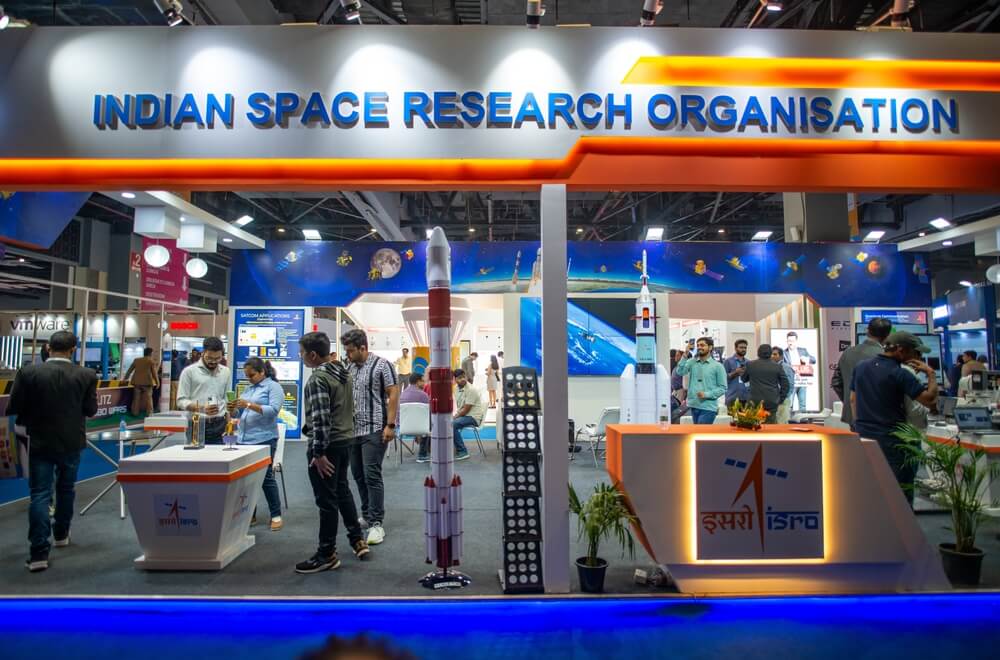 The ISRO must conduct a thorough review of production quality and testing protocols for the PSLV, in order to ensure that India remains the launch provider of choice
The figures paint a stark picture. Today, India spends approximately $2 billion annually on space, compared to China’s $16 billion and the United States’ $25 billion.
And whereas India currently operates roughly 21 active observation satellites, China operates more than 1,000, 250 of which are dedicated defense satellites.
Compounding the challenge, China helped launch four satellites dedicated to Pakistani use last year, and the two countries signed a $406 million deal in September for 20 more.
Meanwhile, the recent mission failures are casting doubt on India’s target of launching 60 satellites within five years.
Low launch frequencies and long turnaround times have also been undermining India’s competitive advantage.
India’s share of the launch market for small satellites stood at 35% in 2017 but plummeted toward zero by 2024, as more agile international players captured burgeoning demand while the ISRO was distracted by prestige projects.
A strategic reset is urgently needed. The ISRO must conduct a thorough review of production quality and testing protocols for the PSLV, in order to ensure that India remains the launch provider of choice.
At the same time, there is a clear need for enhanced clarity on space policy, including the pursuit of defensive military space capabilities.
India’s space program is not a luxury; it is a critical tool for development, a catalyst for innovation, a pillar of security, and a source of national pride.
Fortunately, the ISRO has overcome challenges before, and its technical depth remains indisputable.
By honing its focus and bolstering its resources, India can ensure that its “eyes in the sky” remain sharp, and the ISRO’s hard-earned glory is restored.
Space might be the final frontier, but for India, it is also the next chapter in a story of national transformation.
Shashi Tharoor, a former UN under-secretary-general and former Indian Minister of State for External Affairs and Minister of State for Human Resource Development, is an MP for the Indian National Congress and Chairman of the Parliamentary Standing Committee on External Affairs.
