Within a few hours yesterday, the global economy received two conflicting assessments.
The International Monetary Fund lowered its growth projection for 2026 and warned that an escalation of the conflict involving Iran could push the global economy towards a level already considered recessionary.
Almost simultaneously, the US Department of the Treasury stated that the US economy could maintain growth above three per cent, arguing that its internal structure is strong enough to absorb external shocks.
This is not a dispute about numbers; it is a clash of two logics.
Two reports, same day, opposing conclusions
One view holds that the global economy is a system in which a disruption in one area inevitably produces consequences everywhere. The other assumes that the world's largest economy can insulate itself sufficiently to withstand the shock without a serious slowdown.
Under normal circumstances, these perspectives can coexist. In the context of a war directly affecting energy infrastructure and key trade routes, the difference becomes crucial.
In its World Economic Outlook report published on 14 April, the IMF outlined three scenarios. In the baseline scenario, which assumes a brief conflict and moderate energy price growth of 19 per cent, global growth declines to 3.1 per cent in 2026, down from the 3.3 per cent forecast in January and well below the 3.5 per cent recorded in 2025.
In the adverse scenario, growth drops to 2.5 per cent. In the most severe scenario, which assumes prolonged supply disruptions, global growth falls to 2.0 per cent – a level reached only four times in post-war history and considered in economic literature as the threshold of global recession. In that case, global inflation exceeds 6 per cent.
This is not a short-term shock that can be resolved by additional oil volumes from other regions
The Iran-related war has already caused a disruption that cannot be dismissed as a mere cyclical shock. The Strait of Hormuz, through which a fifth of the world's oil trade and a significant portion of liquefied gas pass, no longer functions as a stable artery of the global economy.
Even a partial blockade or the constant threat of attacks is sufficient to alter market behaviour. Energy prices are rising not only due to physical shortages but also because of increased risk. That risk is factored into the price of every delivery, every insurance policy, and every contract.
Transport through the Persian Gulf has become more expensive and uncertain. Insurance premiums for tankers have increased significantly.
Supply chains, which had only just stabilised after the pandemic and the war in Ukraine, are once again entering a period of renewed instability and disruption.
This is not a short-term shock that can be resolved by additional oil volumes from other regions. It is a change in the regime under which global trade operates.
When the strait closes, everything becomes more expensive
The figures confirm this with brutal precision. Before the conflict began, the war insurance premium for tanker passage through the Strait of Hormuz ranged from 0.02 to 0.05 per cent of the ship's value.
By mid-March 2026, that premium had risen to 5 per cent of the ship's value, meaning it now costs $5 million to insure a $100 million tanker for a single passage. This is an increase of more than one hundred times compared to the long-term peacetime level.
The charter price for a VLCC-class supertanker on the Middle East to China route reached a record $423,736 per day
Lloyd's Market Association expanded the list of high-risk zones to include the entire Persian Gulf, automatically triggering mandatory additional premiums and forcing P&I clubs to cancel standard war cover.
The charter price for a VLCC-class supertanker on the Middle East to China route reached a record $423,736 per day – more than double the level just before the war and five times higher than in January 2026.
Figures that speak for themselves
In such an environment, the assessment by the International Monetary Fund appears cold and technically consistent. Their analysis begins with interdependence.
Energy is not merely a commodity; it is an input cost for almost every economic activity. When its price rises, the effect does not stop at petrol stations. It is transmitted through production, transport, food prices, and ultimately through inflation, which reduces real consumption.
The IMF projects global inflation at 4.4 per cent in 2026, an increase of 0.6 percentage points compared to the January forecast
The IMF identifies in this dynamic something political institutions often underestimate – a cumulative effect. Higher energy prices reduce consumption. Lower consumption reduces production. Declining production reduces investment.
Meanwhile, central banks remain under pressure to keep interest rates elevated to curb inflation. The result is not a dramatic collapse, but a prolonged slowdown that erodes the foundation of growth.
The IMF projects global inflation at 4.4 per cent in 2026, an increase of 0.6 percentage points compared to the January forecast. Goldman Sachs estimates that every 10 per cent rise in the price of oil reduces global GDP by 0.1 percentage point. With oil prices up more than 50 per cent since the start of the war, the American economy cannot ignore this calculation.
Why America is not an island
The American assessment arises from a different experience. Over the past ten years, the United States has shown an ability to absorb external shocks.
Energy transformation has made it one of the largest oil and gas producers. The labour market has remained stable, despite aggressive interest rate increases. Fiscal capacity has enabled swift, large-scale interventions when necessary.
These experiences should not be overlooked. However, the problem arises when the conclusion is drawn that the same logic applies to every crisis.
The energy "independence" of the United States does not mean it is isolated from the global market. The price of oil is determined globally, not in Texas.
If risk in Hormuz raises the price of a barrel, the American economy pays the price as much as others. The difference lies in the degree of dependence, not in the exposure itself.
The average retail price of petrol in the US has increased from $2.98 per gallon on 28 February, the day US and Israeli strikes on Iran began, to $4.11 per gallon at the time of this report.
This is a rise of nearly 38 per cent in less than six weeks. For a consumer who does not read financial statements, this change is more noticeable and significant than any macroeconomic projection.
More importantly, American growth is not confined to national borders. The profits of large companies depend on global demand. If Europe and Asia are slowing due to the energy shock, this affects the US through weaker exports, lower incomes, and pressure on stock markets. In such circumstances, strong domestic consumption can moderate the decline but cannot fully offset it.
Alternative pipeline capacity in Saudi Arabia and the UAE can accommodate only about three million barrels per day
The third channel, often underestimated, is financial. The war in the Gulf is already affecting capital flows. The dollar is strengthening as a safe haven, which stabilises the American economy in the short term.
In the long term, however, a stronger dollar reduces export competitiveness and increases pressure on developing economies. When these economies come under stress, the effects reverberate throughout the global financial system.
The geopolitical consequences are unevenly distributed. The IMF has reduced the growth forecast for the Middle East and Central Asia by two percentage points, to just 1.9 per cent.
Iran faces a downward revision of 7.2 percentage points, with a projected GDP decline of 6.1 per cent in 2026. Saudi Arabia, whose forecast was cut from 4.5 to 3.1 per cent, paid part of the price through an attack on its oil infrastructure, which lowered production capacity by about 600,000 barrels per day.
The eurozone is experiencing a further slowdown, with the growth forecast for 2026 at only 1.1 per cent, compared to 1.4 per cent in 2025.
Behind these figures lies a concrete calculation: Bahrain, Iraq, Kuwait and Qatar have no alternative energy export corridor. All their energy exports pass through the Strait of Hormuz.
Alternative pipeline capacity in Saudi Arabia and the UAE can accommodate only about three million barrels per day, meaning that with a full blockade, 85 per cent of the Gulf's 20 million barrels per day of exports would be trapped.
Unequal price of the same war
At this point, American optimism loses its firm foundation. It assumes the shock can be contained and that the rest of the world will absorb most of it, while the United States maintains steady growth due to its own structure.
This assumption made sense in the past during regional or financial crises. However, when the basic flow of energy is disrupted, it becomes increasingly unsustainable.
History provides a clear parallel. During the oil crises of the 1970s, Western economies initially believed the shock was temporary. This was followed by a period of high inflation and weak growth occurring simultaneously.
Today, the global economy is more complex and reacts more quickly, but the basic dynamics remain unchanged. When energy becomes the limiting factor, growth loses its stable foundation.
There is also a dimension rarely mentioned in macroeconomic reports, but economically just as important: the psychological effect on investment decisions.
The difference between previous similar crises and the current situation lies in the speed at which effects are transmitted
When companies perceive energy volatility as a permanent rather than a temporary feature of the business environment, they change their behaviour.
They postpone capital expenditure, freeze expansion plans, and shorten contracts for long-term deliveries or tie them to sliding energy clauses.
This effect may not be immediately visible in official statistics, but it is clearly reflected in falling investment surveys and slowing industrial activity – always before GDP figures confirm it.
The difference between previous similar crises and the current situation lies in the speed at which effects are transmitted. Supply chains are more deeply integrated, financial markets react in real time, and political room for manoeuvre is more limited. As a result, consequences do not drag on for years but accumulate much more rapidly.
Markets are currently choosing to believe the more optimistic outlook. Stock markets recover on news of possible negotiations and de-escalation.
This is a familiar pattern: markets discount the best possible scenario, as this is the only way to maintain liquidity and confidence. The problem arises when that scenario does not occur.
At present, the basic parameters of the crisis remain unchanged. Energy is expensive. Transport is risky. The political framework is unstable. These are not conditions in which the economy accelerates spontaneously.
Three questions determine the outcome
The issue of who is right between the International Monetary Fund and the US Department of the Treasury will not be resolved in theory. The answer will be revealed by developments in the coming months. Three factors will be crucial.
The duration of the conflict determines the depth of the shock. A short war allows recovery, while a prolonged conflict turns disruption into the new normal.
The status of the Strait of Hormuz determines energy prices. Stabilising traffic restores the market to a predictable framework. Prolonged volatility keeps prices high regardless of increased production.
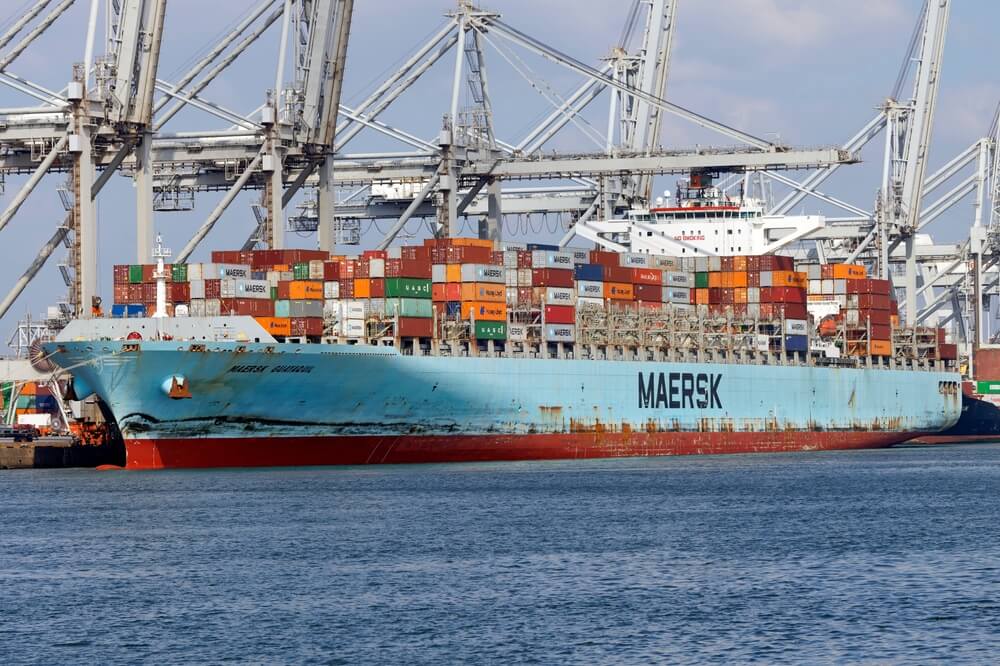 When logistics giants withdraw from the region, the consequences are not only operational; they reshape global trade flows in ways that cannot be quickly reversed
The response of central banks determines the scope for growth. If inflation remains elevated, interest rates remain high, and investments are under pressure.
Another factor cannot be ignored: the non-linear nature of market adjustments. Companies such as Maersk, MSC, Hapag-Lloyd, and CMA CGM have already suspended acceptance of cargo to and from the UAE, Oman, Iraq, Kuwait, Qatar, Jordan, Bahrain, and Saudi Arabia.
When logistics giants of this scale withdraw from the region, the consequences are not only operational; they reshape global trade flows in ways that cannot be quickly reversed, even after the formal end of the conflict.
Markets may react to a ceasefire, but supply chains respond more slowly. The difference between these speeds is the space in which crises become structural changes.
The most realistic scenario does not favour either narrative in its purest form. Global growth is likely to remain below levels considered healthy. Inflation will be more persistent than markets expect. Investments will be delayed, and markets will remain volatile.
In such an environment, the US economy may appear more resilient than others. However, resilience is not the same as steady growth. The distinction between the two becomes crucial when assessing the future.
The essence of the problem is not that one side is wrong about the numbers. The bottom line is that one side assumes the system functions as a whole, while the other assumes key parts of the system can be isolated.
If the basic disruption – energy – is not stabilised, optimism ceases to be an economic assessment and becomes a political message. Political messages have a limited shelf life when they collide with real market movements.
The answer is simpler than it appears: a more accurate assessment considers the real limitations – expensive energy, disrupted transport, and unstable markets. Anything that ignores these factors will quickly prove to be a misjudgement.
