For decades, France’s nuclear doctrine rested on a disciplined premise: deterrence from sanctuary.
The force de frappe was conceived as a sovereign, centralised capability anchored within national territory, its credibility derived from survivability, strategic ambiguity, and the certainty of presidential control.
That model, shaped during the Cold War and refined thereafter, is now undergoing its most consequential evolution in decades. Forward deployment has entered French nuclear thinking.
This shift is not rhetorical; it reflects a structural reassessment of Europe’s strategic environment.
Russia’s sustained nuclear signalling, combined with growing uncertainty about the durability of US extended deterrence, has forced European capitals to confront a basic question: how deterrence must function in practice, not just in theory.
In that context, France is moving from a posture defined by distance to one increasingly defined by presence.
Circumstantial deployment
At the centre of this evolution is what French strategists deliberately describe as “circumstantial deployment.”
The term is precise. It avoids the political and doctrinal implications of permanent basing while enabling operational flexibility.
Under this model, nuclear-capable assets – primarily air-delivered systems – would be deployed temporarily on allied European territory during periods of crisis.
There is no transfer of ownership, custody, or control. These assets remain French. Only their location changes.
France’s approach differs not in who decides – both systems are strictly national – but in how deterrence is projected
This distinction is essential. Within NATO, allied territory provides basing and infrastructure for US nuclear forces, but authority remains exclusively American.
The decision to employ nuclear weapons rests solely with the President of the United States, as it does with the President of France; there is no sharing of launch authority or nuclear codes.
In practice, US nuclear weapons in Europe are delivered by US forces, even where allied infrastructure is integrated into the broader deterrence posture.
France’s approach differs not in who decides – both systems are strictly national – but in how deterrence is projected.
Paris is extending a sovereign capability outward without embedding it in an alliance nuclear structure.
The operational logic
The operational logic is straightforward. A deterrent confined to national territory is inherently predictable.
Predictability simplifies targeting. Dispersal, by contrast, complicates adversary calculations, enhances survivability, and reinforces second-strike credibility.
This is not new; it is Cold War logic adapted to a different geography and a different alliance framework.
In practice, forward deployment will rely on France’s airborne nuclear component.
At its core is the Dassault Rafale, a twin-engine multirole platform operated by both the French Air and Space Force and the French Navy, and already central to France’s air-delivered deterrent.
Rafale can deploy rapidly, reposition across theatres, and withdraw without the permanence associated with fixed basing
Equipped with nuclear cruise missiles, advanced sensors, and electronic warfare systems, it offers flexibility, mobility, and signalling value.
It can deploy rapidly, reposition across theatres, and withdraw without the permanence associated with fixed basing.
The next step is the Rafale F5 configuration. This is not a routine upgrade but a structural transformation.
The F5 will operate within a mature C7ISR architecture – Command, Control, Communications, Computers, Cyber, Combat Systems, Cognition, and Intelligence, Surveillance and Reconnaissance – in which sensors, unmanned systems, weapons, and command authority are integrated into a single operational loop.
Not simply geographic repositioning
Forward deployment, in this context, is not simply geographic repositioning; it is the extension of a fully integrated strike ecosystem across a dispersed battlespace.
The aircraft will operate alongside lethal, low-observable unmanned combat systems – stealth loyal-wingman platforms designed for penetration, strike, electronic warfare, and forward sensing.
These systems extend reach and survivability while reducing exposure of the manned platform. The result is not just mobility, but resilience under contested conditions.
These capabilities are operated by the Forces Aériennes Stratégiques under direct presidential authority
On the nuclear side, the Rafale currently carries the ASMPA – Air-Sol Moyenne Portée-Amélioré, the improved medium-range air-to-surface nuclear cruise missile that forms the backbone of France’s airborne deterrent.
This will transition to the ASN4G, a fourth-generation system designed to restore penetration against advanced air and missile defences.
These capabilities are operated by the Forces Aériennes Stratégiques under direct presidential authority.
This evolution underscores a broader reality often obscured in European debates.
Preventive dimension
France is the only truly independent nuclear force in Europe and the only nuclear power within the European Union.
It is also the only European state to maintain a dual delivery architecture, combining an airborne component with a continuous at-sea deterrent maintained by the Force océanique stratégique.
This structure provides both visibility and flexibility through air power, and survivability through a submarine-based second-strike capability.
The United Kingdom, by contrast, relies on a single delivery platform. Its deterrent is entirely sea-based, centred on submarine-launched ballistic missiles carried aboard its SSBN fleet and built around the Trident II D5, sustained through a deeply integrated technological relationship with the United States.
Traditional deterrence has been reactive, with forces postured in response to escalating crises
In both cases, decision-making remains strictly national. The difference lies in structure and autonomy.
France controls the entire spectrum of its nuclear enterprise – from warhead design to delivery systems to operational doctrine – while maintaining a broader and more flexible force architecture.
Timing is equally critical. Traditional deterrence has been reactive, with forces postured in response to escalating crises. The emerging French approach is more anticipatory.
Forward deployments can occur before a crisis peaks, shaping perceptions earlier and influencing escalation dynamics before they harden. This introduces a preventive dimension to deterrence.
Not a replacement for the US, nor a challenge to NATO
The European implications are significant. France has long asserted that its vital interests extend to Europe. Forward deployment operationalises that claim.
By positioning nuclear-capable assets on allied territory, France extends the physical reach of its deterrent without creating a formal European nuclear force.
The result is a European deterrence effect rooted in French sovereignty.
Reactions will differ. Frontline states such as Poland are likely to view this as a necessary reinforcement of deterrence credibility.
Others, including Germany, will approach it cautiously, mindful of domestic sensitivities and alliance dynamics.
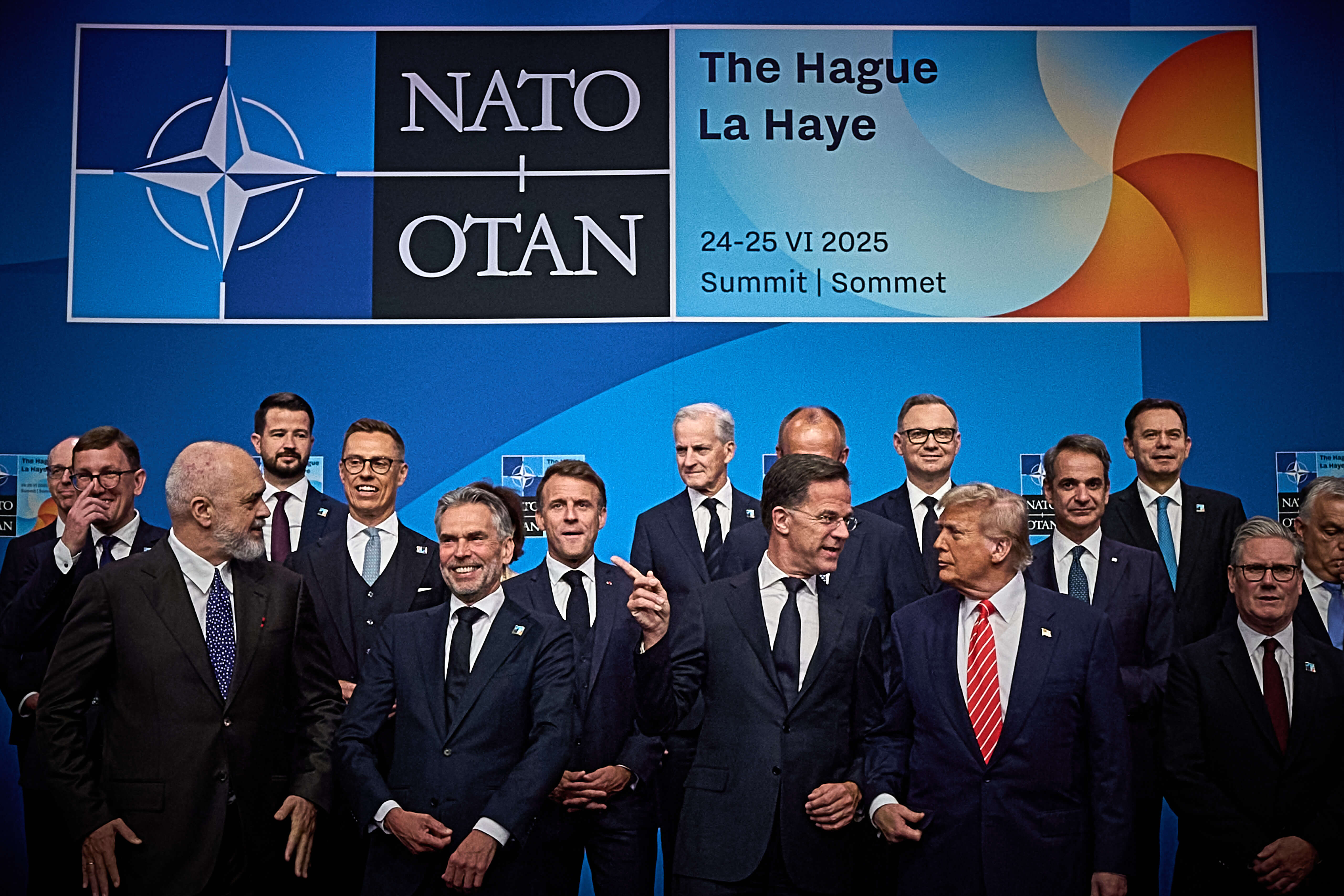 As the transatlantic relationship evolves, France is positioning itself as a central pillar of European nuclear credibility
Yet the underlying logic is increasingly difficult to ignore: a deterrent that can move can adapt.
France is attempting to implement this shift without causing destabilisation. By avoiding permanent basing and retaining full control, it limits both political backlash and escalation risks.
The objective is a calibrated presence – visible enough to signal resolve but not entrenched enough to provoke.
There is also a broader strategic dimension. As the transatlantic relationship evolves, France is positioning itself as a central pillar of European nuclear credibility.
This is not a replacement for the United States, nor a challenge to NATO. It is an effort to ensure that Europe retains an autonomous layer of deterrence should external guarantees become less certain.
The risks remain real. Dispersal increases survivability but introduces operational complexity. Command-and-control systems must function across multiple locations. Host-nation infrastructure must meet stringent requirements. Political consensus must be sustained. Above all, clarity must be preserved. Deterrence depends on being understood.
Yet the trajectory is clear. France is no longer relying solely on deterrence from sanctuary. It is adapting to a strategic environment in which geography, technology, and timing are inseparable.
Ultimately, the shift is simple but profound: from a deterrent defined by its location to one defined by its potential deployment. This change reshapes both credibility and perception.
For Europe, it marks a shift towards a more resilient and self-reliant security architecture. For France, it is the next phase in the evolution of its force de frappe – sovereign but no longer confined.
Dr Nawaf Obaid is a Senior Research Fellow at the Department of War Studies, King’s College London.
