On 11 December, the European Union adopted an agreement that changes how the entry of foreign capital into sensitive sectors will be assessed in the future.
The European Parliament and the Council have agreed on a new framework for the control of foreign direct investments, which for the first time obliges all member states to apply a single system for checking investors in areas important for the security and stability of the Union.
What operated for years as a set of partial rules is now becoming a shared framework binding all 27 member states.
This point was not reached by accident. The 2019 regime was a compromise from a time when it was believed that the global economy would remain open, that technological dependence was a tolerable price for efficiency, and that political risks would remain the exception rather than the rule.
The last five years have shattered all these assumptions. The European Union discovered during the pandemic what it means to have critical industries dependent on imports from a single country. The war in Ukraine showed how economic relations affect security.
Advances in artificial intelligence, quantum technologies, and semiconductors have raised the question of who actually controls the infrastructure on which modern states depend.
Eliminating fragmentation in the screening system
The new regulation is designed to eliminate fragmentation within the system. Each member state must establish a national screening mechanism – there is no longer an option for the state to postpone this work or leave it to the "market".
At the same time, for the first time, the regulation precisely defines what must be subject to supervision.
The focus is no longer limited to the energy or military industries but is expanding to technological areas where dependency can have long-term consequences.
Artificial intelligence with high capabilities, quantum technologies, and semiconductors now formally fall into the category whose transfer under the control of third countries must be verified.
The same applies to critical raw materials, digital networks, transport systems, and election-related infrastructure. Thus, the continuity of democratic processes is treated as seriously as the security of energy networks.
One of the key changes concerns the identification of the real investor. Previous practice could easily conceal the ultimate owners behind companies registered in the European Union.
The new regime requires much greater transparency
The new framework introduces an obligation to examine the control and ultimate ownership structure, not just the formal address.
This means that an investment that, on paper, comes from the EU but is controlled by an entity from a third country will be treated as foreign capital and undergo the same checks.
Such an approach reduces the scope for circumventing the regime and complicates attempts to enter sensitive sectors through intermediary firms.
The change is also seen in how member states work with each other and the European Commission. The new regime requires much greater transparency.
States are obliged to exchange information, respond to the objections of other members, and justify actions that deviate from recommendations. The Commission still is not entitled to veto individual decisions, but it assumes the role of guardian of uniform practice.
Subtly, the focus shifts: the national decision stays at the national level, but it integrates into the European supervisory framework, thereby attracting wider scrutiny for every extremely risky transaction.
Investors preparing for a stricter screening environment
The statistics demonstrate the scale of the ongoing process. According to the latest annual reports, the number of reported transactions is increasing each year.
In 2023, 1,808 cases were recorded as having passed through the national systems. A year later, this number reached 3,136.
Although most of these deals get approved without conditions, the fact that the number of considered transactions has nearly doubled indicates that investors are preparing for a stricter environment and that states are increasingly scrutinising risks that were not previously part of formal procedures.
The new framework requires that any entry be analysed through the lens of security, supply chain stability, and host country resilience
This shift is altering the nature of the European Union's relationship with countries whose capital is deeply involved in European technologies and infrastructure.
The documents do not explicitly mention any country, but everyone familiar with the issue knows that the regime primarily refers to China, whose technological and industrial capacities have the potential to influence strategic sectors in Europe, as well as Russia, whose presence in critical infrastructure is no longer regarded as benign.
The new framework does not block such capital in advance but requires that any entry be analysed through the lens of security, supply chain stability, and host country resilience.
Stronger security policy or continued fragmentation?
What will be crucial in the coming months is how member states implement the new rules.
Some have a strong interest in maintaining the flow of foreign investment, especially in sectors where there is no domestic alternative. Others prioritise risk mitigation and seek robust mechanisms that eliminate political calculations.
The balance between these approaches will determine how much the new regulation will truly strengthen the unified European security policy and how much it will remain an area where the interests of member states diverge.
Investors who do not incorporate these factors into their strategy will no longer be able to rely on a swift process
For investors, the way they enter the Union market will change. The new regime means longer assessments, stricter verification of ownership structures, and a greater likelihood that transactions will be subject to obligations related to data protection, infrastructure localisation, or restricted access to certain network segments.
Investors who do not incorporate these factors into their strategy will no longer be able to rely on a swift process.
This may reduce the number of certain investments, but it will also increase the cost of political risk for all those seeking to acquire positions in sectors that determine long-term technological and security development.
The era of unlimited open markets has ended
The central issue raised by this agreement is not legal but political. With this move, the European Union acknowledges that the era of unlimited open markets for strategic sectors has ended.
It is not about closing borders but about establishing a mechanism to prevent key parts of European digital, energy, industrial, or electoral infrastructure from being controlled by actors whose interests may conflict with those of the Union.
This regulation will also test the maturity of the European political class
At the same time, a clear obligation is introduced to ensure that decisions are not made behind closed doors in national cabinets but transparently and with the opportunity for the rest of the Union to respond.
This regulation will also test the maturity of the European political class. If the new procedures are applied sensibly, with clear criteria and consistent enforcement, Europe will gain a protection system suited to a reality in which geopolitical risks permeate every aspect of the economy.
If it becomes an instrument for national interests, slow procedures, or political signals from outside, it will lose its effectiveness and purpose.
A shared procedure that applies in every member state
Europe can no longer afford to leave strategic sectors to market inertia. The 11 December deal ends the rule-free period and ushers in an era in which security and the economy are considered together.
This does not mean the Union will become a closed market or stop attracting capital. It means only one thing: key technologies, infrastructure, and data will no longer be treated as a secondary aspect of economic development.
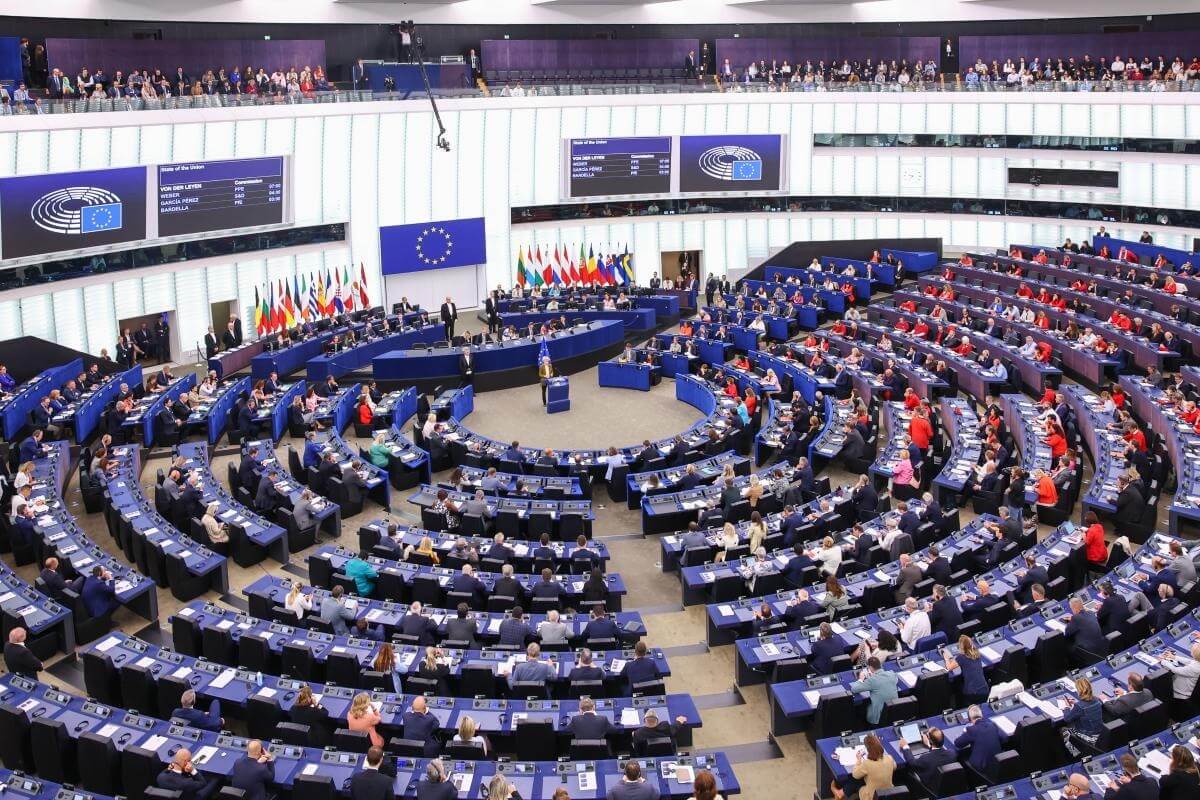 The 11 December deal ends the rule-free period and ushers in an era in which security and the economy are considered together
The new regulation achieves what the previous regime could not: it establishes a shared procedure that applies in every member state and binds all actors wishing to invest in sectors of special importance.
This ends the period in which the same type of transaction could be rigorously scrutinised in one country but almost ignored in another.
From now on, all key investments will be evaluated according to the same rules and under the same supervisory framework.
This does not mean all decisions will be identical – each state retains the right to assess individual cases – but the decision-making process will ultimately be based on a shared foundation.
The first practical cases under the new regime will demonstrate how consistently members use the framework and whether it accommodates investors who have relied on differing national practices for years.
For the EU, this marks a shift from an uneven and often reactive policy to a system that enables all significant transactions to be monitored promptly and according to predetermined rules.
This provides states and investors with predictability and mitigates the risk of making decisions with long-term consequences without broader European oversight.
