The European Union’s controversial new Pact on Migration and Asylum is set to come into force mid-June but is unlikely to calm Europe’s ever more strident debate on the issue.
Even after a two-year implementation process, it is widely anticipated to be a bumpy and uneven ride, with some member states lagging behind on the legal framework and almost all failing to have the logistical infrastructure in place.
Particularly what is in effect a new detention regime – for arrivals from countries deemed safe or for those who come via safe third countries – is likely to cause upheaval.
A new ‘solidarity’ mechanism between EU members is also expected to add to the tensions, as is the prospect of police forces carrying out US ICE-style raids on migrants and those who shelter them.
Fear of the latter has not been helped by the European Commission and Parliament this week agreeing on a slew of measures to ensure more coordinated and expedited procedures to expel those staying without authorisation.
The agreement also covers controversial ‘return hubs’ in third countries outside the EU, based on the already failed British Rwanda and struggling Italian Albania models.
The new rules, that still have to be finalised into EU law, are said to complement the Migration Pact, which itself is far from being ready for implementation.
The ‘fiction of non-entry’
Despite a constant political anti-migration drumbeat and massive EU transition funds totalling some €14 billion having been available over the last few years, detention and new border facilities are either inadequate or not even ready yet.
NGOs and migrant rights groups are pointing at already severely overcrowded ‘prison-like’ centres in Greece. Italy is racing to build detention facilities after its plans to process refugees in Albania were repeatedly held up by the courts.
And Spain for a long time pretended it would be able to get away with a different regime but is now also rushing to build detention facilities.
Rather than help calm the migration debate in Europe, the new rules are already enflaming both anti-migrant sentiments and those more focused on human rights.
There’s a reasonable case to make that the 12-week fiction of non-entry will in effect serve more as a deterrent than as a real obstacle to entry
An unprecedented expansion of the ‘fiction of non-entry’ concept is a prime candidate for both ridicule and more serious critique. It is the immediate reason for the detention regime under the new rules.
People deemed to have little chance of being allowed to enter the asylum process are treated as if they have not entered the EU during a maximum 12-week vetting process.
While this might raise human rights concerns on the left, what happens after the 12 weeks –should the vetting process not have been completed in time – will raise howls of protest from the right: the person is then allowed to ‘enter’ the EU as before.
Given the already overcrowded existing detention, or border reception, centres and the overwhelmed vetting system, there’s a reasonable case to make that the 12-week fiction of non-entry will in effect serve more as a deterrent than as a real obstacle to entry.
The problem of repatriation
Another expected snag to the Pact being effective is the problem of repatriation, which will remain almost as unlikely as it is at the moment, despite the new rules that have just been agreed.
Currently, return rates for those refused permission to stay hover between 20 to 30 per cent. New measures to enforce compliance from countries of origin and third countries as well as a better-integrated EU wide system are expected to consolidate this at the higher end of that range but not much further.
Thus, many of those refused entry after the initial 12-week period will have to be allowed in if they’ve not been repatriated after a further 12-week removal period.
Many core countries have re-introduced some form of border checks over the past couple of years amid domestic anti-migration pressure
Many core countries in the EU’s Schengen free-travel zone, such as Germany, France, Italy, the Netherlands and Austria, have re-introduced some form of border checks over the past couple of years amid domestic anti-migration pressure.
This has partly been justified by concerns in the run-up to the implementation of the Migration Pact.
They have now all extended these measures to late 2026 or beyond in anticipation of the effects of the Pact, partially because they fear previously detained migrants will quickly seek to move on once released.
The new ‘solidarity’ principle
The pressures on national governments are not likely to decline, rather the opposite. Across the bloc, anti-migration parties are increasing their share of the vote, in some cases, such as Germany’s AfD, dramatically.
Even in Hungary, where the right-wing, illiberal Viktor Orbán has just been unseated by the equally nationalistic but currently less illiberal Péter Magyar, the EU Migration Pact plays a part in local politics.
 Peter Magyar is under domestic pressure to prove that he has not compromised Hungary’s stance
Under Orbán, Hungary was fined for not adhering to the EU’s rules for allowing asylum requests.
Under the new rules, if countries refuse to accept their share of asylum seekers, rather than a fine, governments can opt either to pay a ‘solidarity’ contribution or contribute operational resources for border management.
Still, Magyar is under domestic pressure to prove that he has not compromised Hungary’s stance in exchange for the European Commission last week finally releasing €16 billion in frozen funds for the country.
There are more countries, particularly in Eastern and Central Europe, that are set to continue refusing refugees under the EU’s solidarity principle and thus opt for financial or material contributions, possibly defusing a narrative of ‘being forced’ to accept migrants.
The most effective tool
Like so much EU legislation, the Pact is intended to catch up to a reality that has been around for some time. In this case, the relative free flow of people in the EU and especially the Schengen zone, as well as the geopolitical, economic and climate factors that drive migration.
For more than a decade, up to the present and in all likelihood into the foreseeable future, the bloc’s main way of dealing with migration pressures has been to pay third countries around the Mediterranean to help prevent arrivals.
EU Migration Pact is still the most effective tool the EU has at its disposal
This is still the most effective tool the EU has at its disposal, despite the humanitarian and political costs of dealing with often less than savoury regimes that care little for the wellbeing of those they detain and that can use their compliance as leverage against the bloc.
There’s very little prospect of the EU Migration Pact and the newly agreed rules changing that equation.
Other possibilities, such as offering safe, regulated asylum avenues from countries of origin or third countries, are equally unlikely to make much of a dent in the numbers when circumstances drive new waves of people towards Europe.
Deep cracks in existing societies
The Migration Pact might have been predicated on the idea that it’s better for everyone involved, including rejected asylum seekers, if they were processed and then repatriated or expelled quickly rather than spend years in limbo.
In effect, it has become a political tool to try to appease a population increasingly manipulated into anti-migration feelings that have little basis in reality.
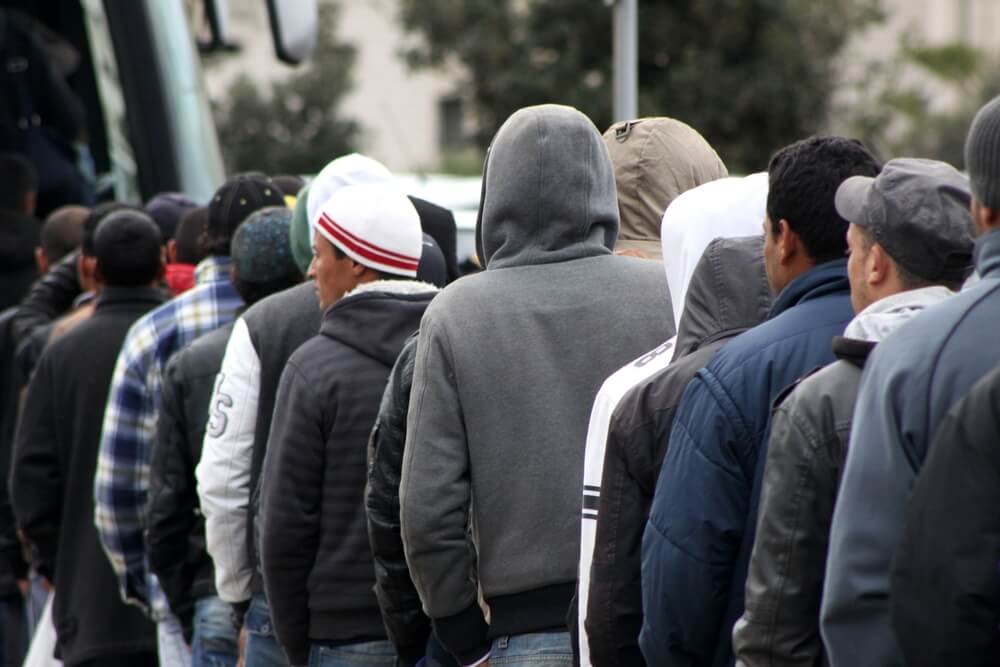 Approximately 1 million asylum applications the EU receives annually are insignificant compared to the bloc’s population of over 450 million
There’s more chance of the Pact adding to the fuel for populism than it helping to calm the debate.
That is mainly because the whole migration issue is taking place on several false premises. The main one being that the European populations are only mainly angry with newcomers when the largest rifts exist between those who see themselves as the native population and large groups of labour migrants that arrived in the second half of the 20th century.
Numerically, the approximately 1 million asylum applications the EU receives annually are insignificant compared to the bloc’s population of over 450 million.
The really significant group is comprised of those with a ‘non-western migration background’ who are now close to, or around, 60 million.
The Migration Pact, quite rightly, does nothing to address the modern-day sectarian fissures that run through European societies.
What it does, though, is perpetuate the fiction that this is about refugees and current arrivals, rather than about deep cracks in existing societies.
