The new returns regulation introduces, for the first time, a common European system for the removal of migrants and allows for their accommodation outside the territory of the Union.
The operational effects remain uncertain, but the political consequences are already changing how majorities are formed in Europe.
On 1 June, the European Parliament and the Council of the European Union reached a provisional agreement on the new Returns Regulation, which for the first time establishes a common European framework for the removal of third-country nationals without the right to reside.
The agreement comes just before the implementation of the Pact on Migration and Asylum and marks the end of a long attempt to unify the European Union's return policy, which until now has mainly been the responsibility of the member states.
The new rules introduce a European return order, mutual recognition of decisions between member states, and the possibility of sending migrants to return centres outside the territory of the Union.
The aim of the reform is to increase the number of returns, which remains significantly lower than the number of decisions to leave European territory.
However, the political significance of the regulation extends beyond its operational scope.
The document was adopted at a time when the number of illegal entries is decreasing, while also indicating that a new majority on migration issues is forming in the European Parliament.
Therefore, the long-term consequences of the reform will probably be more evident in European politics than in migration flows themselves.
Uniform rules across the Union
The new regulation replaces the 2008 Returns Directive and introduces a European return order valid throughout the Union.
A decision made in one member state will be enforceable in another without the need to initiate a new procedure.
Forced return becomes mandatory when a person refuses to cooperate with the authorities, flees to another member state, does not leave Union territory within the stipulated time, or poses a security risk.
Measures such as regular reporting to the competent authorities, financial guarantees, and mandatory residence during the procedure are envisaged.
During negotiations, Parliament supported the possibility of detention for up to 24 months, as well as entry bans of up to ten years. For persons assessed as a serious security threat, the restrictions could be even stricter.
The most controversial part of the regulation concerns the so-called return centres in third countries.
It remains unclear how these mechanisms will function in practice
Member states will have the option to send persons with a final return decision to a country with which the migrant has no previous connection, provided there are agreements guaranteeing compliance with international obligations, including the prohibition of return to countries where the person could face persecution or inhuman treatment.
This part of the regulation is likely to cause the most legal disputes.
Combining the possibility of sending migrants to a country with which they have no connection and the obligation to respect the principle of non-refoulement allows for different interpretations that will ultimately need to be resolved by the courts.
Further controversy has arisen from the abolition of the automatic suspension of appeals in certain cases, meaning that returns will no longer necessarily have to wait until the conclusion of court proceedings.
Supervision of respect for rights during return procedures is entrusted to Frontex, an agency that has itself been the subject of investigations in recent years due to alleged illegal practices at the external borders.
The EU Agency for Fundamental Rights warned at the beginning of 2025 that this model would only be sustainable with precisely defined agreements with host countries and a robust system of independent supervision.
For now, it remains unclear how these mechanisms will function in practice.
How the new majority was formed
The political significance of the regulation lies not only in its content but also in the manner in which it was adopted.
The original report by Dutch liberal MP Malik Azmani did not secure the support of the Socialists, who considered it too restrictive.
Subsequently, the largest group in the European Parliament, the EPP, achieved the required majority with the support of the European Conservatives and Reformists (ECR), Patriots for Europe, and the Europe of Sovereign Nations Group.
 The original report by Dutch liberal MP Malik Azmani did not secure the support of the Socialists, who considered it too restrictive
This pattern was confirmed in the plenary vote on 26 March, when the mandate for negotiations was adopted with 389 votes in favour and 206 against.
Thus, in one of the most politically sensitive areas, the informal majority of conservatives, socialists, and liberals, which until now represented the backbone of Ursula von der Leyen's Commission, has practically ceased to function.
Migration became the first major issue on which the European People's Party demonstrated that it could find the necessary majority to the right of the political centre.
This does not in itself mean a permanent restructuring of European politics. However, it shows that the previous formula of cooperation between conservatives, socialists, and liberals is no longer the only possible one.
For right-wing parties, this vote represents a significant political success. For years, they have acted as critics of European migration policy. Now, for the first time, they are participating in shaping its content.
A reform not driven by migrants
The main weakness in the advocates' argument for the regulation lies in the timing of its adoption.
According to data from Frontex, the number of illegal crossings of the external border of the European Union in the first months of 2026 was approximately 40 per cent lower than a year earlier. Therefore, the reform was adopted at a time when migration pressure is decreasing.
This does not mean that the issue of migration has lost political importance.
The centre parties concluded that the political cost of inaction had become greater than the risk of tightening migration policy
On the contrary, in many member states, migration remains one of the most important issues for voters, regardless of current statistical trends.
The growth in support for the National Assembly in France, Vox in Spain, and similar parties across the continent has forced traditional parties to reconsider their approach.
That is why the regulation should be seen primarily as a response to the political dynamics within the European Union, and only secondarily as a response to the situation at the borders.
This is also why the reform managed to secure a majority that would have been hard to imagine a few years ago. The centre parties concluded that the political cost of inaction had become greater than the risk of tightening migration policy.
The problems the regulation leaves unsolved
The key question is not how strict the new rules will be, but how effective they will be.
The rate of successful returns in 2025 was about 28 per cent. This is the highest level in the past decade, but it still means that the vast majority of people ordered to leave the Union remain on its territory.
The main obstacle is not the European procedure, but cooperation with the countries of origin. Without their willingness to accept their own citizens, the possibilities of the European institutions remain limited, regardless of how strict the new rules are.
Italy's model centres in Albania continue to face political and legal disputes
It is notable that almost two-thirds of the returns coordinated by Frontex have so far been carried out voluntarily. This demonstrates that the success of the system still depends largely on the cooperation of migrants and countries of origin, rather than on coercive mechanisms.
Past experiences offer little reason for optimism. Italy's model centres in Albania continue to face political and legal disputes, while the UK abandoned its plan to send migrants to Rwanda after years of legal challenges.
Despite this, several European governments are already exploring similar solutions. The new regulation therefore serves more as a common legal framework for existing national initiatives than as a completely new approach.
The political impact will be greater than the operational impact
From today's perspective, two relatively reliable estimates can be made.
Firstly, the new regulation is unlikely to cause a significant increase in the number of returns. Litigation, limited cooperation from countries of origin, and the high costs of return centres are likely to limit its practical impact.
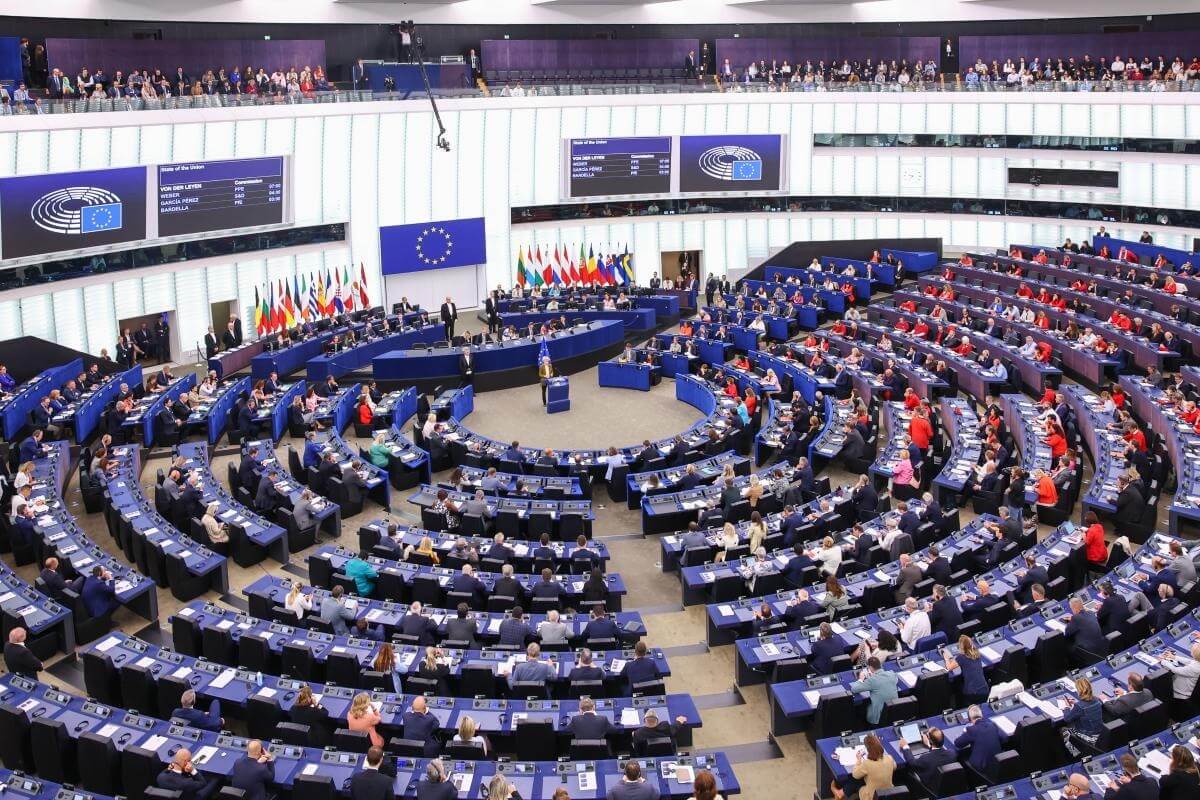 Migration has shown that the EPP can form a majority on certain issues without support from socialists and liberals
Over the next few years, the return rate may rise, but there is little evidence that it will reach the level anticipated by reform advocates.
Secondly, the political effect of the reform is likely to be more enduring than its administrative impact. Migration has shown that the EPP can form a majority on certain issues without support from socialists and liberals.
This does not mean the same pattern will automatically apply to every area of European politics, but it indicates that the political balance in the European Parliament is shifting.
Legal disputes concerning return centres, family detention, and certain investigative powers will almost certainly be brought before European and national courts. Therefore, the true scope of the regulation will become clear only after several years of implementation.
With this reform, Brussels has resolved the question of jurisdiction, but not the issue of migration. The new rules may alter the process for making return decisions, but so far there is little evidence that they will significantly affect the number of people attempting to reach Europe.
What has already changed is the way political majorities are formed in Europe. This may prove a more lasting consequence of the reform than any change in return statistics.
