The European Union has taken another step on the journey from being a rule maker to becoming a rule taker. The bloc’s main decision-making bodies this week negotiated a major watering down of new sustainability regulations that were once regarded as ‘gold standard’.
The two sets of corporate sustainability directives, the CSRD on reporting and the CSDDD on embedding due diligence, were scaled back significantly following both foreign opposition – mostly from the US and Arab Gulf states – and a rightward political shift in the EU.
Whatever the merits of the changes to the directives – already adopted and partly implemented – the manner and timing are set to both weaken the EU geopolitically and cause economic uncertainty down the road.
Until recently, the ‘Brussels effect’ of leading on many regulatory fronts had given the massive trade bloc considerable heft in setting the international agenda.
This was seen as a positive, also by many businesses that could rely on a solid and predictable set of rules despite sometimes grumbling about costs and competitive disadvantages.
In the current, more right-wing and Eurosceptical climate within the EU itself and with increased foreign push-back, especially from the US, the bloc risks being stuck in an economic and regulatory halfway house.
It will not, and arguably cannot, adopt the capitalism red-in-tooth-and-claw so beloved of the American right-wing and its European acolytes. On the other hand, it will not play to its strengths of uniting under a set of ambitious yet clarifying regulations.
The anti-regulatory fervour
Without a coherent and well-thought-out concept behind them, the ad hoc moves to emulate wildly different models such as the US and China embody the desperation of a cargo cult. They copy the outward appearance of economic success without being able to reproduce the whole complex system.
The pattern can be seen in many recent developments, from moves to weaken AI regulations, to pressures to soft-ball fines for US companies under the Digital Services Act and Digital Markets Act, to softening carbon tariffs mechanism and much more.
The anti-regulatory fervour comes partly in the guise of a drive for competitiveness. The EU’s Draghi report from 2024 addressed this issue and has been partly used to justify it.
Instead of the EU-wide liability that was foreseen, responsibility for enforcement is now being returned to member states
While Draghi has expressed concern about the scope and the regulatory burden of the sustainability and due diligence directives, the picture is more nuanced. His report argues for streamlining regulation but mainly by ending fragmentation and duplication across the EU on the national level.
Changes to the directive on enforcing corporate due diligence, the CSDDD, in fact go the opposite direction. Instead of the EU-wide liability that was foreseen, responsibility for enforcement is now being returned to member states.
This will create exactly the fragmentation that Draghi has warned against, making it possible for companies to pick the ‘weakest’ jurisdiction. It will also allow more foreign pressure on individual countries that would otherwise be at least partly shielded by the EU.
Deregulation only complicates matters
Rather than streamlining, as Draghi advocates, it is the kind of deregulation that actually only complicates matters and creates uncertainty for the future. It is highly likely that this will have to be revisited within the next 5 to 10 years if it proves unworkable.
Deregulation is, of course, the buzzword of the current hyper-capitalist, tech-bro-heavy, right-wing American administration, as exemplified in the Heritage Foundation’s blueprint, Project 2025.
It is a wedge to impose a harsh right-wing agenda on the US domestically and to force US allies to open up their markets.
Europe’s far-right has embraced deregulation where this suits its needs, for example, against ‘woke’ so-called limits on free speech, to undermine the safeguarding of migrants’ rights and to break down environmental protections.
Shortly after coming to power, Meloni eased regulations on short-term labour contracts amid a raft of measures
It claims to want protections for working people but when in power, invariably sides with deregulatory corporate interests on labour rules and other social issues.
Take Italy’s Giorgia Meloni, who pushed hard for the changes to the CSRD and CSDDD. Shortly after coming to power, she eased regulations on short-term labour contracts amid a raft of measures.
In recent months many far- and hard-right European admirers of the American capitalist system have ostensibly been caught between the wish to emulate their hero and the fact that the right-wing America First agenda actually poses a threat to their own countries.
It seems increasingly clear though that many of these supposedly nationalist right-wing European movements would rather have an anti-Brussels, anti-woke, anti-immigrant and pro-Trump wasteland than a thriving country within a functioning and rights-abiding EU.
An age of emulation
Whence this growing zeal for a US-type culture war? What has happened to Europe’s swagger that enabled it into the 21st century to look down on the US as an uncultured upstart, even while becoming increasingly dependent on its economic and military might?
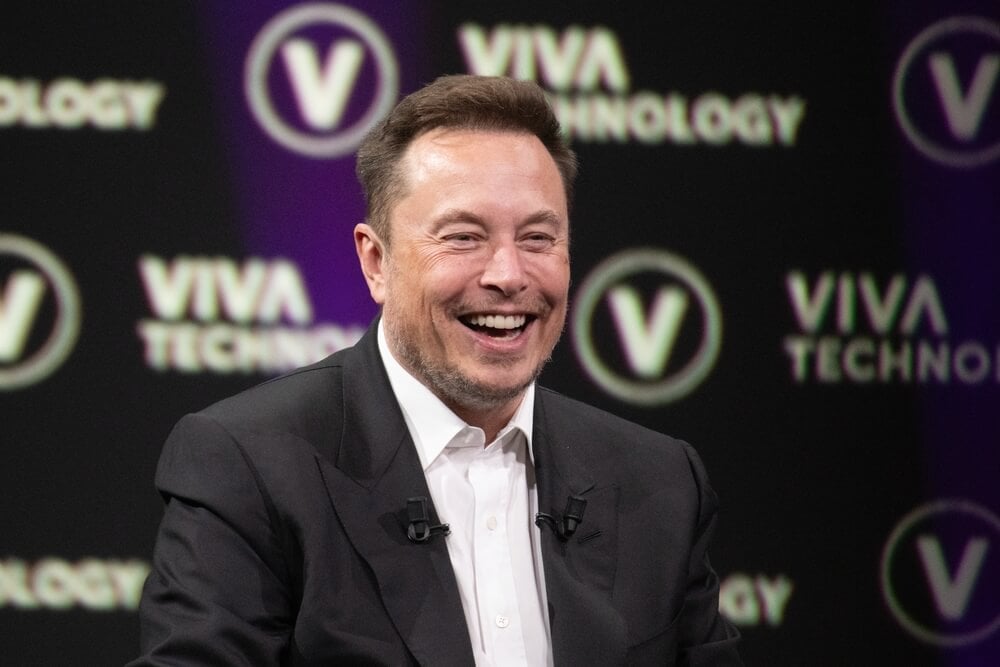 We live in an age of emulation, with whole societies attempting to ape the empty lifestyles and apparent success of online influencers and the likes of Elon Musk
Maybe, as with so many things nowadays, part of the answer lies online and in the glittering promise of high-tech, which embraces and promotes extreme deregulation.
We live in an age of emulation, with whole societies attempting to ape the empty lifestyles and apparent success of online influencers and the likes of Elon Musk.
Europeans, lacking their own massive social media platform, get fed a constant stream of negative narratives about their own countries and continent. The message is that they’re in decline and doing a lot worse than the US and China.
What is therefore more logical than to emulate the business acumen of a Musk, witness the whole Dogecoin saga, or the economic models of these two economic juggernauts?
That these pressures translate into a panicked and unconvincing patchwork of EU policy responses is surprising. If the cliché holds, the Brussels bureaucracy and its political paladins are patronisingly aloof and set in their ways. At the very least, they’re supposed to be master negotiators and planners.
But the EU is facing an unprecedented cascade of pressures: still being in recovery from a financial crisis, losing a member to Brexit, the pandemic response, new debt pressures, a war in Europe, Russian and American animosity, the crumbling of NATO, the rise of a belligerent China, and a polarising internal far-right turn.
It’s no surprise under the circumstances that the old continent is casting around for answers. But whether on defence or the economy, just going through the outward motions without backing it up with a cunning plan will do more harm than good.
