Can a relatively small state with a territory of less than 30,000 square kilometres and a population of just over 3 million people play an important geopolitical role in the South Caucasus region? Undoubtedly yes, if we are speaking of Armenia.
This country has deep historical traditions, a culture spanning many millennia, and a strategic location.
At the same time, for a long period, its foreign policy course was largely determined by orientation towards Moscow, which often contradicted Yerevan’s national interests and restrained its potential as an independent regional actor.
Russia used its influence in Armenia not only to control domestic political processes and the situation in the South Caucasus, but also to strengthen its own position in the Middle East.
A particular role in this strategy was played by the Armenian diaspora in countries such as Lebanon, Syria, and Iran.
However, in recent years, official Yerevan has become increasingly aware of the pragmatic and one-sided nature of Kremlin policy and is gradually distancing itself from excessive dependence on Moscow.
Russia, for its part, is trying to keep Armenia within its traditional sphere of influence, but its capabilities are significantly constrained by the war against Ukraine and the general weakening of its resource base.
The Armenian leadership is taking advantage of precisely this situation.
European support
Against this backdrop, Armenia is intensifying cooperation with the European Union.
Given the risks of external interference and hybrid threats, the EU has decided to send a new civilian mission to the country ahead of the parliamentary elections scheduled for 7 June 2026.
Its task will be to advise Armenian state institutions on countering disinformation, external manipulation, cybercrime, and illicit financial flows during the electoral process.
Moscow will likely attempt to use information campaigns, fake narratives, and political influence tools to shape public opinion in its favour
The main goal is to ensure transparent elections and create conditions for citizens to express their will freely, without pressure or interference.
Moscow will likely attempt to use information campaigns, fake narratives, and political influence tools to shape public opinion in its favour.
This is why European support is important for Yerevan in the areas of modern technologies for monitoring the information space, cybersecurity, and fact-checking.
This also reflects Armenia’s new political approach: decisions are increasingly made on the basis of the interests of its own society rather than the expectations of the Kremlin.
Distancing from the pro-Moscow security alliance
At the same time, the political force of Prime Minister Nikol Pashinyan is consistently distancing itself from the pro-Moscow Collective Security Treaty Organization (CSTO).
The Armenian prime minister has repeatedly stated that Armenia’s membership in the CSTO is effectively frozen, with no plans to return to active participation in the organisation. This position is also reflected in his party’s electoral programme.
Armenia is increasingly oriented towards participation in international structures where its position is taken seriously
The reasons for this course are obvious. During security crises and military clashes around Karabakh, the CSTO, led by Russia, did not demonstrate a genuine willingness to fulfill allied obligations.
That is why Armenia has begun transitioning from a policy of blind trust to one of hard national pragmatism.
After a long period in Russia’s orbit, the country is increasingly oriented towards participation in international structures where its position is taken seriously.
Elections as a turning point
Another important direction is the development of cooperation with NATO. After the Karabakh events, Yerevan became fully convinced that the old security mechanisms do not provide reliable protection.
Therefore, interaction with Western partners is viewed as a path towards modernising the armed forces, implementing modern defense standards, and creating a professional army.
This concerns not only weapons, but also institutional reform, personnel training, and strengthening state resilience.
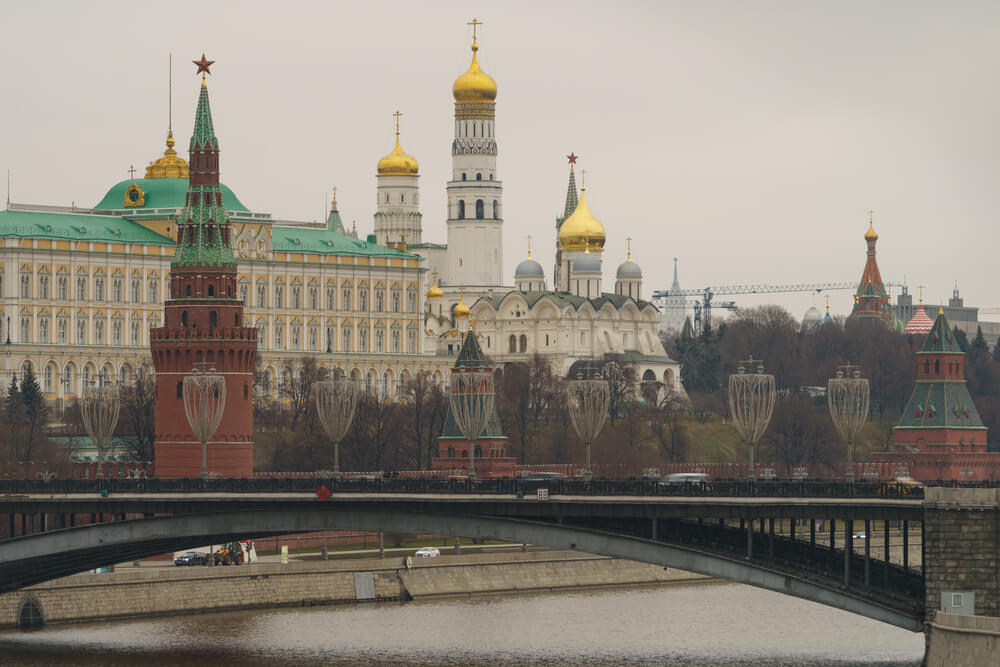 The Kremlin will use the levers of influence it still possesses: church structures, part of the diaspora in Russia, financial channels, and information resources
So, has Armenia definitively turned away from Russia and chosen a course of cooperation with the EU and NATO? The final answer will be given by the parliamentary elections.
The Kremlin will undoubtedly use the levers of influence it still possesses: church structures, part of the diaspora in Russia, financial channels, and information resources.
On the other hand, Prime Minister Nikol Pashinyan relies on his own political force, as well as support from the large Armenian diaspora in France and the United States.
The European Union also cannot remain a passive observer. The experience of other countries, particularly Moldova, has shown that effective resistance to external interference requires not only expert assessments, but also active political and institutional support for democratic forces. A similar scenario is possible in Armenia.
Despite the difficulty of predicting the election results, there are grounds to believe that the pro-European course has a serious chance of victory.
Armenia needs modernisation, economic development, and stronger sovereignty – tasks that are becoming increasingly difficult to achieve within the old model of dependence on Moscow.
However, the final choice will be made only by the Armenian voter.
Oleksandr Levchenko, a former Ukrainian diplomat, is a professor at the State University (Kyiv) and a member of the Academy of Geopolitics and Geostrategy (Kyiv).
