There is something inherently counterintuitive about a U.S. intelligence chief secretly flying to Moscow to talk to the Russian intelligence services.
At a time when the United States and Russia remain deeply divided over Ukraine and other issues, why would Washington want to maintain a channel with the very government responsible for the threats we are trying to counter?
Some may even be offended by it, and with good reason. The Russian intelligence services have committed countless atrocities and crimes in the Ukraine war, and beyond.
But it makes sense strategically, because sometimes these channels work. The goal is de-escalation of Russia’s hybrid war in Europe and a potential end to the Ukraine war, with security guarantees for Ukraine.
Anything that can bring us, as an alliance, closer to that end should be pursued, however distasteful.
Warning against a possible Russian attack on NATO
CIA Director (DCIA) John Ratcliffe’s recent trip to Moscow is a reminder that, even during periods of extreme tension, intelligence services can provide one of the few reliable avenues for communication between adversaries.
The Kremlin confirmed that Ratcliffe met with Russian intelligence officials; reporting coming out of the visit has included meetings with the directors of the SVR (Foreign Intelligence) and the FSB (the monolithic internal security service which Putin himself once headed).
Other reports indicate that he delivered a warning against a possible Russian attack on NATO and raised Russian support for Iran potentially, as well as urged the Russians to end the war. History provides some powerful examples of why these channels matter.
At the height of the crisis, Feklisov communicated via this channel that Moscow was seeking a way out
During the Cuban Missile Crisis in 1962, the KGB's Washington Resident (their equivalent to a CIA chief of station), Aleksandr Feklisov, operating under diplomatic cover, established an important back channel with ABC correspondent John Scali.
At the height of the crisis, Feklisov communicated via this channel that Moscow was seeking a way out.
The message eventually reached the White House and became one of the channels through which Washington and Moscow explored a possible compromise, leading to an agreement: Soviet missiles out of Cuba in exchange for a quiet agreement to withdraw U.S. missiles from Turkey.
The latter part of the agreement remained secret, but the compromise – and the back channel that led to it – both worked.
What formal diplomacy cannot offer
The significance was not simply that an American journalist was talking to a Soviet intelligence officer.
It was that the channel provided something formal diplomacy could not offer: a discreet way for the adversary to communicate without publicly committing itself or admitting defeat.
With the Russians’ historical insecurity about the U.S. and NATO and Putin’s own desire to be seen as a great modern Tsar, it is more important than ever that we consider back channels as an option.
Another example was the 1973 Yom Kippur War, particularly salient given the 5 years now of suffering in Ukraine.
The back channel provided a mechanism for Washington and Moscow to communicate while the crisis was still unfolding
As the conflict threatened to draw the United States and the Soviet Union into a much larger confrontation, Henry Kissinger used direct and secret communications with Soviet leadership to negotiate with Moscow. Intelligence services played a key enabling role.
Finally, Kissinger traveled to Moscow for direct negotiations aimed at ending the war.
The United States and the Soviet Union backed opposing sides. Yet, the back channel provided a mechanism for Washington and Moscow to communicate while the crisis was still unfolding. Again, a compromise was found.
Preventing dangerous miscalculations
These examples demonstrate why intelligence back channels and the diplomacy they can foster remain valuable.
When used properly, they can prevent dangerous miscalculations. And they can communicate intentions when public opinion prevents direct diplomacy.
They can provide an adversary with an off-ramp. And sometimes, they can help prevent a crisis from becoming a war.
A back channel can deliver a warning. It cannot, by itself, make that warning credible
But there is a critical caveat. A back channel can deliver a warning. It cannot, by itself, make that warning credible.
For that, teeth are needed: a credible threat of retaliation. That has thus far been missing from NATO’s calculus.
That is where the lessons of 2021 become important.
When warning lacked teeth
When then-DCIA William Burns traveled to Moscow in November 2021, he was carrying a very different kind of message.
The United States had intelligence indicating that Vladimir Putin was preparing for a massive invasion of Ukraine.
Reportedly, Burns personally communicated the seriousness of the U.S. assessment and a hint of the consequences Washington said Russia would face if it invaded.
The Biden administration also did something unprecedented in the months before the invasion
Burns did many things right. The Biden administration also did something unprecedented in the months before the invasion: it shared an extraordinary amount of intelligence with NATO allies and with Ukraine, publicly exposing Russian military preparations and plans.
That intelligence campaign helped prepare our allies and Ukraine for what was coming.
But the warning itself lacked something essential. It lacked teeth.
The difference between intelligence warning and deterrence
Putin and the Russian siloviki had years of American policy to examine before deciding whether Washington's warnings were credible.
In 2008, Russia invaded Georgia. In 2014, it seized Crimea and launched its war in eastern Ukraine.
In both cases, the United States and its allies failed to impose meaningful costs for war and aggression.
Moscow was not forced to conclude that aggression against its neighbors would have consequences severe enough to fundamentally alter its calculations.
The purpose of an intelligence back channel should not be to tell an adversary what we know
By 2021, Putin had a history to consult.
Washington could tell him what we knew. We could tell him what we opposed. We could tell him there would be consequences.
But the Kremlin could reasonably ask: what consequences? And would the United States actually impose them?
That is the difference between intelligence warning and deterrence.
The purpose of an intelligence back channel should not be to tell an adversary what we know. It should clearly communicate what we will do if the adversary crosses a line.
That requires credibility.
The Ratcliffe visit is a good thing
The Ratcliffe visit is therefore a good thing. These channels should exist. The CIA should talk to their Russian counterparts, however much we loathe them and their Chekist traditions of “we stand for organized terror” (the words of their revered founder, Iron Felix Dzerzhinsky).
Another reason to encourage such direct talks is that they can prompt “hero spies” on the other side to take risks and potentially switch sides.
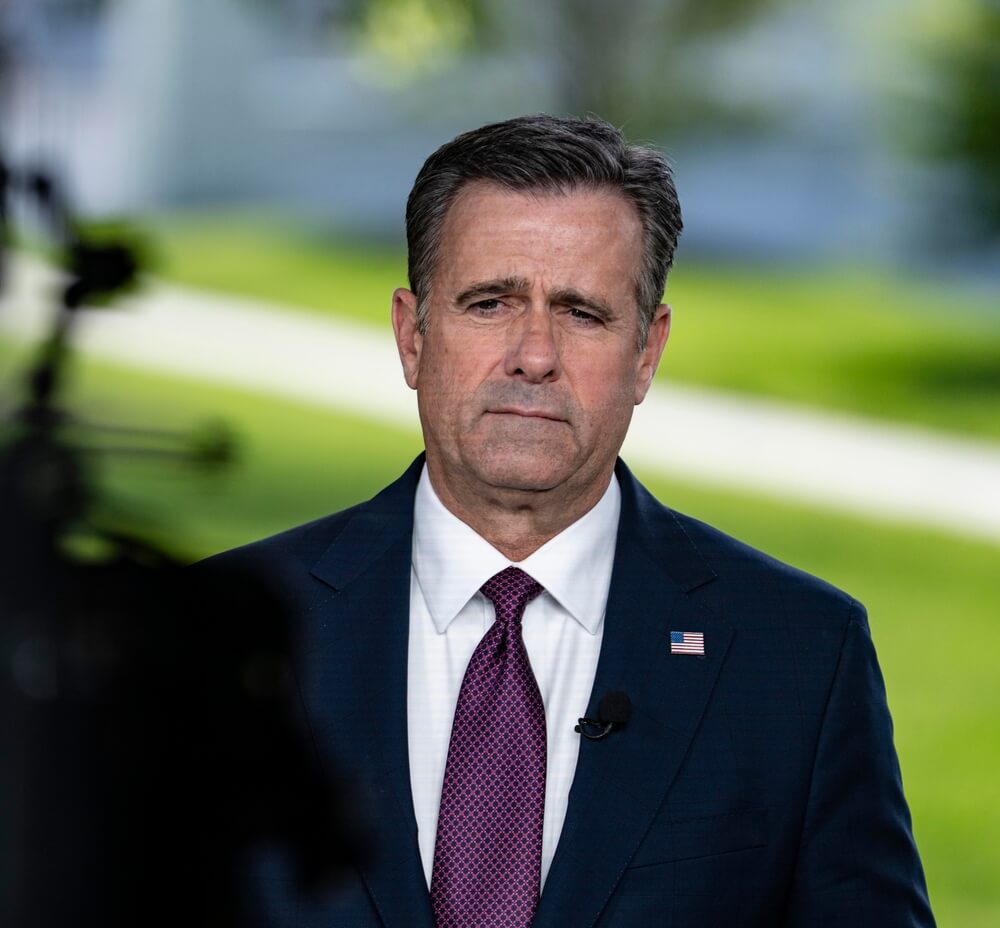 Intelligence chiefs should have the ability to communicate directly when the stakes are high - John Ratcliffe
One such case was Colonel Oleg Penkovskiy, the “spy who saved the world” during the Cuban Missile Crisis.
He provided critical intelligence during that same period and off-ramp discussed above.
Intelligence chiefs should have the ability to communicate directly when the stakes are high.
In fact, that is when communication is most critical to maintain. Sometimes a private conversation can accomplish what a public statement cannot.
But if Washington is delivering another warning to Moscow, we should have learned the lesson of 2021. The message needs teeth.
Russia needs to believe not only that we know what they are doing, but that we are prepared to impose consequences it cannot withstand if they cross the line.
Back channels can work. But only when the adversary believes the person delivering the warning – and, more importantly, believes the consequences behind it. Let's hope Moscow believes it this time.
Sean Wiswesser is a former CIA Senior Operations Officer and expert on Russian Intelligence, Espionage, and Defense Issues.
