Four years after Russia’s full-scale invasion of Ukraine, Western observers still do not understand the Kremlin’s strategy.
Some think there is none, and that Russia’s behavior is completely irrational and thus unpredictable.
Others argue the opposite: Russia is enacting a carefully constructed, long-term revanchist vision, in which claiming Ukrainian territory is just the first step. Both explanations are wrong.
Russia has not undertaken its brutal war against Ukraine and upended Europe’s security architecture on a whim, and Russian President Vladimir Putin’s portrayal of the war as a clash of civilizations—an existential struggle against a West bent on destroying Russia—is not mere theater.
But nor is such rhetoric evidence of a fully formed imperial ideology, let alone a comprehensive blueprint for global transformation.
While Putin views Russia as a great power and civilizational counterweight to Western liberalism, he does not have a coherent plan to remake the world, let alone the capacity to do so.
This weakness shapes Russia’s choices. Because Russia is not as powerful as the coalition it is confronting, it is focused not on domination, but on disruption.
The resulting “strategy” is neither random nor considered, but rather volatile and escalatory.
It also reflects a hierarchy of concerns that the West seems not to understand fully. Putin’s top priority—the lens through which all Russian foreign-policy decisions are made—has always been regime continuity and sovereign control, which depends above all on elite cohesion and internal stability.
Maintaining control over its neighborhood
Putin’s second priority is maintaining Russia’s control over its neighborhood, not least by preventing NATO and the European Union from encroaching on it.
To that end, he is prepared to use massive force and absorb extraordinary costs, including economic contraction, international isolation, and an enormous number of casualties.
It is no coincidence that Putin attacked Ukraine after the country made clear its intention to deepen ties with the West.
More than territory, the Kremlin wants to control the alignment of countries it still considers to be part of its sphere of influence
More than territory, the Kremlin wants to control the alignment of countries it still considers to be part of its sphere of influence.
Preventing the consolidation of a global order that is “hostile” to Russia is third on the agenda.
Russia lacks the economic weight, alliances, and ideological appeal to build an alternative system. Nor can it impose a new order through force.
What Russia can do, as a nuclear power with massive energy resources and a high tolerance for risk, is act as a spoiler, deploying hybrid tactics that are cheaper and more scalable than conventional warfare.
In Europe, this means not conquest, but attacks targeting countries’ internal cohesion.
Energy pressure, cyber operations, and support for polarizing and Russia-friendly politicians serve the same purpose in the EU as bombs do in Ukraine: they complicate alignment, fuel fragmentation, and impede coordinated responses.
Negotiated relevance
With the United States, Russia emphasizes calibrated brinkmanship. Nuclear signaling and arms-control diplomacy are tools for forcing recognition of Russia as an indispensable actor and great power—not for the sake of prestige, but rather to avoid marginalization.
The objective is negotiated relevance, not integration into a Western-led order.
In the Middle East and parts of Africa, Russia’s activities are shaped largely by opportunism
In the Middle East and parts of Africa, Russia’s activities are shaped largely by opportunism.
Intervention in Syria boosted Russia’s regional profile at limited cost. A transactional partnership with Iran bolsters Iran’s ability to challenge Western dominance—indirectly benefiting Russia—without precluding competition for regional influence.
For Putin, the objective is not to shape the regional order, but to expand Russia’s footprint cheaply while retaining flexibility.
Sustained disruption
Seen through this lens, Russia’s behavior reflects restraint as much as ambition.
Putin escalates when Russia’s core interests are at stake and acts transactionally when they are not. Reputational damage for the sake of regime continuity and strategic depth is a price worth paying.
And investing in fragmentation creates new opportunities to use Russia’s leverage.
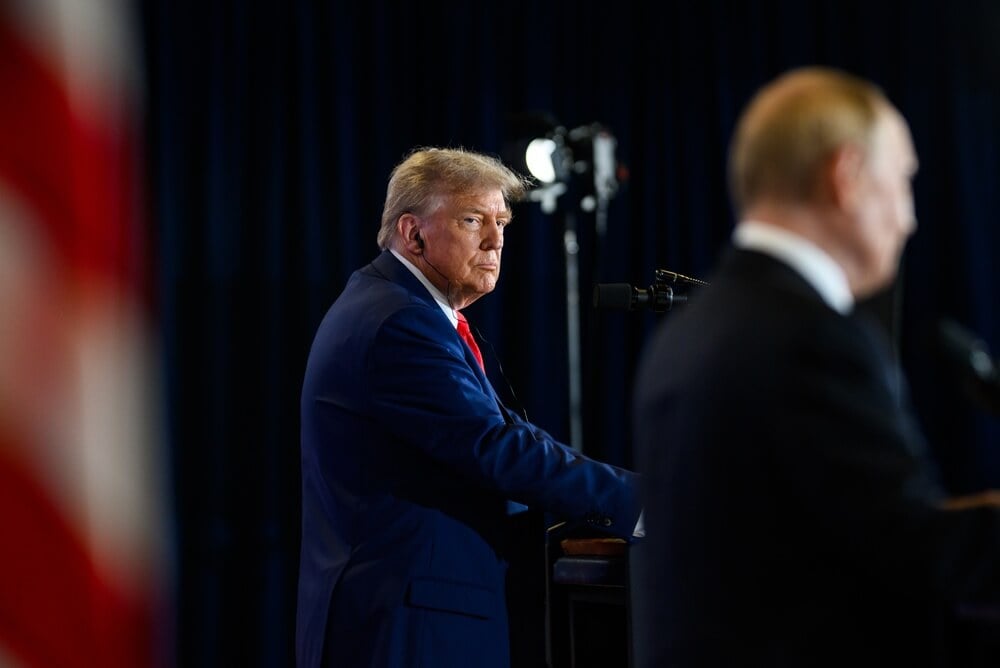 The West’s failure to read the Kremlin’s intentions accurately leads to policy mistakes, including a lack of preparedness for escalation
The West’s failure to read the Kremlin’s intentions accurately leads to policy mistakes, including a lack of preparedness for escalation, an excessive focus on deterring territorial expansion, and misplaced faith in sanctions.
When the regime bases its legitimacy partly on claims that external forces are seeking to destroy Russian civilization, economic coercion by those forces enhances its credibility.
In this sense, sanctions might actually support Putin’s paramount goal of regime preservation.
Similarly, the possibility of diplomatic “resets” has persisted, because tensions are sometimes misunderstood as problems of tone rather than clashes of strategic objectives.
The implications extend beyond Europe and North America. For middle powers and emerging economies, building resilience, including through cooperation, is essential.
Russia’s quest for influence creates opportunities for transactional engagement. Where its interests are instrumental rather than existential, countries can limit its leverage and occasionally extract gains.
But engagement with Russia also carries risks. Fragmented systems are easier to penetrate. Polarized societies are easier to pressure.
Fragile institutions are easier to obstruct. Russia is well aware of this, and has proved adept at disrupting coordination, fostering division, and exploiting institutional weaknesses to serve its interests.
Russia cannot construct a coherent alternative world order, but it can erode cohesion within the existing one.
World leaders should thus be preparing for sustained disruption by reinforcing resilience, strengthening cooperation, and defending contested sovereign alignments.
Inna Bondarenko is a researcher and human-rights activist at Memorial.
Daniel Sleat is Senior Policy Adviser at the Tony Blair Institute for Global Change.
