China's request for consultations at the World Trade Organization (WTO), filed against India in mid-December, may at first seem like another technical trade dispute between two major developing economies.
In reality, it signals a much deeper shift in global economic competition. This is no longer a debate about individual tariffs or administrative measures but a dispute over who has the right to build their own industry and under what conditions.
The subject of the Chinese complaint is Indian tariffs on information and communication technology products, as well as programmes supporting domestic production in the solar sector.
Formally, the arguments are based on India's commitments under the WTO, including limits on tariffs and the prohibition of certain forms of subsidy that favour domestic producers.
The essence of the dispute, however, lies elsewhere: China is challenging a model of industrial development that is directly reducing opportunities for its companies in one of the world's most important growing markets.
A dispute at a moment of institutional weakness
The timing of China's move is crucial. The WTO has been in a state of institutional uncertainty for years. A dispute resolution mechanism formally exists, but there is no functional appeals level to ensure the finality of rulings.
In such circumstances, initiating a dispute is no longer primarily a legal instrument but a political signal.
States use disputes to exert pressure, shape negotiating positions, and define the boundaries of acceptable behaviour—even when it is clear that a quick and definitive outcome is unrealistic.
Beijing has chosen an institutional framework, sending the message that it operates within existing rules
China used this moment deliberately. Instead of unilateral trade countermeasures or strong political statements, Beijing has chosen an institutional framework, sending the message that it operates within existing rules.
This allows it to present itself as an actor defending the system, while at the same time using that system to limit its rival's moves.
Industrial policy under scrutiny
China's argument in the dispute does not aim to undermine India’s development. On the contrary, the dispute clearly demonstrates that industrial policy has once again become an accepted tool of major economies.
What China challenges is the way India seeks to protect and accelerate its own production, particularly when these mechanisms affect the market position of Chinese firms.
India is placed in a position where it must continually explain and defend its industrial strategy
In recent years, India has openly sought to change its role in the global economy. Rather than remaining primarily a large consumer market and service base, New Delhi aims to attract manufacturing, increase domestic value in supply chains, and reduce dependence on imports in sectors it considers strategic.
Electronics, renewable energy sources, and related technologies are at the forefront of this shift.
This is precisely where the Chinese request targets the most sensitive issue. By initiating the dispute, India is placed in a position where it must continually explain and defend its industrial strategy, not only before the WTO but also before investors and trading partners. Even without a ruling, the cost of pursuing such a policy increases.
The solar sector as a test of boundaries
The aspect of the dispute concerning solar subsidies carries particular weight. The solar sector is no longer a marginal industry; it is a central element of energy and industrial strategies worldwide.
Major economies are openly seeking to build their own production capacities and reduce dependence on imports, especially from Asia.
How far countries can go in protecting domestic production before their actions become the subject of international dispute?
When support models in this area are challenged before the WTO, it becomes evident that the issue extends beyond India.
It raises the question of how far countries can go in protecting domestic production before their actions become the subject of international dispute.
If the rules begin to be interpreted more strictly, the scope for industrial policies will be much narrower than is often assumed today.
The WTO as an arena, not a courtroom
This case demonstrates that the WTO is used less as a forum for final dispute resolution and more as an arena where power relations are defined.
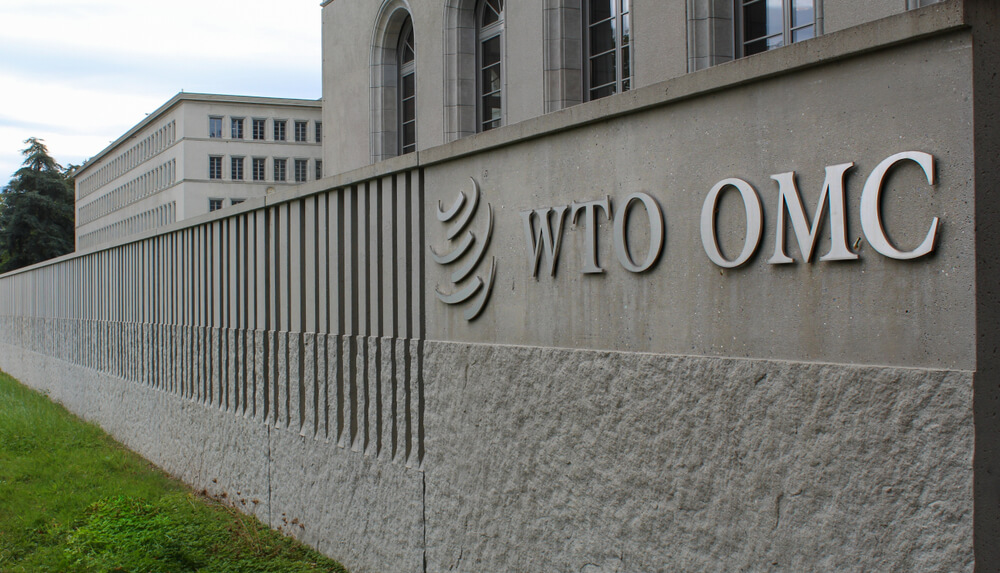 The WTO is used less as a forum for final dispute resolution and more as an arena where power relations are defined
The temporary arrangements for the appeals process, which involve some of the world's biggest economies, show that the system is fragile but that there is political will to keep it going.
The outcome of disputes increasingly depends on political will and negotiating power and less on purely legal interpretation.
For China, the benefit of this move is not a swift ruling but a strengthening of its negotiating position and a message that it will not passively observe policies that disadvantage its companies.
For India, the challenge is to demonstrate that its industrial strategy is not a short-term measure but part of a long-term, sustainable economic plan.
A broader lesson for Europe
Europe should draw a clear lesson from this dispute. The issue is not who is formally correct in the dispute between China and India.
The issue is how similar arguments may be used in the future against European production support policies, particularly in sectors related to the energy transition and critical technologies.
The line between permissible industrial policy and arguable discrimination is becoming increasingly thin.
Trade disputes are entering a new phase in which they are no longer fought over tariffs as such, but over the right to development
In the coming months, a scenario of quiet adjustments is more likely than open rulings. Consultations within the WTO often serve to modify measures without public withdrawal.
However, even such an outcome confirms the basic point: trade disputes are entering a new phase in which they are no longer fought over tariffs as such, but over the right to development.
This case demonstrates that the lines of conflict in the world economy are shifting. It is no longer about the traditional division between developed and underdeveloped countries but about competition between countries that use similar tools for similar objectives. Rules exist, but how they are applied becomes as important as their content.
China's action against India is therefore not an exception but a signal. In a world where industrial policy has reclaimed its centrality in economic strategy, international rules are increasingly serving as a battlefield, determining who has the right to accelerate their own growth and who must maintain openness. This is the dynamic that will shape the coming years of global trade.
