For years, central banks have based their authority on a single assumption – that they act as unified bodies. Differences existed, but mostly remained internal, constrained by procedures and the language of official announcements.
From the outside, the system appeared to speak with one voice. Today, this is no longer the case. Interest rate decisions may still seem stable on paper, but the process behind them reveals that something deeper is changing in the background.
In the latest round of decisions in Washington, Frankfurt and Tokyo, the focus was not on policy itself, but on the perception of reality underlying that policy. Board members now differ not only on nuances, but also on their fundamental understanding of the state of the economy.
This represents a significant shift from the previous decade, when there was at least minimal agreement on the basic diagnosis and debate centred on the dosage rather than the nature of the remedy.
Washington: interest rates unchanged, divisions deepen
The Federal Reserve kept interest rates steady, but not unity. The split in the vote no longer appears to be a passing episode, but a persistent symptom.
One faction of the committee sees the economy slowing faster than expected. Credit activity is weakening, financing costs are weighing on investment, and the labour market is no longer sending as strong a signal as it did a year or two ago.
From this perspective, monetary policy is already sufficiently tight and should begin to be gradually eased.
Another group on the committee acknowledges that the economy is slowing but does not wish to promise a shift in advance.
Their argument is not merely tactical. Inflation resulting from an energy shock does not follow predictable patterns and does not respond neatly to changes in the benchmark interest rate.
It is no longer sufficient to understand the decision itself and the accompanying announcement
In such circumstances, any announcement of easing can be interpreted as a willingness to abandon the goal of price stability. For those holding this view, the key issue is the institution's credibility, not short-term relief for the markets.
Behind the scenes, there is another layer that is less frequently discussed openly. The change at the top of the institution coincides with a period when political pressures are no longer discreet but publicly visible.
This inevitably affects the behaviour of committee members. In such an environment, differences of opinion become a matter of identity, a way to preserve some autonomy and to signal that decisions are not merely an extension of politics.
For the markets, this alters the starting point. It is no longer sufficient to understand the decision itself and the accompanying announcement. It is necessary to understand the internal dynamics of the institution making the decision, as well as who may carry more weight in future votes.
Tokyo: the end of cheap money in question
A similar process is evident in Japan, but under entirely different circumstances. The debate there is not about whether the policy is restrictive, but whether the era of extremely lax conditions is truly ending.
Japan is emerging from many years when the main concern was the threat of deflation. However, this exit is neither stable nor convincing.
One faction of the board believes that prices have risen sufficiently to justify moving towards neutral interest rates. If the current policy continues while energy and food prices are increasing, there is concern that inflation expectations will become permanently elevated.
In this scenario, the central bank reacts too late and, after years of combating deflation, faces a problem that is equally challenging but fundamentally different.
Raising interest rates prematurely could easily halt a recovery that is not yet firmly established
Another faction of the board sees the situation differently. In their view, the price increases are primarily the result of an external shock. Domestic demand remains fragile, and wage growth is insufficient to support stable, self-sustaining inflation.
In such circumstances, raising interest rates prematurely could easily halt a recovery that is not yet firmly established and push the economy back into the old deflationary pattern.
This difference is not resolved by additional models, more accurate graphs, or further projections. Ultimately, it depends on assessing how long the energy shock will last and how it will affect the domestic economy.
For this reason, the discussion is not concluded in a single meeting. It continues from session to session, with increasing pressure to take a clear position and a growing awareness that any decision can quickly lose its relevance if circumstances change.
Frankfurt: unity without shared interests
In Europe, the situation is even more complex, as the differences are not only between economic schools but also between countries.
The European Central Bank maintains the unity of its structure. At press conferences, the Council continues to present a common position. However, behind this unity, the substance is no longer the same as before.
Inflation remains above target, growth is close to stagnation, and the energy shock continues to be a factor beyond the control of monetary policy. In this environment, each decision has unequal consequences for different members.
An increase in interest rates has one effect in Germany, which still benefits from stronger fiscal and industrial support, and quite another in Italy or Greece. The decision to keep interest rates unchanged also has different political implications in the northern and southern countries of the eurozone.
Markets factor into prices not only the official decision but also a map of internal divisions
This is why the debate within the ECB is no longer primarily about whether to respond, but about how the costs of the response will be distributed. One approach prioritises preserving price stability, even at the expense of weaker growth and higher unemployment in more vulnerable economies.
The other focuses on avoiding additional pressure on public finances and credit activity in countries already burdened with high debt and low tolerance for more expensive borrowing.
Such differences cannot remain concealed indefinitely by general statements. They become evident through subtle changes in the language of announcements, the tone and emphasis in Council members’ public speeches, and informal signals that emerge after meetings.
Markets follow this almost in real time and factor into prices not only the official decision but also a map of internal divisions.
Energy shock and the end of stable models
In all three cases, the root of the problem is the same: an energy shock that separates inflation from classical patterns.
The increase in energy prices affects not only the official consumer price index but also alters relationships throughout the economy, raises production costs, reduces real household incomes, and forces companies to delay or reconsider investments.
Inflation and slowing growth are occurring simultaneously, a combination that leaves little room for elegant solutions.
Each rate move addresses one problem while worsening another
This is a situation for which standard models of monetary policy are not designed. Interest rates can influence demand, but they cannot increase the supply of gas or oil, nor can they resolve a geopolitical crisis. Each rate move addresses one problem while worsening another.
If policy is tightened, inflation may ease, but the slowdown intensifies. If it is relaxed, the decline in activity is mitigated, but there is a risk that inflation will remain above the target for longer.
In such circumstances, there is no room for a solid consensus within central banks. Differences in assessment become inevitable, as they are based on varying assumptions about how long the shock will last, how quickly the economy will adjust, and what the political threshold of tolerance is for painful decisions.
Monetary policy in permanent uncertainty
This fundamentally alters the nature of monetary policy. Instead of providing clear and predictable signals, it increasingly resembles a process in which decisions are made under conditions of permanent uncertainty.
Within institutions, disagreements are no longer incidental but have become the norm. Visible minority opinions are now an integral part of the landscape, rather than an exception.
For markets, this means the loss of the stable point of support to which they have become accustomed over the past decade. When central banks sent clear signals, investors needed only to follow a few key indicators and officials’ comments.
Now, they must try to understand the internal dynamics of institutions, assess who holds greater influence in voting, and track how sentiment shifts between meetings.
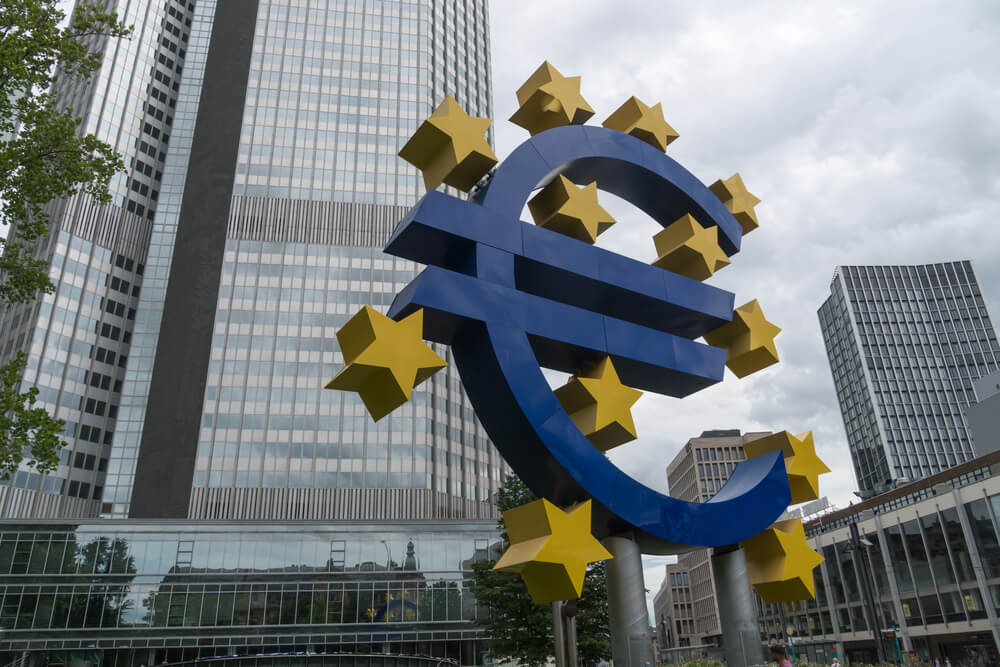 Central banks are less able to set the direction and are more often trying to keep pace with events beyond their control - ECB
For states, the consequences differ but are equally demanding. Monetary policy can no longer act as the sole main stabiliser. The energy shock and rising cost of living require coordination with fiscal policy and energy strategy.
This extends beyond the mandate of central banks and enters a domain where decisions depend on political agreements, not solely on expert analysis.
In this environment, central banks no longer decide within a pre-agreed, stable framework. Each decision results from the current balance between opposing views within the institution.
Differences are no longer exceptions concealed behind unified statements, but factors that directly affect outcomes.
This change is not temporary. It stems from the fact that the global economy no longer functions as it once did.
Energy prices are volatile, political risks are constant, and markets are increasingly fragmented. In these conditions, central banks do not lose their importance, but they do lose the clarity of their actions.
Instead of a single direction, decisions increasingly result from conflicting assessments, and the traces of these conflicts remain visible even after the vote. The interest rates the public sees are merely a consequence.
The fundamental problem is that there is no longer a single, shared view of the world from which these decisions arise. When that common image disappears, so does the stability on which monetary policy relied for years.
In these circumstances, central banks are less able to set the direction and are more often trying to keep pace with events beyond their control. Their role is shifting from shaping expectations to mitigating consequences.
If this trend continues, the key issue will no longer be the precise level of interest rates, but whether central banks have the capacity to run the system at all. More importantly, it will be whether they can retain the role they have held so far.
