Canada has slipped into a technical recession even as it enjoys record revenues from high commodity prices. The key reason is that Ottawa has combined record spending, a disastrous net-zero act, interventionist regulations, and anti-investment policies that limit economic growth, worsen the cost of living, and neutralise the windfall from oil and gas.
The continuity between Trudeau‑era interventionism and Mark Carney’s current policies has left Canada with weak productivity, chronic underinvestment, and a heavily indebted public sector.
Despite a strong global manufacturing and commodity cycle, driven by geopolitical tensions and the Iran war, Canada’s government has created structural weaknesses and stifled growth in exactly the period when the country should be booming.
Canada is now in a technical recession, with real GDP declining for two consecutive quarters.
Real gross domestic product fell at an annualised rate of about 0.1% in the first quarter of 2026, following a small contraction in late 2025, marking the first technical recession since 2020.
Rather than being the inevitable consequence of external shocks, this downturn reflects the direct impact of domestic policy errors.
Falling into recession despite a strong external tailwind
Some commentators attempt to attribute the economic decline to the controversy surrounding tariffs with the United States, but this explanation fails to withstand scrutiny.
The composition of GDP clearly shows that the main drags on growth are domestic and policy‑sensitive.
Real residential investment fell at an annualised rate of about 7.9%, with a nearly 10% drop in ownership transfer costs, reflecting a sharp collapse in housing resale activity under the weight of high interest rates, regulation, and poor confidence.
Investment in non‑residential structures, equipment, and machinery declined by 3.2% annualised, driven by a 4.6% drop in engineering structures – precisely the kind of long‑term projects most sensitive to regulatory risk and fiscal instability.
The sectors that should be leading the cycle are contracting, with domestic policy a central reason
On the external side, exports fell by 0.5% annualised, while imports surged by about 12%. Overall final domestic demand declined by 0.4% annualised, highlighting broad underlying weakness even though headline consumer spending remained marginally positive.
In other words, the sectors that should be leading the cycle are contracting, with domestic policy a central reason.
This downturn is occurring despite a strong external tailwind. Since January, prices for gas, fertiliser, and metals – products in which Canada is a major global player – have soared, and this was the case even before the Iran war fully escalated.
The conflict has amplified an already favourable terms‑of‑trade shock. In a rational policy framework, an energy‑exporting country facing this environment would be growing above trend, not falling into recession.
An excuse to spend more, not to correct course
Ottawa acknowledges that budget projections have improved partly due to stronger nominal revenues.
The Carney government’s economic outlook has improved enough to cut projected deficits over five years by roughly 60.3 billion dollars compared to its first budget.
Yet, instead of translating this windfall into sustainable debt control, productivity‑enhancing reforms, and growth‑oriented tax relief, policymakers are allowing real activity to contract.
The improvement in the numbers is used as an excuse to spend more, not to correct course.
Ottawa still plans to run deficits for at least the next five years
The Carney government’s latest spring budget shows the deficit is lower than previously forecast, largely because higher oil prices and solid exports have boosted revenues.
However, Ottawa still plans to run deficits for at least the next five years. The autumn 2025 budget projected a deficit of about 78.3 billion Canadian dollars for 2025–26; the spring update improves that outlook but still anticipates Canada “operating at a deficit” until 2031, with a shortfall of around 50 billion a year by then.
In practice, little has changed: over the first eight months of the 2025‑26 fiscal year, federal public accounts show a deficit of 26.39 billion dollars, slightly larger than the 22.72 billion recorded in the same period a year earlier, because expenditures grew faster than revenues despite the commodity boom.
Continuity with Trudeau‑era interventionism
The current government’s policy mix reflects continuity with Trudeau‑era interventionism rather than a break from it. Ottawa plans to keep large deficits and rising debt despite the nominal revenue boost.
Total federal debt is projected to reach about 2.9 trillion dollars by 2029/30 under Carney, compared with 2.6 trillion under the already imprudent Trudeau plan.
In the latest update, the improvement in the fiscal outlook of about 60.3 billion dollars over five years has been almost entirely spent, with 54.5 billion in new commitments instead of accelerated deficit reduction or tax relief that might have boosted private investment and productivity.
Over the past decade, federal policy has built what even mainstream analysts now describe as a policy regime that deters investment in the energy and mining sectors, combining layers of rigid environmental regulation, federal reviews, net‑zero mandates, and uncertainty over pipelines and carbon pricing.
Ottawa is using the oil‑revenue windfall to expand the bureaucratic state’s size
Under Trudeau, these rules have effectively curtailed the growth of oil production and exports, acting as a drag on business investment and productivity across the economy, not only in oil and gas.
Years of weak business investment and zero productivity growth have now left the economy structurally fragile and uncompetitive, just as it should be taking advantage of its enormous potential.
Carney has so far chosen to double down on key elements of this model rather than unwind them.
His government has signalled large, targeted industrial‑policy programmes and sector‑specific limitations, while keeping high levels of public spending and maintaining many of the investment‑killing regulatory frameworks inherited from Trudeau.
Instead of broad‑based tax cuts and regulatory simplification that could unleash private capital, Ottawa is using the oil‑revenue windfall to expand the bureaucratic state’s size, leaving the federal debt ratio and programme spending at historically high levels even in boom conditions.
Domestic policy is blocking growth
Ottawa’s budget narrative acknowledges a strategic opportunity to expand energy production, logistics, and shipping capacity to serve customers beyond the United States, and the government has earmarked billions of dollars in new spending for this purpose.
However, many experts warn that Canada’s existing infrastructure, net‑zero‑driven permitting regime, and regulatory constraints mean the country may not be able to meet this sudden spike in demand. Capital is mobile, and investment is already moving to more welcoming jurisdictions.
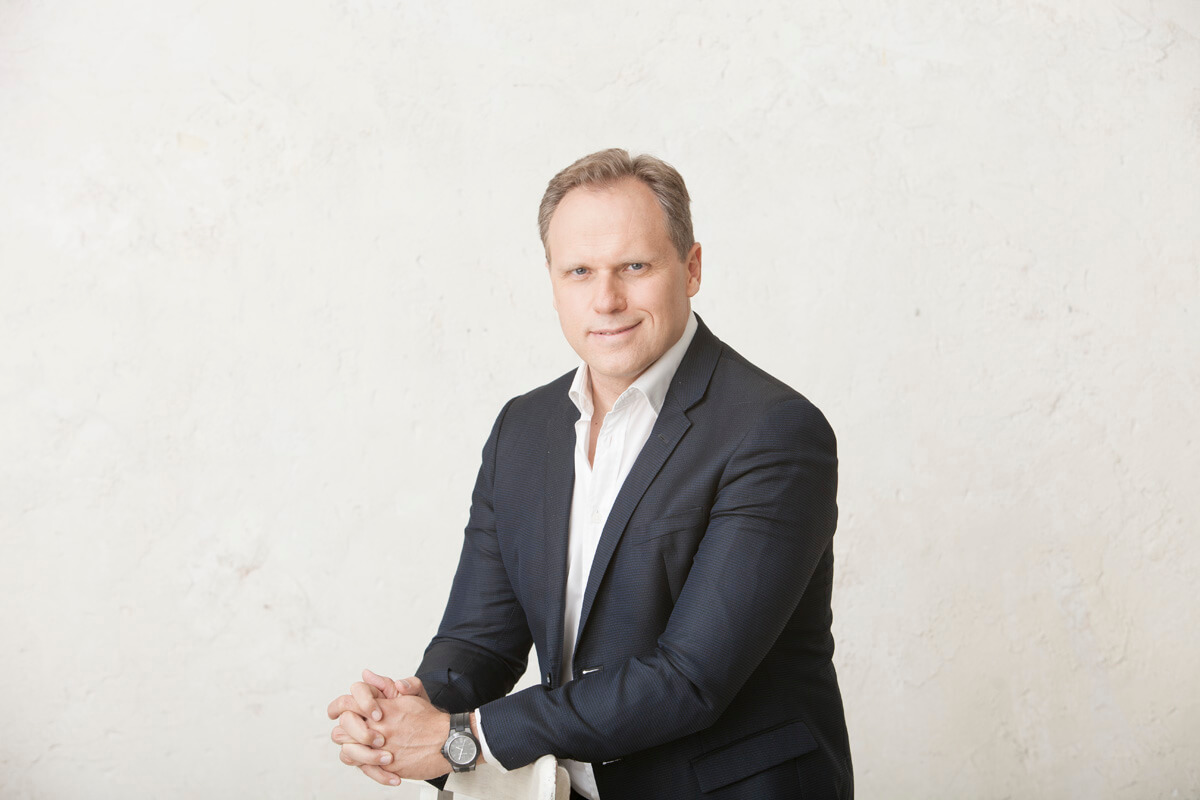 Carney has effectively extended Trudeau’s experiment in debt‑financed state interventionism and aggressive net‑zero regulation into a period when Canada cannot afford structural stagnation - Daniel Lacalle
At the same time, inflationist policies are squeezing households and non‑energy sectors.
Food prices in Canada are already about 30% higher than a decade ago, and nitrogen fertiliser prices have jumped more than 70% since the start of 2026, increasing cost pressures on farmers and consumers.
Measured from Trudeau’s arrival in office to the Carney era, cumulative inflation in Canada has been huge: roughly a 30% rise in the CPI since 2015.
If there is no growth in productivity or investment in tradable sectors, these price increases translate into falling real incomes and weaker consumption, making the economic situation worse.
This is why opposition leader Pierre Poilievre argues that “the only way out of this Liberal recession is to reverse the policies that caused it,” explicitly blaming Carney’s policy choices for the recessionary outcome.
Even Statistics Canada’s own breakdown, which attributes the downturn to declining resource extraction and construction in a context of rising global demand and high commodity prices, underscores that domestic policy, not external conditions, is blocking growth.
Instead of using the commodity boom to accelerate private investment, deleverage the public sector, and remove barriers to growth, Carney has effectively extended Trudeau’s experiment in debt‑financed state interventionism and aggressive net‑zero regulation into a period when Canada cannot afford structural stagnation.
