When, on 24 April, China's Ministry of Commerce imposed export restrictions on seven European military-industrial companies for "arms sales to Taiwan", the reactions in Brussels were limited to routine statements about "politically motivated measures" and "violation of trade rules".
In reality, this is not an isolated incident in the dispute over Taiwan, but the first serious test of China's willingness to use the same arsenal of economic pressure against Europe that the West has used against it for years.
Taiwan serves as the formal justification, but the real issue lies in European sanctions against Chinese companies over Russia and the EU's attempt to reshape its own industrial policy.
Taiwan on paper, Russia in the background
Beijing presented its action using the legal language of export controls and national security. Seven companies from Belgium, Germany, and the Czech Republic have been added to the list of entities prohibited from exporting "dual-use" equipment and technology from China.
Among them is FN Herstal, one of Europe's most renowned manufacturers of light weapons, as well as companies from the aerospace and satellite sectors.
The move is justified by Taiwan, but the link to European sanctions against Chinese entities over Russia is clear
Officially, the explanation is that these companies are involved in arms deliveries to Taiwan. Beijing cites its own Export Control Law and the "One China" principle, as if this were a straightforward application of domestic law. The chronology suggests otherwise.
In its 20th package of sanctions against Russia, the EU for the first time included Chinese and Hong Kong companies extensively, classifying them as entities assisting the Russian military-industrial complex.
Beijing responded the very next day by placing seven European defence companies on its own export control list. Formally, the move is justified by Taiwan, but the link to European sanctions against Chinese entities over Russia is clear.
Taiwan’s damage assessment
At first glance, Taipei's response was unusually calm. Defence Minister Wellington Koo stated that Chinese sanctions on European companies "will not affect" Taiwan's ability to procure weapons.
The structure of Taiwanese procurement is familiar: key systems are still supplied by the United States, while European companies are mainly active in specialised sectors.
It is more useful for Taiwan to show resilience and avoid pushing Brussels into a sharper conflict with Beijing
For decades, European capitals have avoided supplying large combat platforms that would openly challenge Beijing. The result is paradoxical: China formally punishes Europe "because of Taiwan", while Taiwan calmly notes that, in practical terms, it is collateral in someone else's reckoning.
Such a reaction also serves as a signal to Europe. For now, Taiwan has no interest in complicating EU-China relations with dramatic statements.
On the contrary, it is more useful for Taiwan to show resilience and avoid pushing Brussels into a sharper conflict with Beijing, while the EU remains important as a political partner, but not as a key supplier of arms.
Europe as a target of retaliatory measures
The European Union has for years attempted to pursue distinct policies towards Beijing. One relates to Russia and the war in Ukraine; the other concerns Taiwan and security in the Indo-Pacific.
In the first, the EU has established a complex sanctions regime, including pressure on third countries supporting the Russian war industry. In the second, it remains largely at the level of political statements and limited gestures towards Taipei.
China's measures against seven European companies directly link the two approaches for the first time. From now on, every European decision about which Chinese company to list because of Russia also signals its readiness to withstand pressure regarding the Taiwan issue.
Brussels is in the process of "de-risking" from China, especially in the green and digital sectors
Beijing has made it clear that it can transfer the consequences of European policy towards Ukraine into the Asian context – and that it is prepared to do so whenever it finds it useful. This is where another, unpleasant layer for the EU emerges.
Brussels is in the process of "de-risking" from China, especially in the green and digital sectors. "Made in Europe" proposals for batteries, renewables, and critical technologies clearly aim to reduce dependence on Chinese value chains.
Days before this move, Beijing had already publicly warned that such a development would not be without consequences.
Now it has demonstrated what those consequences can be – not through massive tariffs and an open trade war, but through targeted, sector-by-sector measures that are painful enough to concern industry, yet not dramatic enough to prompt a single, decisive EU response.
China is entering the game of economic pressure
For years, China has criticised Western sanctions regimes as politically motivated and legally questionable. Meanwhile, it has patiently built its own framework for export controls and restrictions on access to its market. Now, that framework is coming into effect.
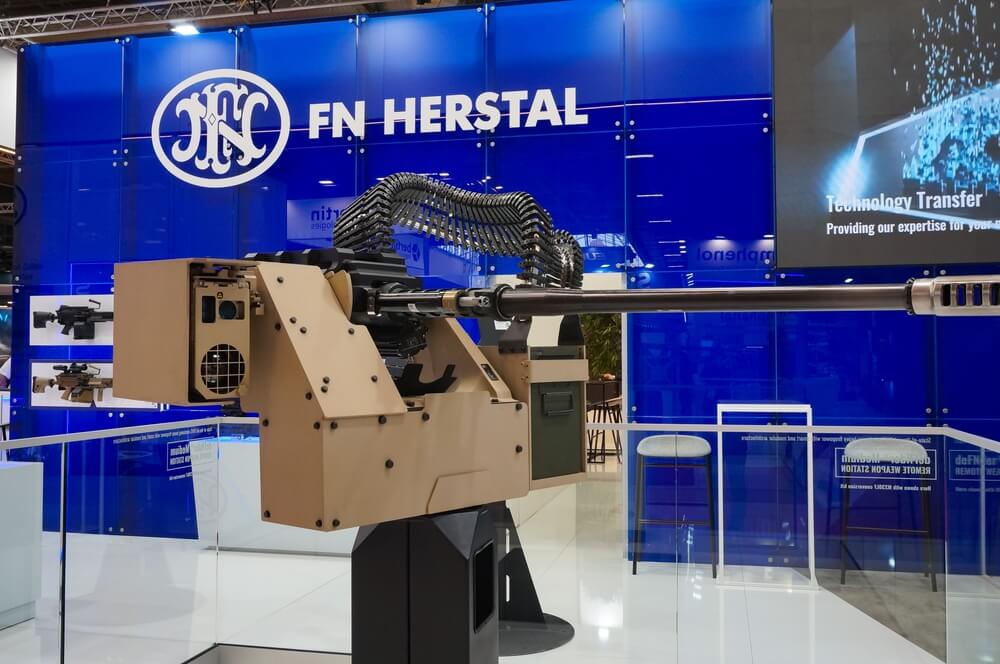 The seven affected companies are enough to attract the industry’s attention, but not enough for others to see this as a permanent change
In this respect, China’s move is not a departure from international standards, but rather an adoption of what the US and the EU have already normalised: the use of trade and technological instruments as extensions of foreign policy.
The difference is that, until now, China was mostly the target of such measures, and now it is beginning to apply them to Europe in a targeted and calculated manner.
This is not a dramatic “first strike” in a major trade war. The significance lies in the precedent. The seven affected companies are enough to attract the industry’s attention, but not enough for others to see this as a permanent change, so the situation is described as a “controlled episode”. Such episodes often become models for future behaviour and turn into standard practice.
The limits of European autonomy
In theory, the EU could respond in a unified and sustained manner. This would require a willingness to accept the real cost of a strategic shift: accelerated investment in its own industrial base, a faster move away from dependence on Chinese technologies and raw materials, and at the same time, maintaining a firm stance towards Russia.
The political reality is different. Europe is deeply divided over its relationship with Beijing. For some members, China is primarily a trade partner and investor; for others, it is a systemic rival and security challenge. When Chinese measures target specific companies in particular countries, it becomes difficult to maintain a strong, united front.
The EU faces internal pressure to demonstrate its resolve towards Russia
This creates opportunities for what Beijing traditionally excels at: working with individual states and large corporations. Belgium, the Czech Republic, and Germany each have their own relations with China and their own companies that depend on the Chinese market or raw materials.
As these actors increasingly lobby to calm relations, common European policy will become a series of compromises rather than a strategy.
At the same time, the EU faces internal pressure to demonstrate its resolve towards Russia. Any dilution of future sanctions packages will be politically costly, especially in countries that insist most strongly on tough measures.
This is precisely where China’s greatest leverage lies – not in the immediate effect on the seven companies, but in its ability to influence how Europe calibrates its future actions towards Moscow.
What the next phase looks like
The main directions for further development are already evident from Beijing's initial move. China has no interest in entering into an open, wide-ranging trade conflict with the EU at this stage.
It is much more likely that China will gradually expand the list of European companies subject to export controls, depending on how Brussels supplements sanctions against Russia and adjusts its industrial policy.
Any new package of European measures against Chinese entities may receive a measured response in the form of further restrictions on European companies.
New sanctions packages against Russia are likely to focus increasingly on individual Russian entities
First, sectors in which Beijing believes it holds a clear advantage will be targeted: certain areas of the defence industry, technologies dependent on Chinese components and materials, and segments of the green transition where the EU already relies on Chinese suppliers.
The aim is not to sever trade, but to remind European governments and businesses that any additional sanctions carry a price that can be imposed quickly.
The European response will almost certainly combine strong rhetoric with caution in practice. New sanctions packages against Russia are likely to focus increasingly on individual Russian entities, with internal debate intensifying over whether to expand the list of Chinese companies.
Industrial policy will continue to be presented as a robust response to Chinese competition, but with many exceptions and transitional arrangements to avoid sudden, costly disruptions to supply chains.
A turning point, but not a culmination
Sanctions against seven European companies will not, by themselves, change the global order. What makes this episode significant is the shifting dynamic of the relationship.
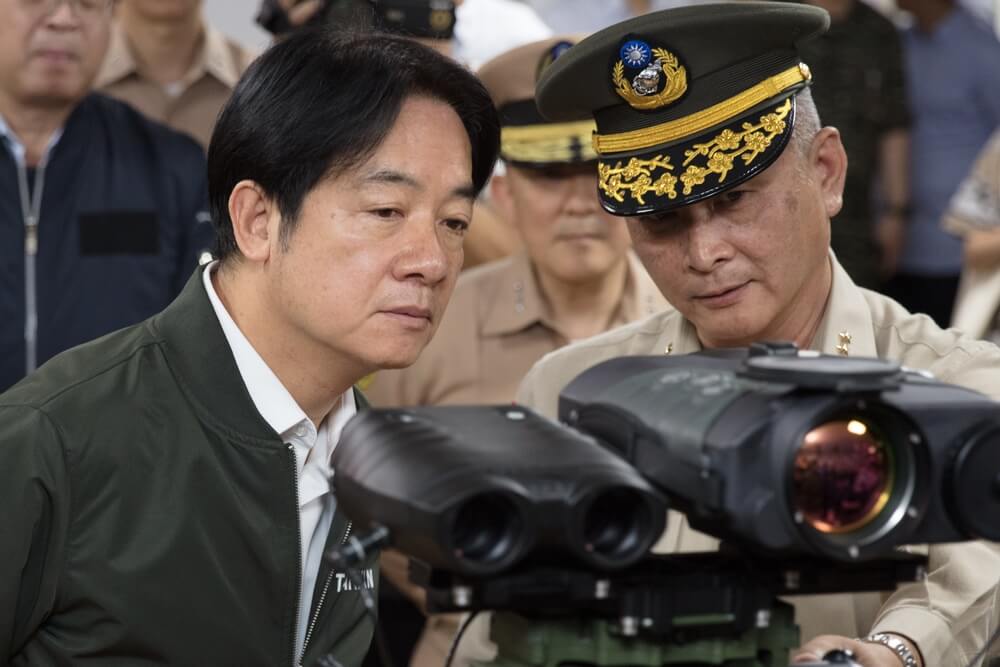 Taiwan serves as a useful legal framework and symbol in this context - President Lai Ching-te
China is no longer merely the target of European and American restrictions, but an actor that retaliates in real time with similar measures.
Taiwan serves as a useful legal framework and symbol in this context, but the key issue is European policy towards Russia and the Chinese economy.
For the EU, the question is no longer whether it seeks "strategic autonomy", but whether it is prepared to pay the price of a consistent policy – towards Moscow, Beijing, and Taipei simultaneously.
If the answer remains equivocal, the Chinese side will rightly see this April episode as the moment when the balance of power in economic competition with Europe began to shift in its favour – not because Beijing became significantly stronger, but because Europe demonstrated how difficult it is to translate political will into a sustainable strategy.
