America's power has never depended solely on the size of its economy or the strength of its military.
Much more deeply and permanently, it has been based on the ability to build a stable circle of allies that multiplies that power. Europe has been the key support in that order.
Together, the US and Europe created a political, economic, and security space that, for decades, was unparalleled by anything else in the international system.
That is why the idea that America can enter into open conflict with Europe, threatening it with tariffs, political coercion, or strategic blackmail, while retaining all the benefits of that relationship, is fundamentally wrong.
This is not a matter of diplomatic tone or the current crisis. It is a matter of misunderstanding the basis of one's own power.
America’s most important economic partner
Europe is not a secondary market for American goods. It is the most important economic partner the United States has.
The transatlantic economy is not simply a sum of bilateral trade balances but a deeply intertwined system of investment, technology, finance, and services.
Millions of jobs in the US directly depend on European investment and access to the European market.
American companies in Europe do not only export products; they also sell high value-added services, finance, software, pharmaceuticals, licensing, and know-how.
These are the sectors in which America makes its largest profits and in which Europe is the most important regulatory and market space after the US itself.
In this context, European countermeasures would not be limited to symbolic tariffs. Europe has regulatory and market power that can target precisely those parts of the American economy most sensitive to political uncertainty.
Losing access to European tenders means fewer contracts for US infrastructure, IT, and defence firms in upcoming budget cycles
Restricting access to public procurement, digital markets, and financial services does not produce an immediate shock but directly alters the business decisions of American companies.
Losing access to European tenders means fewer contracts for US infrastructure, IT, and defence firms in upcoming budget cycles.
Stricter rules for digital platforms increase regulatory costs, slow the expansion of services, and reduce profit margins in the European market, which is crucial for the global growth of American technology companies.
In the financial sector, restrictions and increased supervision affect the cost of capital and reduce the competitive advantage of US banks and funds over European rivals.
The effect does not occur in a single blow but through a series of business decisions that change the flow of investments and reduce the American presence in a market that generates stable and high returns.
When US treasuries cease to be politically neutral
Furthermore, while Europe is not the dominant holder of US government debt, European central banks, funds, and institutional investors are among the largest and most stable foreign holders of US treasuries and other assets.
Their role is not to "sell debt" to destabilise the USA, but rather that European capital forms one of the foundations of trust in the American bond market.
If the political relationship with Europe breaks down, the consequence would not be a sudden financial crisis but a gradual change in investment behaviour: reduced exposure, a higher required risk premium, and increased borrowing costs for the American government.
In a country that already relies on continuous refinancing of its large public debt, even a limited rise in interest rates has long-term fiscal and political consequences.
Destabilisation does not necessarily occur through dramatic moves but through a change in the risk assessment
In such a financial environment, destabilisation does not necessarily occur through dramatic moves but through a change in the risk assessment.
If investors conclude that political conflicts between the US and Europe are no longer occasional incidents but a permanent feature of the relationship, US government bonds cease to be viewed as a neutral and politically safe asset.
Investors seek compensation for the increased risk, leading to a demand for higher yields. Higher yields automatically mean more expensive borrowing for the US government, tighter financial conditions in the economy, and increased pressure on the budget.
The dominance of the dollar as a global currency remains a fact even then, but it ceases to be unconditional.
Energy, security, and the limits of interdependence
The energy dimension further exposes this interdependence. After the start of the Russian invasion of Ukraine, European countries drastically reduced the flow of Russian gas and turned to importing liquefied natural gas (LNG) as an alternative.
By 2025, the US has become the largest source of LNG for the European Union, accounting for about 57% of the EU's total LNG imports.
This means that US LNG shipments have become a significant part of European energy consumption, although Europe still has other sources, such as Norway and Algeria, and is actively working to diversify its energy suppliers and consumption structure.
If energy becomes an instrument of political pressure, Europe will accelerate diversification, even at the cost of higher short-term expenses. The US energy sector, on the other hand, would lose its most important customer and face declining exports, price pressures, and domestic political consequences.
Most US operations outside US territory rely on European bases, airspace, and infrastructure
Energy blackmail in such a relationship produces no winner; it results in a long-term erosion of trust.
The security dimension is perhaps the least visible in daily discussions, but strategically it may be the most important. The American military presence in Europe is not a matter of prestige but of logistics.
Most US operations outside US territory rely on European bases, airspace, and infrastructure. Without that support, US forces can still operate, but with significantly longer preparations, much higher costs, and political uncertainty.
In that case, US military power loses much of the operational advantage that has distinguished it from all other powers for decades. In such a context, Europe does not need to formally close bases to change the reality on the ground.
Administrative delays, legal uncertainty, political conditioning, and limited cooperation are sufficient. These are soft but extremely effective levers that work in the long term.
The consequences of unpredictability
The most serious consequence of a political conflict with Europe would not only be in customs, finances, or military deployment, but in a loss of trust.
When Europeans begin to plan for a world in which Washington is permanently unpredictable and primarily transactional, there will be changes in the way they make decisions.
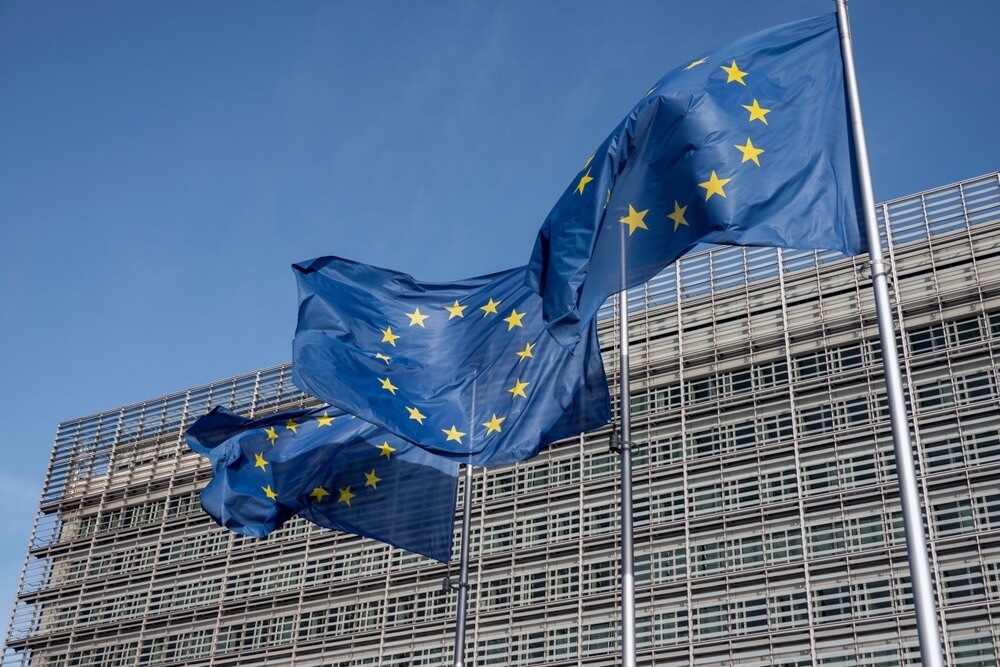 If Europe begins to be treated as an adversary or an object of political pressure, America does not gain more control but weakens its own position
This does not necessarily lead to an open break but to quiet adjustments: reducing reliance on American guarantees, strengthening their own capacities, and seeking alternative political and economic arrangements.
Such decisions are made gradually but can have lasting consequences. Once key policies and investments begin to be shaped by the assumption that America is no longer a reliable support, returning to the previous state becomes extremely difficult.
American power after 1945 rested on a combination of economic strength, military capability, and political reliability. Europe was a key partner in that order, not because it followed America, but because that relationship produced stability on both sides of the Atlantic.
If Europe begins to be treated as an adversary or an object of political pressure, America does not gain more control but weakens its own position.
In such a scenario, the US does not formally lose an ally, but it loses the framework in which its leadership was accepted and effective.
A conflict with Europe would therefore not demonstrate American strength but indicate strategic misunderstanding.
In a world where political, economic, and security power rests on stable relationships and predictable behaviour, weakening ties with its closest partners directly diminishes America's ability to shape outcomes in its favour.
