Brookfield Asset Management and NextEra Energy announced plans on 29 July to develop a large data centre and energy complex on US Department of Energy land in Paducah, western Kentucky.
The companies described the announcement as a $100 billion project. The campus is expected to have more than 1.2 gigawatts of computing capacity, supported by energy infrastructure capable of handling up to 1.8 gigawatts of load. Work is scheduled to begin in 2028, with full construction targeted for completion in 2032.
Location matters more than the size of the project itself. The Paducah Gaseous Diffusion Plant was built in 1952 to enrich uranium, initially for the US nuclear weapons programme and later to fuel commercial nuclear power plants.
Production was suspended in 2013. One of the largest complexes for computing and electricity generation in the country is now planned for the site that served American nuclear policy for decades.
This historical connection carries immediate political weight. In the next phase of technological competition, Washington is relying on assets created during the Cold War.
America’s advantage in artificial intelligence no longer depends solely on the chips, models and capital of Silicon Valley. It also depends on land, power plants, transmission lines, water, fibre-optic connections, permits and the ability to connect a large customer to the grid ahead of competitors. Paducah shows how the infrastructure of a previous strategic era is being given a new purpose.
The US–China competition is entering a phase in which technological power is also measured by the speed of building physical infrastructure. America’s July 2025 AI Action Plan linked AI leadership to accelerated permitting, increased energy capacity and expanded federal land use.
Choosing Paducah turns that policy into a concrete project. The state no longer views data centres as purely commercial facilities, but as part of the country’s industrial and security capabilities.
Electricity has become a bottleneck
As part of the project, NextEra would develop up to two gigawatts of natural gas power plants and battery systems totalling up to 2.6 gigawatts. Brookfield would own and operate the campus. Big Rivers Electric Power, Jackson Purchase Energy Cooperative and Paducah Power System would provide wholesale, distribution and local services.
The companies estimate that construction would employ around 8,000 people, while the completed complex would have about 600 full-time employees.
The figures reveal the scale of the problem facing the US AI industry. In 2023, data centres consumed about 4.4 per cent of electricity in the United States. The Department of Energy estimates that their share could rise to between 6.7 and 12 per cent by 2028.
A more recent estimate by Lawrence Berkeley National Laboratory puts the potential share by 2030 between 9.5 and 15.3 per cent. Even the lower limit will require major new power plants, grid connections and local infrastructure.
The Ministry of Energy highlights the reliability of uninterrupted power supply as one of the main characteristics of large data centres’ electricity consumption
A computing capacity of 1.2 gigawatts represents a load comparable to the consumption of a large city, concentrated in one location and active almost continuously. An AI data centre can hardly adjust its operations to current regional network congestion.
Its business value depends on constant, predictable electricity, with sufficient spare capacity so that the failure of a power plant, transmission line or substation does not shut down expensive computer equipment. The Ministry of Energy highlights the reliability of uninterrupted power supply as one of the main characteristics of large data centres’ electricity consumption.
The announcement of a 2.6 gigawatt battery system does not give the full picture. A gigawatt measures power, while the duration of operation depends on energy capacity expressed in gigawatt-hours. The partners have not yet announced how long the batteries could deliver full power.
For now, they should be regarded as a means of stabilising the system, covering short-term spikes in consumption and supporting the network. Continuous power supply will be provided by gas-fired power plants and connection to the wider power system.
Federal land shortens the road
Paducah is part of a broader state policy. In July 2025, the Ministry of Energy designated four federal sites for the development of AI data centres and new energy capacity. In addition to Paducah, Idaho National Laboratory, Oak Ridge Reservation and Savannah River Site were selected.
In November 2025, a process was announced for private companies to fund, build, power, operate and eventually remove the facilities at the Kentucky site. Bidders were required to ensure the necessary connections and permits, and the financial viability of the project.
The advantage of such locations lies in what the state has already built. Paducah has federally controlled land, industrial access to water, fibre-optic infrastructure, and a connection to the transmission system.
Cleaning and dismantling of the old facilities are still ongoing, so construction must be coordinated with the long-term rehabilitation of the area.
The starting point is still more favourable than a completely new location where every line, pipeline, road and connection would have to be built from scratch.
Washington is thereby trying to shorten the slowest part of the AI investment cycle. The acquisition of servers and chips can be accelerated with money, but the construction of power plants, transmission lines and large substations depends on permits, local regulators, land, environmental procedures and multi-year connection queues.
Private bidders are responsible for financing, operating, permitting, connecting and subsequently removing their own infrastructure
The federal site retains regulatory obligations but consolidates land, existing infrastructure and political priority around a project that the administration treats as a matter of national competitiveness.
The American approach differs from the traditional subsidy to a single factory. The state provides access to the location and expedites the administrative process, while private partners are expected to provide capital, energy, tenants, and bear business risk. Such a model suits the AI industry, where the technology cycle changes faster than public infrastructure projects can usually be completed.
At the same time, it gives the state greater control over the locations where computing capacity of potential importance for the economy and national security is created. Under the terms of the original call, private bidders are responsible for financing, operating, permitting, connecting and subsequently removing their own infrastructure.
Paducah comes days after the Department of Energy selected Amentum to negotiate a one-gigawatt data centre and dedicated power source at Savannah River Site in South Carolina.
This sequence confirms that federal nuclear sites are becoming a distinct category within American industrial policy. They provide space, infrastructure and political priority that private investors can hardly secure on the open market in the same timeframe.
Return of natural gas
Paducah also illustrates the limits of American energy ambitions. The administration is promoting advanced nuclear reactors, geothermal energy and new storage technologies. The project, which is due to begin operating in 2028, will still rely on up to two gigawatts of new gas-fired power plants.
The reason is practical. Natural gas can currently provide large amounts of continuous power on a schedule that most new nuclear projects cannot match, while batteries, which lack proven multi-hour capacity, cannot handle this kind of load on their own.
AI investments therefore reinforce the political and economic significance of gas. For years, technology companies have presented their data centres in terms of renewable energy contracts and emissions reduction targets.
American AI policy will, in its first phase, be more energy conventional than the technological product it serves
The new complexes require electricity at scales and timeframes that put gas turbines back at the centre of development. This will increase demand for pipelines, turbines, connections and long-term supply contracts, and will also lead to disputes over emissions, water use and the local impact of power plants.
Paducah is unlikely to be an exception. Advanced nuclear reactors may later play an important role at federal sites, but projects aiming to operate before the end of the decade will mostly rely on the grid, natural gas, renewables and batteries.
American AI policy will, in its first phase, be more energy conventional than the technological product it serves. That assessment stems from the choice of energy capacity in Paducah and the growing number of American projects that link new data centres with their own gas production and storage.
Who pays the bill?
The most sensitive issue is the price of electricity for households and the wider economy.
In March, the White House established the Ratepayer Protection Pledge, which requires large technology consumers to build, secure, or purchase new generation capacity and pay for the network infrastructure needed by their data centres.
In July, the administration announced that more than 200 additional utility companies, cooperatives, states and developers had signed on to the initiative.
The partners say Paducah complies with that rule. Dedicated power plants and contracts are intended to prevent costs being passed on to households, but the actual level of protection will depend on the final contracts.
The main technology tenant has not been named, the final documents have not been agreed, and the full financial structure has not been presented
It matters who finances the gas power plants, who pays for transmission and distribution works, who bears the cost if construction of the data centre slows down, and whether the tenant will pay for reserved capacity even when it is not used. It is precisely such special tariffs and mandatory payments for reserved energy that form the basis of the White House programme.
That part of the project has not yet been announced. The main technology tenant has not been named, the final documents have not been agreed, and the full financial structure of the announced $100 billion investment has not been presented.
The project is still being negotiated. The current announcement confirms the political and commercial direction, but the final investment decision for the full campus has not yet been made.
From announcement to model
The most likely scenario is phased construction. Brookfield will not build full computing capacity without long-term contracts with one or more major tenants. NextEra will develop energy facilities in line with confirmed load, permits, and power purchase agreements.
The first part of the campus may begin operating in 2028, while its final scale will depend on demand, turbine availability, gas infrastructure and the pace of network construction. This is an analytical assessment based on the planned four-year development period, the absence of a named tenant and the fact that the final documents have not yet been signed.
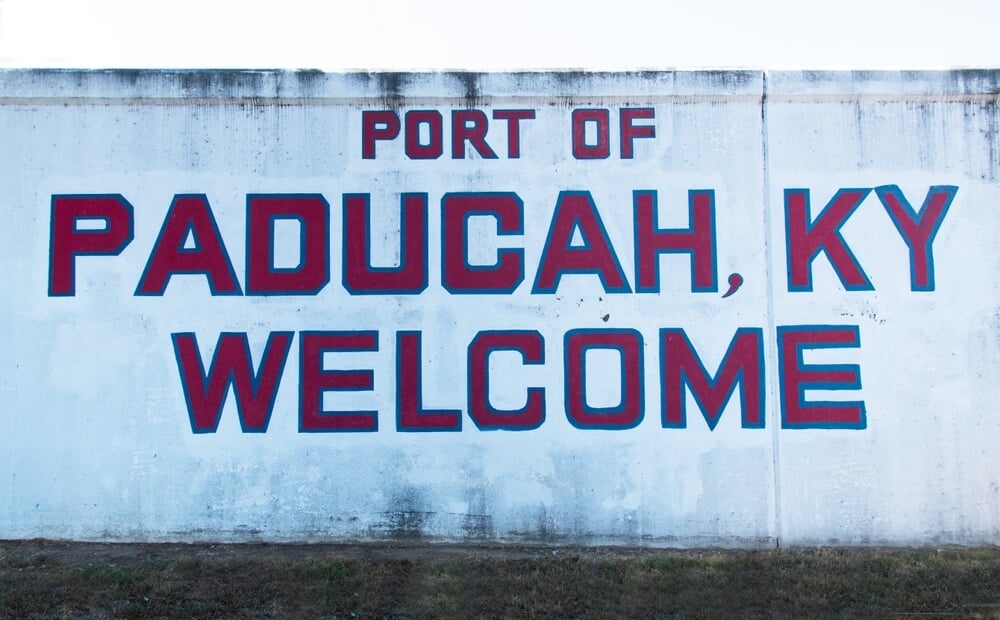 In Paducah, the US government found suitable land, existing infrastructure and a clear reason to prioritise the project
Over the next year, more important than new headline figures will be the announcement of the tenant’s name, the signing of the long-term lease for the federal land, the agreement of the special electricity tariff and the conclusion of the final financing agreements.
If those documents confirm that private users shoulder the cost of generation and the grid, Paducah will become a model for other federal sites. If the risk is transferred to the wider community through regulated tariffs, public guarantees, or network investments, political support for such projects will quickly weaken.
In Paducah, the US government found suitable land, existing infrastructure and a clear reason to prioritise the project. Private partners bring capital, energy expertise and the capacity to manage a large, complex site.
The crucial phase is yet to come. By 2028, they must turn the political decision into permits, contracts, power plants, and connected computing capacity.
If they succeed, former nuclear sites will become the foundation of the American AI industry. If the deadlines slip, Paducah will show that neither federal land nor $100 billion can quickly make up the power shortfall.
