Indonesian President Prabowo Subianto dismissed his chief of staff, Listyo Sigit Prabowo, on 4 November, a day after Listyo, who served as national police chief until October, was arrested on suspicion of involvement in the illegal wiretapping of the president, members of the government and other public figures.
Also arrested were Ahrie Sontani Nasution, head of the national police’s legal service, and Eko Hadi Santoso, a senior instructor at the police training institute. Prabowo appointed Lieutenant General Ariyo Windutomo, who already headed the presidential secretariat, as the acting head of the cabinet.
The decision came just a month after Listyo had been removed from his post as head of the police and transferred to the presidential administration.
The investigation began at a time when Prabowo was already removing from important positions some of the closest associates of his predecessor, Joko Widodo.
The arrest of the man who led the police force for more than five and a half years gives him an additional reason to question its authority and leadership.
At the same time, it raises the question of what limits will be placed on the president's control over the service that handles sensitive information about politicians, government officials, and citizens.
The change in police leadership began on 1 October
In 2014, Widodo appointed Listyo as his personal adjutant, and in 2021 he made him chief of police. When Prabowo replaced him on 1 October with Suyudi Ario Seto, then director of the National Narcotics Agency, the change formed part of the most extensive government reorganisation since the beginning of Prabowo’s mandate.
At the same time, Pratikno, a long-time associate of Widodo, was also dismissed, and his position in the government was taken by Sugiono, a politician from Prabowo’s party.
There is no public evidence that the former president knew about the alleged wiretapping, authorised it, or used the information gathered
Listyo was appointed head of the presidential cabinet, but that office had previously lost part of its remit after the establishment of a special government communications agency.
After the October reshuffle, Indonesian analysts judged that Listyo retained a senior position through that transfer but lost command of the police.
A month later he was in custody, and the police force he had led for years is now managed by a man chosen by Prabowo.
Widodo's son Gibran Rakabuming Raka is Indonesia's Vice-President, and the weakening of figures linked to his father is shifting the balance within the ruling coalition.
There is, however, no public evidence that the former president knew about the alleged wiretapping, authorised it, or used the information gathered.
Wiretapping has left its mark within the police itself
According to a statement by the criminal police on 3 November, during 2025 and 2026 the suspects used the police system for lawful interception of communications, known by the English abbreviation LIMS (Lawful Interception Management System).
Investigators state that they entered phone numbers into the system without the required checks and without an open investigation, and that in October 2026 an order was issued to delete electronic records of monitored conversations.
According to the head of the criminal police, the case was reported on 30 October by a police officer familiar with the alleged activities.
Among the alleged targets were journalists, politicians, representatives of civil society and businesspeople.
The police have interviewed witnesses and seized electronic devices, but have not yet announced the motive or confirmed who received the material.
It will be crucial to establish whether the data was removed completely, whether any copies were preserved, and who may have ordered their deletion
The most serious risk for the president is that people with access to the government's communications interception system monitored his conversations under official authority.
For other targets, the risk is different, because journalists' conversations can reveal their sources, while politicians' and businesspeople's conversations can expose negotiations and plans that have never been made public.
Once it is established who had access to that content, the names of people who did not take part in the wiretapping itself but may have used its results could also emerge.
The deletion of the records was allegedly ordered in the very month that Listyo left the leadership of the police, which points the investigation towards the former command structure.
It will be crucial to establish whether the data was removed completely, whether any copies were preserved, and who may have ordered their deletion.
Doubts about police surveillance long predate this case
The Indonesian public has already confronted accusations that the police are monitoring officials from other government agencies.
In May 2024, it was reported that individuals suspected of belonging to the Densus 88 counter-terrorism police unit had followed Senior Prosecutor Febrie Adriansyah into a restaurant in Jakarta.
In response to these allegations, then President Widodo convened a meeting between police chief Listyo and the chief state prosecutor. At that time, the prosecution was investigating a major corruption scandal in the mining industry.
The current investigation may also affect relations between the police, the prosecutor’s office and the presidential administration
The identity of the people who followed the prosecutor, and the authority under which they were acting, has not been officially confirmed.
That episode shows that suspicions about police surveillance have previously caused conflicts between state institutions. The current investigation may also affect relations between the police, the prosecutor’s office and the presidential administration, which were strained even before the November arrests.
The police remain under presidential command
Prabowo appointed the commission for police reform on 7 November 2025, following a wave of protests during which a police vehicle killed delivery rider Affan Kurniawan.
In May this year, the commission submitted recommendations to the president, including strengthening the National Police Commission, known as Kompolnas, which is responsible for external oversight of police work. The direct subordination of the police to the president was established by a law passed in 2002.
In May, Prabowo decided to maintain that arrangement and backed greater powers for Kompolnas, including binding decisions and a more independent selection of its members. The chief of police is appointed by the president with the consent of parliament. The published statements do not yet explain what approach Kompolnas will take to the most sensitive police operations.
A special law on wiretapping is being prepared in parliament
On 9 June, Parliament adopted amendments to the Law on Police, which entered into force on 17 June. Among other changes, active police officers were given the option of performing certain tasks in other state institutions.
Civil society organisations challenged the law, arguing that it increases the political influence of the police and narrows the scope of the professional civil service, and in July the Constitutional Court began considering a request to review the procedure by which the law was adopted.
At the same time, a special law on wiretapping is being prepared in parliament. It would unify rules that are currently scattered across several regulations and could more precisely determine who authorises the interception of communications, how records are kept, and who outside the police checks the legality of such measures.
The military is present, but no link to the arrests has been confirmed
The announcement of increased military presence and heightened alert in Jakarta also attracted attention, although it has not been confirmed that this is connected to the arrests.
In Indonesia, where during the three decades of Suharto’s rule the military held a strong position in civil administration, such news is cause for concern.
That sensitivity was further heightened by the 2025 amendment to the Military Law, which opened more civilian posts to serving officers.
In little more than a year both services acquired broader powers to assign their members to the civil administration
With the June amendments to the Law on Police, a similar option was introduced for police officers, so in little more than a year both services acquired broader powers to assign their members to the civil administration.
The appointment of Lieutenant-General Windutomo as acting chief of staff aligns with Prabowo’s tendency, and that of the former general himself, to rely on people with military experience, even though Windutomo has previously worked in the presidential administration.
Prabowo will first consolidate control, then decide on oversight
In the coming weeks, it is highly likely that the president will support extending the investigation to everyone who granted access to the system and handled the collected information.
At the same time, he will aim to give the new chief full authority over the police leadership, because a public conflict within the service would further complicate the management of the state.
He already has the most important political and legal tools for this, having replaced the chief of police, removed his predecessor from the cabinet, and retained direct authority over the police, which was confirmed back in May.
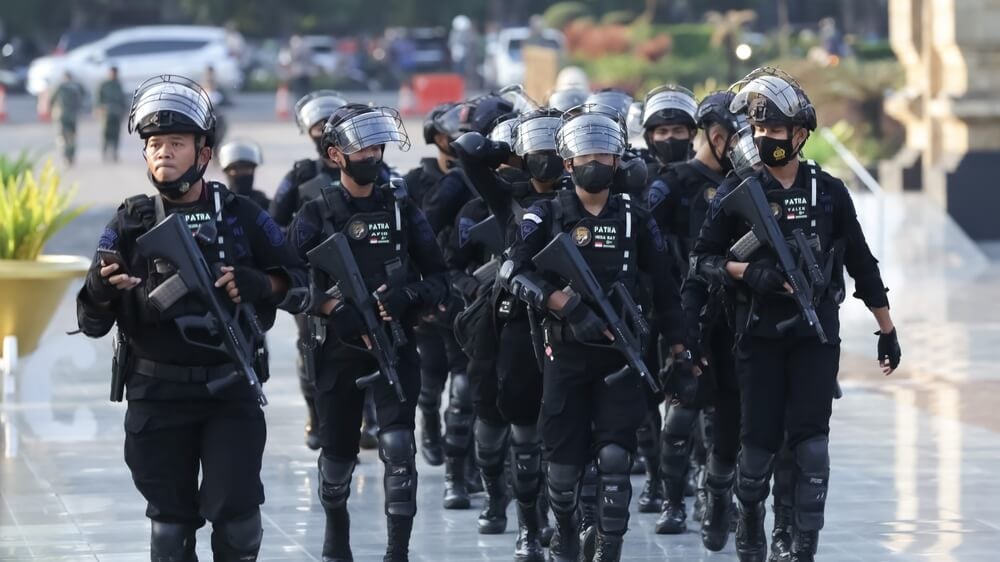 Prabowo will probably emerge from this affair with greater influence over the police
It will be more difficult to determine how the wiretapping was carried out and whether the recorded conversations reached anyone outside the police.
Investigators’ interest in pursuing evidence does not necessarily coincide with the political elite’s interest in regaining control as quickly as possible, and journalists and other potential targets have a right to know whether they have been wiretapped.
Minister Yusril Ihza Mahendra, who is responsible for law, human rights, immigration and the penal system, said on 3 November that the investigation does not yet provide grounds for treason charges.
A representative of the presidency was more severe the next day, stating that the case could represent a threat to the state.
Prabowo will probably emerge from this affair with greater influence over the police, while those who have tied their careers to the Widodo administration will be in a weaker position.
The relationship with Vice-President Gibran will therefore remain one of the key issues within the ruling coalition in the run-up to the 2029 elections.
The long-term outcome, however, will depend on the rules that apply to each subsequent chief of police, regardless of who becomes president.
If access to secret surveillance continues to be controlled only within the same command structure, changing the people at the top will not prevent similar abuses from happening again.
Reform will have real substance only if all wiretapping requires clear authorisation and leaves an access record that police leadership cannot erase.
