On 9 November, US media reported that investigators from the Bureau of Industry and Security (BIS), the US Department of Commerce’s export control service, had their work restricted after Nvidia’s lawyers contacted a senior official in the department.
The investigation concerned Singapore-based Megaspeed, Nvidia’s largest customer in South-East Asia, whose reported assets rose from $33 million to $3 billion between 2023 and 2024. US authorities are examining whether some of its businesses gave Chinese users access to artificial-intelligence processors whose export to China is restricted.
The Department of Justice has continued the criminal investigation, but it has not yet been explained to the public why BIS stopped working on the case or who was checking new shipments in the meantime.
In June 2024, Jensen Huang, founder and CEO of Nvidia, met Alice Huang, then associated with Megaspeed, in a bar in Taipei. The encounter was captured in a photograph and, according to news reports, US intelligence officials later concluded that she had been gathering information for Chinese intelligence.
On 8 November, Huang admitted in a memo to employees that he had been unfaithful to his wife, and Nvidia’s board of directors launched an independent investigation. Beijing rejects the espionage allegations, and the board says it has no reason to believe that state or business secrets were leaked.
Regardless of the outcome of the probe into the espionage allegations, contacts between Nvidia’s top legal team and Commerce Department leadership have seriously called into question the independence of oversight of a company on whose products America’s technology strategy depends.
The criminal investigation continues, but the public does not know how new shipments have been checked since BIS withdrew from the case.
The boss’s name in the memo from Nvidia’s lawyer
BIS had been investigating Megaspeed’s dealings for months, checking whether processors shipped to South-East Asia ended up with Chinese customers who require special US licences for such equipment.
In August 2025, Nvidia’s chief legal officer, Tim Teter, contacted the investigators and stated that he had been authorised to speak to them by Jeffrey Kessler, the undersecretary at the Department of Commerce who heads BIS and is the investigators’ most senior supervisor.
Before that, Teter had reportedly asked Kessler whether BIS was involved in the Singaporean authorities’ treatment of Alice Huang. The investigators declined the meeting, concerned that the lawyer for the company they were investigating had referred to their boss by name.
Singapore later denied that it was investigating Alice Huang for espionage, but confirmed that it was investigating Megaspeed’s activities.
At the end of 2025, the Department of Justice requested that BIS suspend work on the case and continued the criminal investigation under its own leadership
Kessler told the investigators to follow the rules. There is no evidence that he ordered information to be withheld or that Nvidia unlawfully stopped the investigation, and company spokesperson John Rizzo said that Nvidia is communicating with officials to answer their questions, provide field data and seek guidance.
However, referring to Kessler was not harmless, because the head of BIS can be the final arbiter in administrative proceedings against an exporter, and his contacts with the company could become the subject of evidentiary proceedings.
According to the same reports, officials were required to seek approval for any contact with Nvidia after that point and were not allowed to share data about Megaspeed outside the agency.
At the end of 2025, the Department of Justice requested that BIS suspend work on the case and continued the criminal investigation under its own leadership.
BIS is both a regulator and an authority whose agents can conduct criminal investigations, searches and arrests. Cooperation with the Department of Justice in complex cases is common, and separating investigative actions may be justified to protect evidence.
Export bans make sense only if supervision of their implementation continues while criminal proceedings are under way.
Billions of dollars and an owner no one can identify
Megaspeed received its current name in 2023, when Alice Huang became its controlling owner. Ownership was soon transferred to the Singapore-based firm Swiftdata, and researchers at the Washington-based organisation C4ADS, which monitors illicit trade networks, have not been able to determine who ultimately controls the firm.
For export control, this is crucial information, because the state must know who actually controls the buyer.
According to an analysis of customs documents published in December 2025, companies linked to Megaspeed had imported at least $4.6 billion worth of Nvidia equipment by November that year.
The same analysis showed that approximately 50,000 processors recorded in trade data were missing from the inventory that Nvidia provided to US authorities.
These data do not prove smuggling to China, and Megaspeed denies illegally diverting the equipment
Nvidia later said it had checked additional storage facilities but did not say how many devices it had found, and two data centre operators disputed its claim that they had Megaspeed equipment.
These data do not prove smuggling to China, and Megaspeed denies illegally diverting the equipment.
When a manufacturer sells goods worth billions of dollars and at the same time submits data on which the state verifies compliance with the ban, verification of those data must remain in the hands of state institutions.
A Chinese user may be far from the Chinese border
Monitoring is further complicated when access to computing power is purchased rather than the processors themselves. A company from China can rent a server in Indonesia and use its capacity over the internet to train artificial intelligence models, while the device remains in the country where it is installed.
According to a December 2025 report, the Chinese company Alibaba has used computing facilities associated with Megaspeed, and such deals can be entirely legal under certain conditions.
Washington depends on the cooperation of Singapore, Malaysia and Indonesia, whose laws and economic interests are not the same as those of the United States
On 31 May, BIS clarified that a licence for certain advanced processors is also required when they are acquired by a company outside China if the company’s head office, or the head office of its ultimate parent company, is located in China or in another country subject to the same restrictions.
That rule does not automatically apply to all access to a remote server. Washington depends on the cooperation of Singapore, Malaysia and Indonesia, whose laws and economic interests are not the same as those of the United States.
Budget and security in the same decision
Nvidia has exceptional bargaining power, as its processors power many of the most advanced artificial intelligence systems. At the same time, the administration linked the approval of certain sales to China to revenues for the US budget.
An arrangement for H20 processors was announced in August 2025, under which the state would receive 15 per cent of the revenue from sales to China, but it was never implemented.
In December 2025, Trump authorised the export of more powerful H200 processors, and in January 2026 a 25 per cent tariff was imposed on US imports of certain advanced processors, specifically including the H200.
Those arrangements do not prove that the Megaspeed investigation is constrained by money, but an administration that ties export security decisions to budget revenue can hardly claim that the two interests are separate.
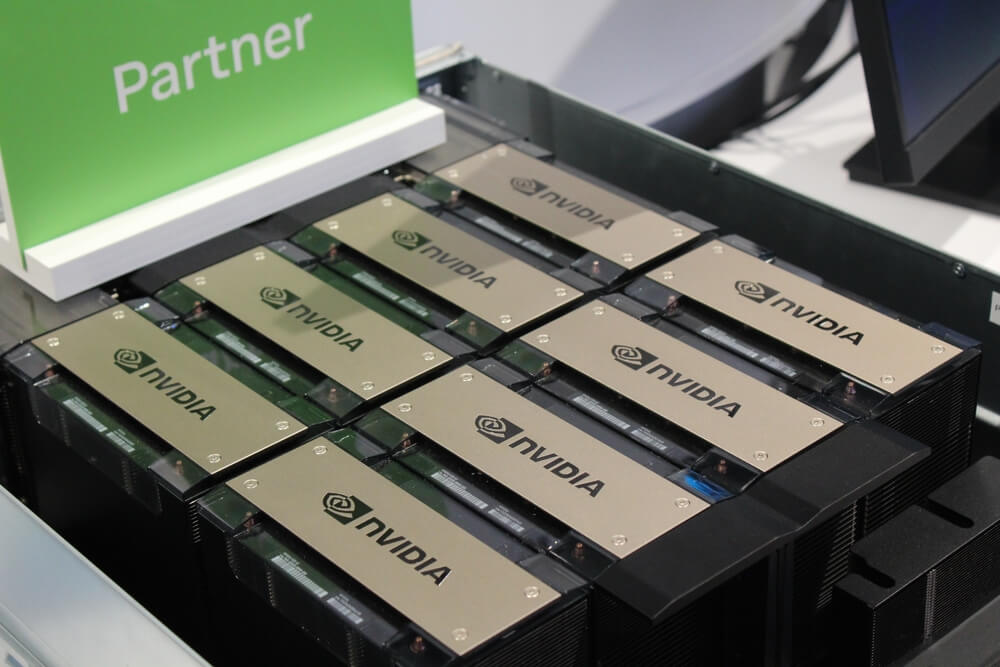 In December 2025, Trump authorised the export of more powerful H200 processors
Huang argues that strict bans only accelerate the development of Chinese competitors. Beijing, however, is building its own industry even when Washington allows purchases. In early 2026 it restricted imports of the newly approved H200 processors.
According to news reports, Trump was informed in late 2025 about Huang and Alice Huang’s relationship, and about intelligence concerns regarding her, before approving the export of the H200 in December.
The White House did not explain whether that information was even taken into account when deciding whether to approve the export. Huang has since spoken to Trump, who publicly endorsed him on 9 November and said the FBI was investigating the case.
In early November, Nvidia began asking new partners in South-East Asia to opt in to a system that tracks the layout and location of processors.
Location data, however, are not automatically shared with either the manufacturer or the US government. Such control has full value only when state authorities can verify the data themselves.
The board of directors before its own rules
Nvidia’s May filing with the US Securities and Exchange Commission stated that the nominating and corporate governance committee oversees government relations, trade compliance and related risks.
The board cannot claim that this risk falls outside its jurisdiction.
Shareholders filed a class action lawsuit against Nvidia and Huang on 9 November over the alleged concealment of risks
An independent review should also determine when the directors first learned of the suspicions about Megaspeed, what they were told about its ownership and purchases, and when they were informed of Huang’s relationship with Alice Huang.
Shareholders filed a class action lawsuit against Nvidia and Huang on 9 November over the alleged concealment of risks.
Whether the company rigorously checked large deals involving sensitive equipment, or simply saw Megaspeed primarily as a fast-growing customer, depends on the outcome of the investigation.
The real pressure starts in January
The House Republican committee chairs have invited Huang to take part in a closed-door briefing on security risks on 18 November.
Democratic members of the Foreign Affairs Committee are asking Commerce Secretary Howard Lutnick to explain what the administration knew about the intelligence warnings and why it nevertheless approved the export of advanced equipment.
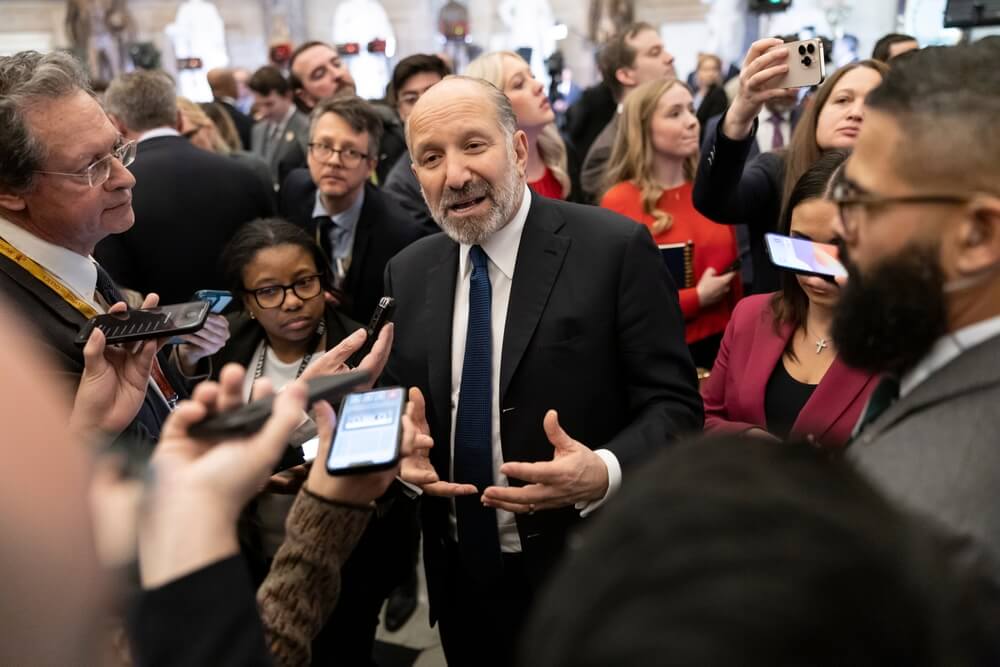 Democratic members of the Foreign Affairs Committee are asking Commerce Secretary Howard Lutnick to explain what the administration knew about the intelligence warnings
House Democratic Leader Hakeem Jeffries has called for stronger oversight of chip sales to China, and Senator Chris Coons has announced an inquiry.
If Huang attends the closed briefing on 18 November, he will, for the time being, avoid giving public testimony. The first test will be the annual defence bill negotiations, which take place behind closed doors.
The Senate version gives Congress the power to review permits to export advanced chips to China and to introduce location tracking for exported processors, but similar provisions were removed from the final text last December after lobbying by Nvidia and opposition from the White House.
The real pressure will begin in January, when Democrats take control of both houses of Congress and gain the power to subpoena the Commerce Department’s chronology of actions, its correspondence with Nvidia’s lawyers, and data on shipments to Megaspeed.
The criminal investigation could take years, and its outcome will not answer the question this case raises.
If the political leadership is found to have limited independent checks because of Nvidia’s economic and strategic importance, Washington will itself have weakened the export controls it presents as a matter of national security, and Beijing will benefit the most.
