The recent dispute between Daron Acemoglu and The Economist becomes much more interesting when viewed as something larger than a disagreement over institutions or artificial intelligence.
At the heart of it lies a broader question: what happens when a prize turns an economist, writer or political figure from the author of a particular contribution into someone who is perceived almost as an authority on an entire field? In Acemoglu’s case, part of the unusually intense scrutiny he is now facing may well be the price of becoming a Nobel laureate.
One point should be clear from the start. Acemoglu did not become famous in economics because of the Nobel Prize. Long before receiving it, he was already one of the world’s most cited and influential economists. Even The Economist, while sharply criticising him, acknowledges the extraordinary scale of his academic output and influence.
But when he received the 2024 Prize in Economic Sciences, together with Simon Johnson and James Robinson for their work on how institutions are formed and how they affect prosperity, his public status changed. He was no longer simply Daron Acemoglu, the MIT economist. He became “Nobel laureate Daron Acemoglu.”
That label makes the target much larger.
The Economist essentially asked whether one of the world’s most influential economists is really as persuasive as his reputation suggests.
Acemoglu responded that he had no objection to scientific criticism but objected to the way more than three decades of academic work were judged partly through anonymous comments and informal opinions attributed to other economists.
There is nothing wrong, of course, with questioning Acemoglu’s research. A Nobel prize should never make anyone immune from criticism. Yet there is also something peculiar about the way the prize first elevates a scholar into a symbol of intellectual authority and then encourages people to test whether that authority was deserved in the first place.
“The Pretence of Knowledge”
Perhaps the more interesting issue, therefore, is the Nobel system itself.
Strictly speaking, the prize commonly called the “Nobel Prize in Economics” was not among the original prizes established by Alfred Nobel. Its official name is the Sveriges Riksbank Prize in Economic Sciences in Memory of Alfred Nobel, created by Sweden’s central bank in 1968. It follows similar selection procedures and has almost exactly the same prestige, but economics was not included in Nobel’s original will.
More importantly, one of the greatest economists ever to receive the prize raised precisely this concern more than half a century ago. In 1974, Friedrich Hayek said that, had he been consulted about establishing such a prize, he would have advised against it.
Economics deals simultaneously with people, institutions, expectations, politics, culture, technology and history
His concern was striking: the award could confer on economists a degree of public authority that no economist should possess. His Nobel lecture was aptly titled “The Pretence of Knowledge,” warning economists against imitating the apparent precision of the physical sciences in a field dominated by complex human behaviour.
Fifty years later, that warning still looks remarkably relevant.
Economics is not physics. A physicist may be able to observe the behaviour of matter under defined conditions, a chemist can demonstrate the properties of a new molecule, and a medical researcher can test a treatment through controlled trials.
Economics deals simultaneously with people, institutions, expectations, politics, culture, technology and history. The same policy can produce different outcomes in different countries. The same data can be interpreted differently by serious economists working with different models.
Not a certificate of infallibility
That makes the idea of identifying the “best economist” inherently problematic. The issue becomes even more obvious with the Nobel Prizes for Peace and Literature. Who can objectively determine the greatest novelist in the world? By what measurable standard can anyone establish who has made the largest contribution to peace?
A political leader celebrated for making peace at one moment may become associated with conflict a few years later. A writer praised as a literary genius may later become deeply controversial because of political or moral positions.
To be fair, Nobel committees do not formally claim that they are identifying the “best person in the world.” They generally recognise a particular contribution, body of work or achievement. The problem comes later.
Public perception transfers the award from the work to the individual. “This contribution was judged worthy of the Nobel Prize” gradually becomes “this person is one of the ultimate authorities in the field.”
Nobel history itself shows why that is dangerous.
The 1973 Peace Prize was awarded to Henry Kissinger and North Vietnamese negotiator Le Duc Tho for the Vietnam ceasefire. The decision was so controversial that two members of the Nobel Committee resigned. Le Duc Tho declined the prize on the grounds that genuine peace had not yet been achieved. It remains one of the most disputed decisions in the history of the award.
Aung San Suu Kyi received the Nobel Peace Prize in 1991 for her struggle for democracy and freedom in Myanmar. Decades later, she faced severe international criticism over her response to the persecution of the Rohingya and for defending aspects of her government’s conduct. Calls followed for her prize to be withdrawn, although Nobel rules do not permit that.
Ethiopian Prime Minister Abiy Ahmed received the Peace Prize in 2019 for his role in making peace with Eritrea. Within roughly a year, Ethiopia descended into the devastating Tigray conflict. The Nobel Committee later felt compelled to emphasise that the award reflected the expectations created by the peace process at the time.
Perhaps the award system is at its strongest when it recognises a clearly identifiable discovery or solution
Literature has produced similar controversies. Peter Handke’s 2019 Nobel Prize reignited intense debate over his statements during the Yugoslav wars, his attitude towards Slobodan Milošević, and his attendance at Milošević’s funeral. The argument rapidly moved beyond literary merit into the political and moral character of the laureate.
Even the natural sciences are not completely protected from retrospective doubt. António Egas Moniz received the 1949 Nobel Prize in Physiology or Medicine for the therapeutic value attributed to prefrontal leucotomy, later widely known as lobotomy.
The procedure was subsequently associated with severe side effects and profound personality changes and was largely abandoned as psychiatric medicine developed. Nobel recognition did not make the treatment eternally correct.
So, the Nobel Prize is clearly not a certificate of infallibility. (I already mentioned the absurdity of the Nobel Prize in economics nearly two years ago).
Perhaps the award system is at its strongest when it recognises a clearly identifiable discovery or solution. If a biological mechanism has been discovered, a molecule identified, a physical phenomenon demonstrated or a treatment developed, the object of the award is relatively clear.
Even then, future research may change the interpretation, the distribution of credit may be contested, and the laureate may later become morally controversial. But at least the achievement itself is easier to define.
In economics, peace and literature, the boundaries are much less clear. Nobel recognition in such fields may therefore be healthier if it is treated not as an official certification of truth or superiority, but as the judgement of a particular committee, at a particular moment, that a particular contribution deserves exceptional recognition.
The pie can grow while the slices change
This brings us back to Acemoglu.
The Federal Reserve wealth chart that prompted this discussion shows a major change in American wealth distribution between 1993 and 2023. Using the chart’s definition of the middle class as households between the 20th and 80th income percentiles, that group’s share of total household wealth fell from roughly 36–37 per cent to around 26 per cent.
Over the same period, the wealth share of the top 1 per cent rose from about 17 per cent to roughly 26–27 per cent, eventually overtaking the broad middle-income group.
That graph does not prove all of Acemoglu’s theories.
It does not establish that institutions are necessarily the dominant causal explanation of economic development. It does not resolve methodological criticisms of the famous empirical work linking colonial mortality, institutions and long-run prosperity. Nor does it demonstrate that Acemoglu’s relatively cautious forecasts about artificial intelligence will prove correct.
On these points, The Economist has legitimate questions to ask. The causal relationship between institutions and development has been debated for years. Even the Nobel Committee’s technical discussion recognises the difficulty of separating institutions from reverse causality and alternative explanations involving geography, culture and history. Other scholars have every right to test those findings again. That is precisely how science is supposed to work.
The same applies to AI. Acemoglu’s work has produced relatively cautious estimates of the productivity benefits artificial intelligence may generate over the coming decade. Those estimates are serious, but they remain estimates of the long-term consequences of a technology still developing at extraordinary speed.
Just as few observers in 1995 could have predicted all the businesses the internet would eventually create, it is difficult today to calculate every new product, profession or business model that AI may generate.
Here The Economist has a point.
But Acemoglu also has a powerful argument that cannot simply be dismissed: technological progress increasing total wealth is not the same as that wealth being broadly distributed.
The Federal Reserve wealth chart does not validate his entire intellectual framework, but it certainly demonstrates that the question he is asking is real
Much of Acemoglu’s work with Pascual Restrepo focuses precisely on this distinction. Automation can shift tasks from labour to capital, reducing demand for certain forms of work and weakening wages.
At the same time, productivity improvements and the creation of new tasks can work in the opposite direction. The final outcome depends not simply on whether technology advances, but on what kind of technology is developed, who owns it and how the institutional environment distributes its benefits.
That is where the Federal Reserve chart matters.
The United States has produced extraordinary technological progress over the past three decades. It has created some of the most valuable companies in human history. Financial markets expanded, productivity improved, per-capita income increased, and entire industries were transformed. Yet during the same period, the ownership of wealth became considerably more concentrated at the top.
So, The Economist’s proposition that technology can create enormous prosperity and Acemoglu’s warning that the resulting prosperity may be distributed very unevenly, are not mutually exclusive.
Both can be true.
The pie can grow while the slices change.
My earlier assessment therefore still stands. The Economist is justified in questioning weaknesses in Acemoglu’s empirical work, his tendency at times to sound excessively cautious about technological change, and the danger of making “institutions” such a broad explanatory concept that it risks explaining almost everything.
Acemoglu, however, is asking an equally important question when he insists that technological progress does not automatically improve the position of the majority and that institutions, corporate power, ownership and labour’s bargaining position shape the final outcome. The Federal Reserve wealth chart does not validate his entire intellectual framework, but it certainly demonstrates that the question he is asking is real.
The most valuable distinction
Yet the most intriguing aspect of this dispute may still be the Nobel Prize itself.
Had Acemoglu never received the Nobel, The Economist could obviously still have criticised one of his papers or challenged his ideas. Academics would have debated the merits of the criticism, as they always do. But a headline asking whether one of the world’s most influential economists is really as convincing as people think would probably have carried less symbolic weight.
The Nobel first enlarges the individual and then creates an incentive to ask whether the person deserved to become that large.
It places a crown on someone’s head and then invites everyone to see whether the crown can be knocked off.
Part of what has happened to Acemoglu can be understood in those terms. The Nobel Prize did not make him an important economist; he was already an exceptionally influential scholar. What it did was turn him into a symbol of economic authority for millions of people outside academia.
From that moment on, every statement became not merely “Acemoglu’s view” but “the view of a Nobel Prize-winning economist.” The inevitable consequence is that every error, forecast and theory attracts far more aggressive scrutiny.
Perhaps the solution is not to diminish the Nobel Prize but to reduce the authority we attach to it.
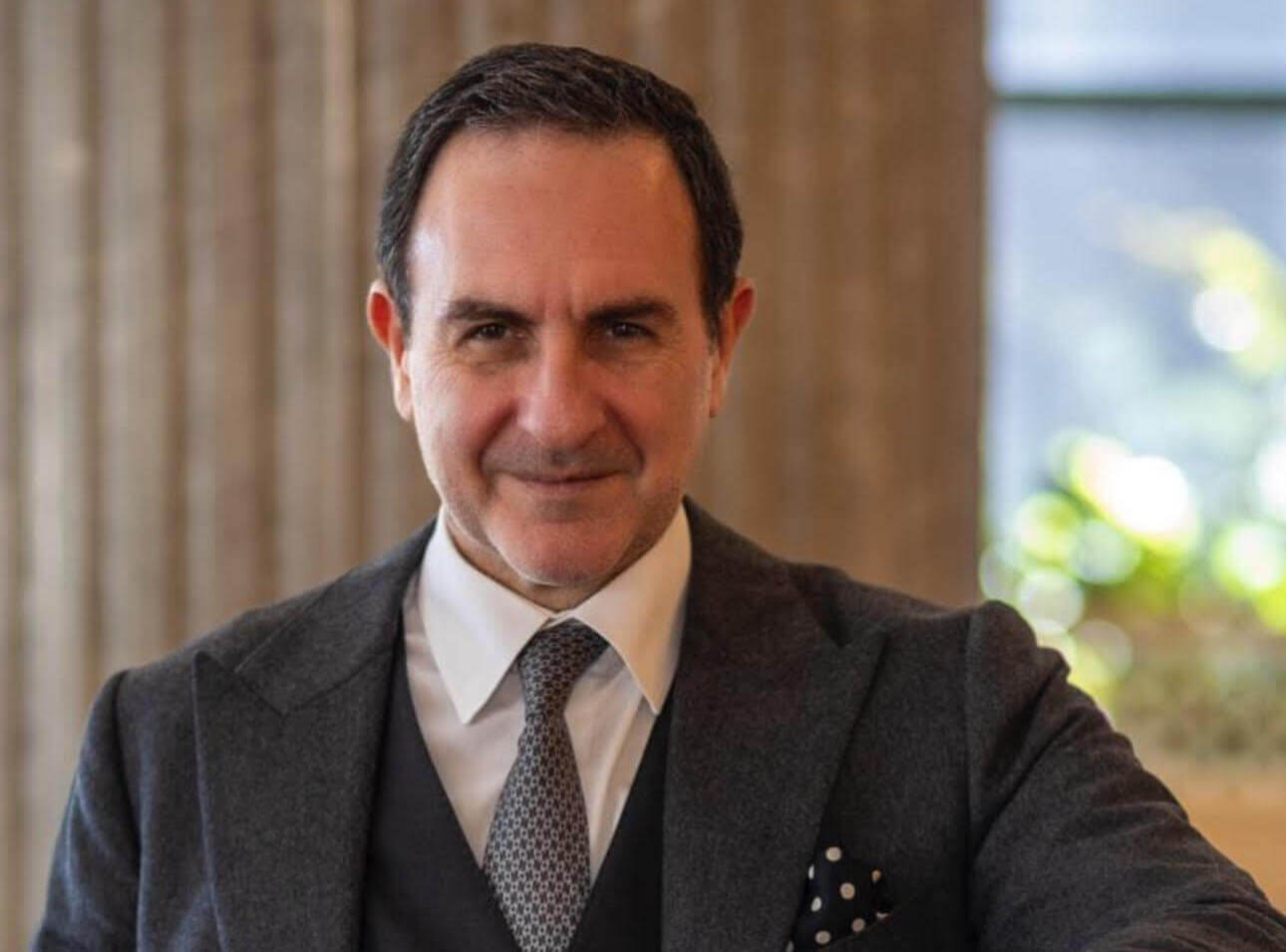 The problem with the Nobel may not be that prizes are awarded. The problem may be our tendency to transform recognition of a contribution into an endorsement of the entire person - Emre Alkin
A person can make an extraordinary contribution in one field without being right about everything else. An economist can produce groundbreaking research on institutions and still be wrong about artificial intelligence. A political leader can help end one conflict and later make grave mistakes. A great novelist can hold objectionable political views. Even a Nobel-winning scientific idea can be revised or rejected as knowledge advances.
That is how knowledge progresses.
The problem with the Nobel may not be that prizes are awarded. The problem may be our tendency to transform recognition of a contribution into an endorsement of the entire person.
That leads to a more balanced conclusion about the Acemoglu–Economist dispute. The Economist is right to reject any notion of Nobel immunity. Acemoglu’s arguments should not be accepted merely because he holds the prize.
But when criticism shifts from “Is this argument correct?” to “Was this man ever worthy of so much admiration?”, scientific debate risks becoming a struggle over intellectual status. In reacting against excessive glorification, it is easy to move towards excessive demolition.
The Federal Reserve graph brings the debate back to something more concrete. The rising share of wealth held by the top 1 per cent and the declining share held by a broad middle-income group demonstrate that Acemoglu’s question – who actually receives the gains from economic and technological progress? – is entirely legitimate. But the chart is not a certificate proving his institutional theory or his AI forecasts correct.
Nor should the Nobel Prize ever be such a certificate.
Hayek’s warning from half a century ago remains remarkably apt: a prize in economics risks giving its recipient an authority that no economist should have.
Perhaps we should therefore ask less often, “What does the Nobel laureate say?” and more often, “What does this particular piece of research actually show?”
That would also be fairer to Acemoglu. His arguments should not be accepted because he won the Nobel, but nor should there be a special appetite to disprove them because he did.
Because in academia, the most valuable distinction is still not a Nobel Prize.
It is being right.
