European Commissioner for Trade and Economic Security Maroš Šefčovič presented the early warning network for supply disruptions in Hanoi on 26 November.
Through this network, the European Union and its Pacific partners will notify each other when there is a risk of shortages of important raw materials and components.
The network was launched at the second meeting between the EU and these countries on trade and investment, and its participants will meet for the first time in early 2027.
China has postponed until 10 January 2027 the implementation of a broader package of restrictions on the export of rare earths and their processing equipment.
While the network is still negotiating how it will operate, European magnet and car manufacturers must plan their supplies in case Beijing does not extend the delay.
The EU’s Pacific partners are members of the Comprehensive and Progressive Agreement for Trans-Pacific Partnership (CPTPP), a trade agreement between 11 Pacific Rim countries, including Japan, Canada, Australia, Mexico, Vietnam and the United Kingdom.
The agreement still has 12 members, as Costa Rica withdrew from accession at the end of October, although negotiations were essentially completed in May.
EU trade ministers will discuss relations with the bloc on 30 November in Brussels. Before them lies the question of what the Union expects from a partner that warns that a commodity is running out and then plans to limit its export in order to preserve it for its own industry.
The network is voluntary, and each government reserves the right to act in line with its own regulations and international obligations.
The statement adopted in Hanoi allows governments to discuss measures and inform partners in a timely manner, but only when they judge this to be necessary.
Neither a deadline for warnings nor an obligation for governments to consult each other before restricting exports has been established.
The partners would benefit most from talking before one of the participating countries restricts exports, while its government is still deciding.
They can then still persuade it to ban the export of only those goods that are genuinely in short supply or to introduce the ban for a shorter period. Once the measure takes effect, factories in other countries usually have no option but to look for alternatives from suppliers already approached by competitors.
Factories are the first to know how much they can withstand
Rare earths are a group of 17 metals. Some are essential for the strongest permanent magnets, which are used in electric motors, wind turbines and military equipment.
From 4 April 2025, China requires permission to export seven such metals – samarium, gadolinium, terbium, dysprosium, lutetium, scandium and yttrium – as well as products containing them. Those rules still apply to dysprosium and terbium, without which magnets lose their strength at high temperatures, such as in electric motors.
The delay until 10 January relates to the broader package from October 2025, which included five additional metals – holmium, erbium, thulium, europium and ytterbium – as well as certain processing equipment and technology.
Implementation of that package was initially postponed until 10 November 2026. With its decision of 9 November, Beijing gave buyers a further two months, without any guarantee that it will extend the deadline again.
After the introduction of the April rules, Chinese exports of the goods they cover fell sharply during April and May 2025. On 4 June, the European Association of Automotive Suppliers announced that some plants and production lines in Europe had already stopped operating.
A buyer seeking quotes from three suppliers at the same time can appear, on paper, as three separate buyers
According to the International Energy Agency, in 2024 China processed 91 per cent of the world’s rare earths used for magnets and produced 94 per cent of the strongest permanent magnets, which are made by pressing and heating rare-earth powders. A factory that runs out of them can hardly find another supplier quickly.
Customs data only show that imports have fallen, whereas the factory knows exactly which magnet it lacks and how many days it can operate with existing stocks.
A manufacturer that receives such a timely warning can check whether it can install a magnet from another supplier in the same component or change the production sequence. Smaller parts manufacturers, which find it harder than large companies to secure deliveries years in advance, would benefit the most.
A buyer seeking quotes from three suppliers at the same time can appear, on paper, as three separate buyers. Governments that only collect such enquiries may overestimate the shortage and procure the same goods simultaneously.
A more reliable picture comes from comparing confirmed deliveries with the number of days plants can continue operating using their inventories.
To do that, there is no need to disclose customer names, prices, or other business secrets. It is enough to distinguish over time between a factory at risk of shutting down next week and one that is building up stocks for the coming month.
Japan has secured what Europe is still seeking
In May, Australia and Japan expanded their cooperation on critical minerals, raw materials that governments consider crucial for industry and defence.
The Australian government has announced support of up to A$1.3 billion, through its Critical Minerals Fund and Export Finance Agency, for projects involving Japanese companies.
Part of this amount has not yet been formally approved. The package also includes letters of support, in which the Australian government informs companies that it is ready to take part in financing, without committing to provide the money.
The supported projects are intended to supply Japan with gallium, nickel, graphite, rare earths and fluorite. Japan wants to secure more stable deliveries and reduce its dependence on China, while Australia aims to stop exporting unprocessed raw materials, process them domestically and thus increase its earnings.
What such cooperation delivers in practice is illustrated by the Australian company Lynas, one of the few producers of processed rare earths outside China.
According to its stock exchange announcement on 10 March 2026, the contract with its Japanese partner JARE, a company owned by the Japanese trading house Sojitz and Japan’s state agency for metals and energy security, is valid until 2038.
Up to 75 per cent of Lynas’s production of heavy rare earth oxides, a processed raw material used to make magnets, will be available to Japanese industry, and JARE has committed to buy an amount equal to half of that production.
European buyers can request offers from the same manufacturer, but half of its production is already taken up by the Japanese purchase obligation, and Japanese industry is contractually promised up to three-quarters.
When governments estimate how much of a commodity will be available during a shortage, they must distinguish between how much a plant can produce and how much output it still has available for sale. The Hanoi network can help determine this earlier, but contracts still decide who receives the goods.
If European countries purchase jointly, they will not compete with one another and drive up the price
Brussels is developing its own procurement methods. The RESourceEU plan envisages European firms pooling orders, buying together and entering into long-term supply contracts.
This autumn, the European Commission announced a competition to select an organisation to prepare the first joint European stocks of critical raw materials, and to set the rules on when goods from them are sold to companies.
If European countries purchase jointly, they will not compete with one another and drive up the price. When the commodity is in short supply on the world market, every tonne that the Union buys for its stockpile is a tonne that will not be received by Japanese, Canadian or Australian buyers.
Partners in Hanoi therefore have the right to ask whether Brussels will inform them in advance when it decides to buy more, or when it will reserve goods from its stocks exclusively for European factories.
Stocks can ease pressure on the market when the Union uses them to supply its factories and therefore temporarily buys less. The effect is the opposite when several countries try to replenish reserves from the same suppliers at the same time.
If a purchase is announced at such a moment, partners can compare their needs and agree who buys first, especially when some plants have enough material to wait for the next delivery.
The EU can hardly ask Australia, Canada or Chile to inform it in advance when they intend to limit the export of a raw material if it does not, in turn, inform them when, by purchasing that raw material for its own reserves, it reduces the amount remaining on the market for others.
Five partners already have a deadline that Brussels does not
In 2022, Washington launched the Indo-Pacific Economic Framework (IPEF), under which 14 countries signed the Supply Chain Resilience Agreement. Seven members of the CPTPP are among the signatories.
The agreement has entered into force for the US and at least five of those seven countries: Australia, Japan, Malaysia, New Zealand and Singapore.
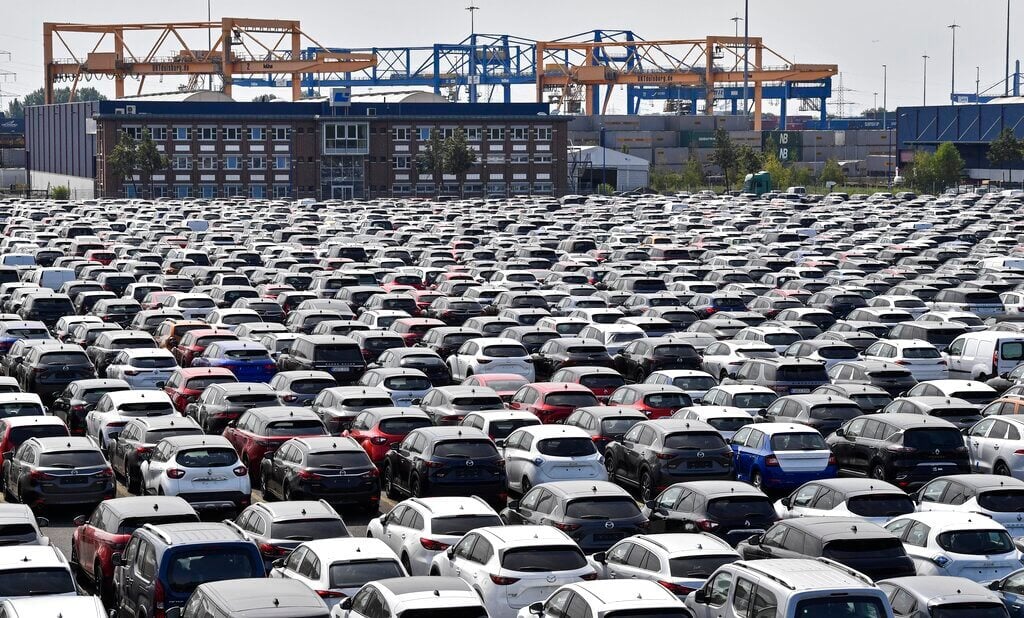 European factories will rely only on their own stocks and supplier contracts in the next shortage
The EU is not part of that agreement. According to Article 12, a country threatened with a supply interruption can request an extraordinary meeting, which should be held as soon as possible and no later than 15 days after the request.
The threatened government then states how long the interruption could last, which branches of the economy it affects, and what kind of help it could use, if it has this information and can share it without revealing business secrets. The partners tested this procedure in 2024 in an exercise in which they simulated an interruption in the supply of chemicals.
A 15-day deadline can be a starting point for negotiations in a new network, but a factory that will run out of material in a few days needs a swifter response.
At the first meeting, the EU should propose a simple rule: a country that intends to restrict exports informs its partners while it can still decide how strict the restriction will be. If it has to react immediately, it announces on the same day how long the measure will last and when it will be reconsidered.
Participants could also carry out a test exercise involving a shortage of one type of magnet and check whether the warning reaches small parts manufacturers, who would then have only a few days left to find a replacement.
The EU would have to follow the same rule whenever its joint purchases or the distribution of goods from stocks could reduce deliveries to partners.
On 10 January, China will decide whether to delay broader restrictions on rare-earth exports again. The network from Hanoi will most likely not have agreed rules or held its first meeting by then, so European factories will rely only on their own stocks and supplier contracts in the next shortage.
