On 5 November, Brazil’s government adopted a list of 27 minerals that it considers vital to the country’s economy and security, and which will receive priority in state support.
At the top of the list are rare earths, a group of 17 chemical elements without which there would be no powerful magnets for electric cars, wind turbines and weapons, as well as lithium, nickel and copper.
President Luiz Inácio Lula da Silva wants foreign buyers who come to Brazil to build processing plants and bring technology with them.
American and European companies are already signing contracts for future deliveries, and the government must quickly decide what to demand in return from the projects it chooses to support.
The decision came ten days after the 25 October election, in which Lula won a fourth term with 51.8 per cent of the vote, to begin on 5 January 2027.
He defeated Flávio Bolsonaro, son of the jailed former president Jair Bolsonaro and an ally of Donald Trump.
After meeting Trump in May, Flávio promised the United States a long-term partnership to exploit Brazil’s deposits, as Washington sought to gain an advantage in access to rare earths.
In 2025, Trump tried to force Brazil to drop the criminal proceedings against Jair Bolsonaro by using tariffs and sanctions.
That pressure did not work, and foreign governments will now negotiate access to Brazil’s minerals with the president who resisted it and has received a new mandate to implement a policy under which ores should be processed as much as possible in Brazil itself.
Brazil has the world’s second-largest rare earth reserves, after China, but currently extracts them only in small quantities.
Since China controls most global processing of these elements, buyers from other countries are seeking new sources, giving Brazil an opportunity to demand more than the simple purchase of ore.
The difficulty lies in timing: the mines need money and customers immediately, while the factories that will turn the ore into more valuable industrial materials will take several years to establish.
The state checks to whom the minerals will be sold
The law, signed on 16 September, gives the state the right to audit the sale of companies that hold rights to important deposits, access to strategic geological data and international supply contracts that could affect the country’s economic or geopolitical security.
Specific regulations have yet to determine how this scrutiny will be carried out. The law allows the state to require exporters to process most of the ore in Brazil and to support these conditions by offering part of the output to domestic customers.
The state is particularly interested in knowing to whom future production is being sold, and there is an economic reason for this.
It is easier for a bank to issue a loan to open a mine when it knows who will buy the ore, because it can then estimate the revenue from which the loan will be repaid.
Customers sign contracts years before the mine begins operating, thereby securing ore in advance
For this reason, customers sign contracts years before the mine begins operating, thereby securing ore in advance.
It may be that much of the future production is sold abroad before there is a factory in Brazil capable of processing it.
The government is trying to prevent such contracts from predetermining where Brazil’s ore will go, but it must not frighten investors and banks, because without their money there will be no mining.
It has not yet been publicly clarified whether the new rules apply to the contract between the Belgian chemical company Solvay and the Australian mining company Viridis.
Scope for negotiation in that project remains within a special agreement on technology transfer, which is still under discussion.
Washington has already secured part of Brazil’s production
In February, the US government’s International Development Finance Corporation (DFC) announced a $565 million loan to Serra Verde for the Pela Ema mine in the state of Goiás.
The company then offered the US government the opportunity to become a minority shareholder.
The US company USA Rare Earth bought Serra Verde on 3 September, just 13 days before the law came into force under which the state scrutinises such sales. The deal was valued at around $2.8 billion when it was announced in April.
At the end of August, it was also announced that a special company, backed by the US government, had secured funding to buy all the mine’s production in the first phase for 15 years, with guaranteed minimum prices for the rare earths used in magnets.
In addition to the loan to the mine, the US government invested money in the company that buys the ore and undertook to buy part of the production itself, assuming the risk that market prices might fall.
US companies seeking Brazil’s raw materials are backed by government funding and guarantees
US companies seeking Brazil’s raw materials are backed by government funding and guarantees.
Brazil’s only commercially active rare earth mine has become part of a US government-backed supply chain.
At the start of his new term, Lula finds a business in which investment, ownership and future sales are already contractually tied to the US.
His government will have to secure additional benefits for Brazil, both in such deals and through conditions for new projects, without driving away the capital needed to develop the mines.
The victory over Trump’s ally means that Brazil’s policy will continue, but it will not by itself bring to Brazil the most demanding stages of processing, such as separating individual rare earths, producing alloys and making magnets.
Where these steps will be carried out depends on who has the technology, where factories already exist and to whom production has already been sold.
France receives material for existing processing
The Solvay–Viridis deal illustrates the same gap between assured deliveries and an industry that has yet to emerge.
Material from the Colossus project in Brazil’s state of Minas Gerais will be sent to Solvay’s plant in La Rochelle, France.
Deliveries are scheduled to begin in 2028, with the first contract period running until the end of 2034.
In France, individual rare earths will be separated and purified for industrial use.
Viridis in Brazil already produces so-called mixed carbonate, the first intermediate product obtained by chemical processing of ore, in which rare earths remain mixed.
For now, it is producing this only in a pilot plant, with industrial-scale production planned for 2028.
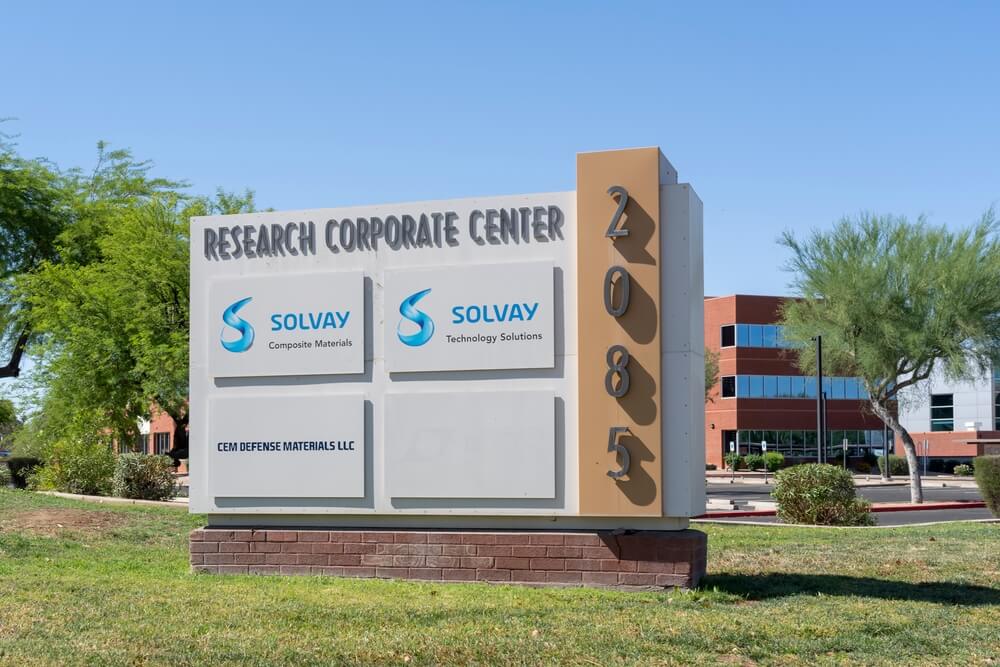 A separate agreement would allow Solvay to transfer technology to Viridis and help it produce higher-quality carbonate
A separate agreement, currently being negotiated, would allow Solvay to transfer technology to Viridis and help it produce higher-quality carbonate.
This would improve the first stage of processing in Brazil, but the more demanding stages would remain in France, where the factory already has the necessary technology and capacity.
According to Viridis, Solvay has committed to purchase at least 70 per cent of the carbonate that Viridis plans to produce in the first period, and has a right of first offer on the remainder.
The contract also sets minimum prices for the four main rare earths used in magnets.
Based on those volumes and prices, Viridis expects to earn at least about $915 million between 2029 and 2034, if it delivers the contracted volumes.
For Brazil’s factory, the key issue will be exactly what the technology-use contract permits: whether local experts will be allowed to modify the process themselves, maintain the equipment and train new staff, or whether they will have to call in a foreign partner for every change.
These conditions are not yet known, and they will determine how much knowledge remains in Brazil and how far Brazilian companies continue to depend on the owners of the technology.
On 8 September, Brazil’s state development bank, BNDES, approved a 77.5 million reais loan to Viridis for a research centre and pilot processing facility in the city of Poços de Caldas.
In August, Brazilian institutions received five kilograms of carbonate to examine whether the next steps – the separation of rare earths, the production of alloys and the production of magnets – can be carried out in the country.
A Brazilian government loan is supporting the project, whose largest customer will supply a factory in France.
The new policy establishes a fund through which the state can invest up to two billion reais to guarantee loans for mining and processing projects, as well as tax incentives totalling up to one billion reais a year from 2030 to 2034.
The incentives can cover up to 20 per cent of the costs of processing minerals and recovering them from waste, and will be higher for companies that create more value in Brazil, according to criteria that have yet to be defined.
China’s advantage limits the conditions that Lula can impose
According to an April 2026 report by the International Energy Agency, in 2024 China mined about 60 per cent of the world’s rare earths used in magnets, processed 91 per cent and produced 94 per cent of these magnets.
These magnets are built into electric motors, power plants and weapons, and shortages can halt the production of much more expensive equipment.
In April 2025, China restricted the export of certain rare earths, demonstrating the extent to which its dominance can affect foreign buyers.
Even broader restrictions, announced in October of the same year, were temporarily suspended until 10 November 2026, and on 28 September China’s Ministry of Commerce announced that the trade deal with the US was being extended until 10 January 2027.
Domestic processing will need permanent buyers for its products, in Brazil or abroad
The new Brazilian mine will reduce dependence on China only if its ore can be processed elsewhere.
Solvay and the US network around Serra Verde offer such a route, but each allocates work between countries differently.
Short-term trade deals with Beijing mean little to buyers who contract supplies for the next decade.
The new Brazilian factories will have to compete with Chinese manufacturers, who benefit from a well-developed network of suppliers, large-scale production and lower costs.
The International Energy Agency warns that projects outside China are generally more expensive.
Lower purchase prices shift some of that risk to the foreign buyer, and government support can facilitate initial investment, but only if the factories have long-term business.
Domestic processing will also need permanent buyers for its products, in Brazil or abroad, because the obligation to supply part of output to the domestic market will not by itself ensure sufficient demand.
Buyers will gain certainty ahead of Brazil’s industry
Brazil is highly likely to increase exports of partially processed material in the coming years, with substantial domestic processing to follow later.
Benchmark, the market intelligence agency, in its October assessment, does not expect Brazil to begin refining rare earths before 2030, and even then only in small quantities and only for the lighter elements.
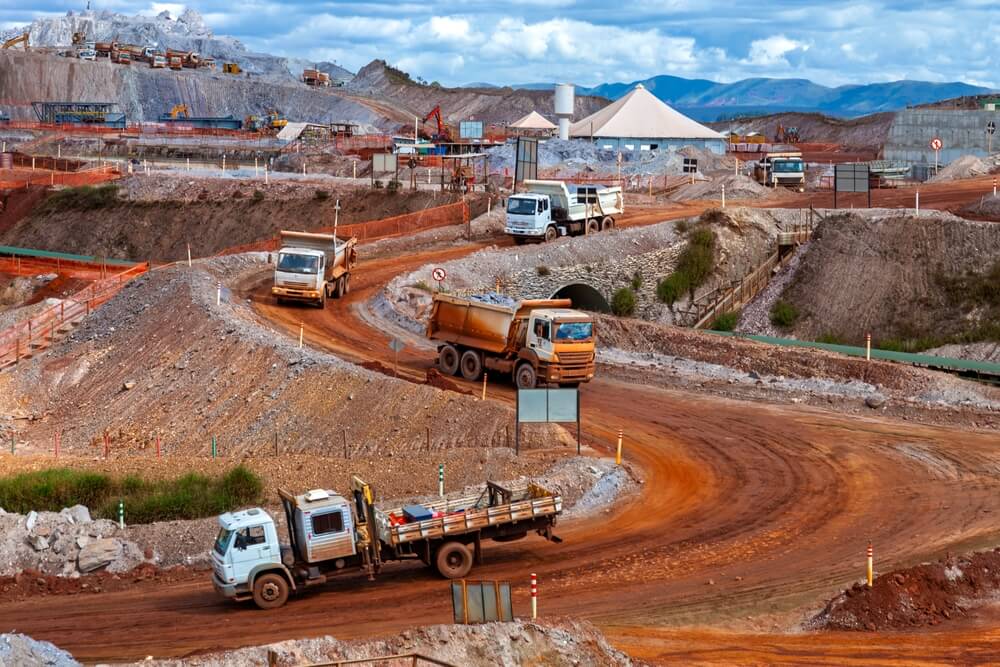 Western buyers can already contract access to minerals, while Brazil needs years to build factories and train experts
American and European buyers, meanwhile, will sign contracts to secure material for their existing or planned factories, so the new Brazilian rules will have the greatest impact on future investments and mine expansions.
These contracts give them rights to future deliveries, but no assurance that the mines will produce enough material of the required quality in time.
On 5 November, the Ministry of Development was given a deadline of 15 days, until around 20 November, to propose which production chains should be prioritised for development.
The subsequent regulations will indicate which stages of processing the government intends to support and what it will require of exporters and companies that receive incentives.
For Colossus, the next steps are to secure credit, conclude a technology agreement and begin production in 2028.
Lula has good reason to link state support to domestic know-how and production before future jobs are allocated over a longer period.
Western buyers can already contract access to minerals, while Brazil needs years to build factories and train experts.
If domestic processing lags behind export contracts, Brazil will reduce others’ dependence on China faster than it reduces its own dependence on Chinese technology.
