Nearly 105,000 attendees from 207 countries and territories, 2,900 exhibitors, sponsors, and partners, over 1,700 speakers and thought leaders, nearly 2,600 journalists and industry analysts from around the world, and over 1,300,000 views of the keynotes and live sessions.
In 2026, Mobile World Congress celebrated 20 years in Barcelona, and I look back to MWC26 thinking about how far the industry has come.
Twenty years ago, the conversation focused on mobile devices and network coverage. Today, the conversation revolves around artificial intelligence, digital infrastructure, space connectivity, and the future of global digital economies.
The message across the keynotes, the Talent Arena, and the industry summits was that infrastructure matters more than ever. Let me share a few highlights on my view of where technology is heading next.
The message from the main stage. Finish 5G and prepare for the AI era
The opening keynote at MWC26 delivered a strong message. The work on 5G is far from complete. Do we all agree? During a roundtable I attended at QUALCOMM, John Smee, SVP Engineering, also reiterated that point.
For years, we have heard about the promise of 5G. Faster speeds, lower latency, and new business models. Yet many regions across the world still lack full deployment as we talk 6G. The overall message is to finish the job.
Without robust connectivity, the vision of real-time AI applications across healthcare, manufacturing, transportation, and smart cities will remain limited.
The overall message across these discussions was that AI cannot scale without the right digital backbone
Executives from companies such as IBM, Nokia, Ericsson, and the top tech giants reinforced the same point in their sessions. Artificial intelligence is moving into every part of enterprise operations. Networks should evolve to support the scale and reliability required for those workloads.
At MWC26, the conversation moved beyond the average hype. The industry is more focused on execution.
Ericsson highlighted the need for resilient networks capable of supporting large-scale AI processing and data flows. Nokia emphasised the importance of cloud-native infrastructure to support automation and digital services. And IBM focused on enterprise AI integration and how companies can combine AI capabilities with secure infrastructure and hybrid cloud environments.
The overall message across these discussions was that AI cannot scale without the right digital backbone.
Talent Arena. The next generation of tech leaders
One of the most inspiring additions to Mobile World Congress in recent years has been the Talent Arena. While the main exhibition halls showcase innovation and focus on the largest business deals, the Talent Arena focuses on people.
As I've always said, the future of technology depends on the talent entering the industry today. Developers, engineers, researchers, and entrepreneurs who will shape the next decade of innovation.
You can see it in their eyes: entrepreneurs eager to share their concepts and solutions, and open to partnerships with those who can help them reach the next level in business.
Innovation happens when people from different backgrounds bring new ideas into the ecosystem
Walking through the sessions and discussions, I saw a much clearer focus on education, skills, and opportunity. Companies are now looking for talent who can bridge multiple disciplines.
From AI engineers who understand ethics to network specialists who understand data science and leaders who combine technical knowledge with business strategy.
For young professionals, events like MWC create visibility and momentum. They show us that the industry values diverse voices and fresh perspectives.
Innovation happens when people from different backgrounds bring new ideas into the ecosystem.
The Airport Summit and the importance of infrastructure
One of the areas I was looking forward to this year, as I mentioned in my pre-MWC piece, was the Airport Summit.
Airports today operate as complex digital ecosystems. They rely on connectivity, data processing, security systems, and AI-driven analytics to manage millions of passengers and cargo operations.
I worked at one of the busiest airports in the world for 13 years. What seems like a lifetime ago continues to fascinate me.
Leaders discussed how connectivity and digital infrastructure are transforming airport and transport operations.
MWC26 reinforced the idea that connectivity is not a background utility
We now live in a world where connectivity enables real-time decision-making across the entire ecosystem, AI can optimise passenger flow, and data analytics can enhance security and logistics.
A microcosm of the networked future can be found in airports. Everything functions smoothly when the infrastructure is in good working order.
This lesson applies far beyond aviation. It is just an example of. Cities, industries, and economies depend on reliable digital infrastructure.
MWC26 reinforced the idea that connectivity is not a background utility. It is a strategic asset.
Looking back at twenty years of MWC Barcelona
Celebrating 20 years of the Mobile World Congress in Barcelona offered an opportunity to reflect on the industry's evolution.
The first editions focused on mobile hardware and telecom expansion. Smartphones were entering the mainstream, and app ecosystems were still developing.
Today, the conversation includes artificial intelligence, quantum computing, satellite connectivity, digital identity, cybersecurity, and immersive technologies.
MWC26 also highlighted how collaboration across industries is shaping the next phase of innovation
The mobile industry has become the backbone of the global digital economy.
MWC26 also highlighted how collaboration across industries is shaping the next phase of innovation. Telecom companies work alongside cloud providers, AI developers, hardware manufacturers, and governments.
Technology ecosystems are becoming more interconnected than ever. Leaders are talking more openly about digital safety, ethical AI, and sustainable technology.
Why MWC is still relevant
Some people ask whether large tech events are still relevant in an era of virtual communication. Anyone who has walked thousands of steps through the halls of MWC can answer that question.
Ideas will always move faster when people meet face-to-face.
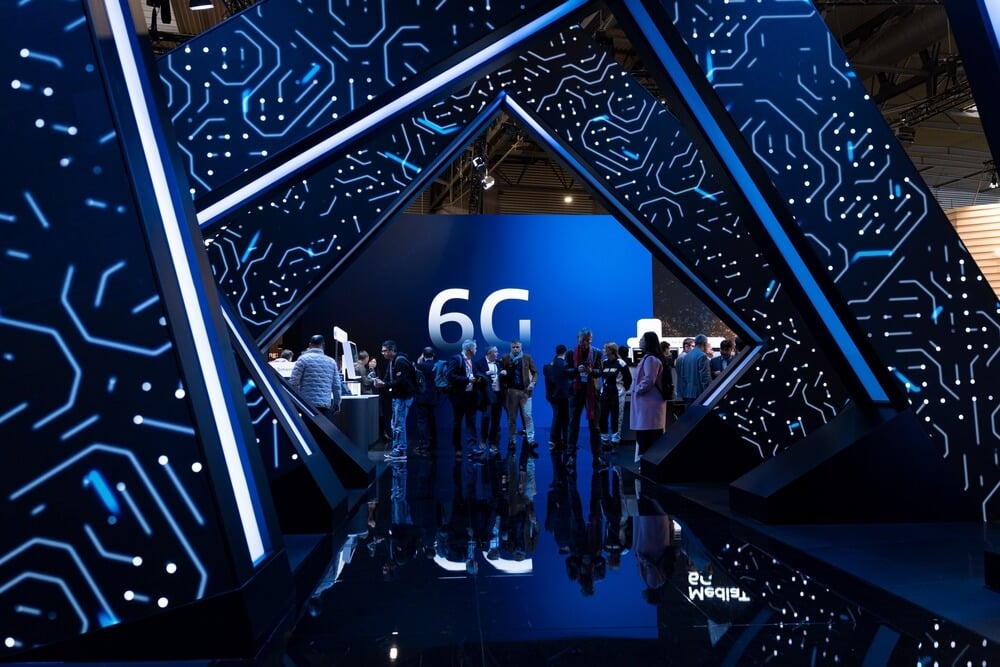 Ideas will always move faster when people meet face-to-face
Partnerships form over conversations, and innovation accelerates when leaders from different sectors share perspectives in the same room.
Barcelona once again became the centre of the global technology conversation. The follow-ups will continue for many weeks to come.
If you missed the keynotes or discussions, I strongly recommend visiting the official MWC channels to watch the recaps. I'm also catching up on what I missed.
The real takeaway from MWC26 is that we are entering a period where infrastructure, artificial intelligence, and human talent should evolve together.
And this brings me to the question I left Barcelona asking myself.
If the last twenty years of mobile technology transformed how we communicate, how will the next twenty years of AI-powered connectivity transform how we live, work, and build the future?
The next chapter of innovation has already begun. Are you ready?
As I always say, together we are stronger.
