Turkey’s Recep Tayyip Erdoğan is often mentioned in one breath with that other long-ruling illiberal authoritarian, Hungary’s Viktor Orbán. And so it was once more after the latter’s defeat earlier this month.
The Turkish opposition, including Ekrem İmamoğlu, the jailed mayor of Istanbul who is seen as a potent challenger to Erdoğan in 2028, saw Orbán’s defeat as a chance to rally its supporters.
“Hungary has chosen hope over fear, democracy over autocracy. Tonight, the Hungarian people reminded Europe, and the world, that no strongman is invincible when citizens refuse to surrender their freedom,” İmamoğlu posted on X.
The mention of Europe in the message can be explained on several levels. It is likely primarily an appeal to the many Turkish voters who see closer integration with Europe and the EU as the way forward economically and also as a counterweight against authoritarianism.
Yet, it also touches on an uncomfortable truth that hovers over the EU’s relationship with Turkey and Erdoğan: While Orbán was a major irritant for Brussels, Erdoğan’s even more oppressive rule might not be entirely inconvenient.
Of course, Hungary and Turkey have radically different positions in relation to the EU. Hungary is, after all, a member, while Turkey is by now a candidate in name only.
Trade, leverage, and migration
Still, the EU remains hugely important to Turkey, with a customs union facilitating trade, making the bloc the destination of some 40 per cent of the country’s exports and the source of about a third of its imports.
But that does not give the EU the same kind of leverage it had over Hungary, where it could withhold more than €16 billion in funding over rule of law concerns.
Turkey might have more leverage over the EU than the other way round
The money that the EU does pay to Turkey, for helping to manage migrant transits to the bloc, is not in the same category, as it is often earmarked specifically for UN and other humanitarian purposes or for border control measures.
These are very much in the interest of the EU itself, so much so that Erdoğan has been able on occasion to threaten to “open the gates” to migrants heading for Europe.
Especially at a time of renewed tensions in the Middle East, Turkey might have more leverage over the EU than the other way round.
Security, strategy, and the EU’s silence
While Ursula von der Leyen, the president of the European Commission, has called İmamoğlu’s detention “deeply concerning” and a rapporteur for the European Parliament has called on Turkey to release him and other opposition politicians that have been similarly targeted, the EU response has been decidedly muted compared to its constant struggles with Orbán.
In an interview with Politico this March, İmamoğlu’s stand-in as Istanbul mayor, Nuri Aslan, condemned the bloc’s timidity.
“Those governments that constantly speak about democracy and the rule of law unfortunately did not stand firmly enough on the side of democracy because of their own short-term interests,” he said.
Rather than blaming it on the migration issue, Aslan attributed the EU’s relative silence to the bloc’s security requirements: “You know the global situation. Turkey’s armed forces and defence capacity are very strong, and Europe currently has a security gap.”
Turkey has played a decisive role in some recent conflicts, particularly backing Azerbaijan against Armenia
Indeed, Turkey, like the UK and Norway, is increasingly mentioned as having a role to play in lowering Europe’s security dependence on the US.
The country is a fellow NATO member and has the second-largest army of the alliance. Its position astride the Bosphorus, on the Black Sea and bordering Iran, makes it strategically important.
Turkey has played a decisive role in some recent conflicts, particularly backing Azerbaijan against Armenia. It also supported the Syrian faction that took over that country, and it has been relatively supportive of Ukraine.
But while it’s clear that Turkey is an enormous strategic asset and could play an even larger role in the continent’s defence, many of the same issues that have traditionally troubled its relationship with the EU stand in the way of that happening.
These are not limited to democratic backsliding, rule of law concerns and increased authoritarianism, they also extend to Turkey’s role in Cyprus and remaining tensions with Greece.
Wildly different realities
Erdoğan strengthening his iron grip on power, especially after the 2016 coup attempt, would be enormously problematic inside the EU and was one of the reasons for the freezing of accession talks in 2018.
As in Hungary, Erdoğan and his AKP have near total control over the media, they have remade the legal system to suit their needs and are moving to have more sway over the economy, where some large families and conglomerates still exert influence.
Among opposition activists, artists, academics and others, fear of being targeted by the government has increased over the past decade, and many have moved abroad.
Hopes that Orbán’s defeat signals a turning of the tide for Turkey have to contend with the wildly different realities in both countries
Hopes that Orbán’s defeat signals a turning of the tide for Turkey, or at least that it shows how a popular opposition can remove an entrenched authoritarian, have to contend with the wildly different realities in both countries.
As the coup attempt confirmed, Turkey, unlike Hungary, has a large and influential army to contend with, one that has in the past regularly taken over.
Some Europeans, therefore, initially gave Erdoğan the benefit of the doubt when he and his religiously inspired AKP took over and started curbing the powerful secular judiciary and the army.
Yet, Erdoğan and his party’s ties to political Islam and particularly the Muslim Brotherhood have from the beginning also led to misgivings.
Widespread popular opposition in the EU
Turkey’s opposition, including İmamoğlu and his CHP colleagues, like Péter Magyar and his Tisza party, promise greater alignment with the EU.
In fact, İmamoğlu, even from jail, has argued for updating the crucial customs union agreement, albeit also with a ‘democracy clause’ that would reward Turkish adherence to the rule of law.
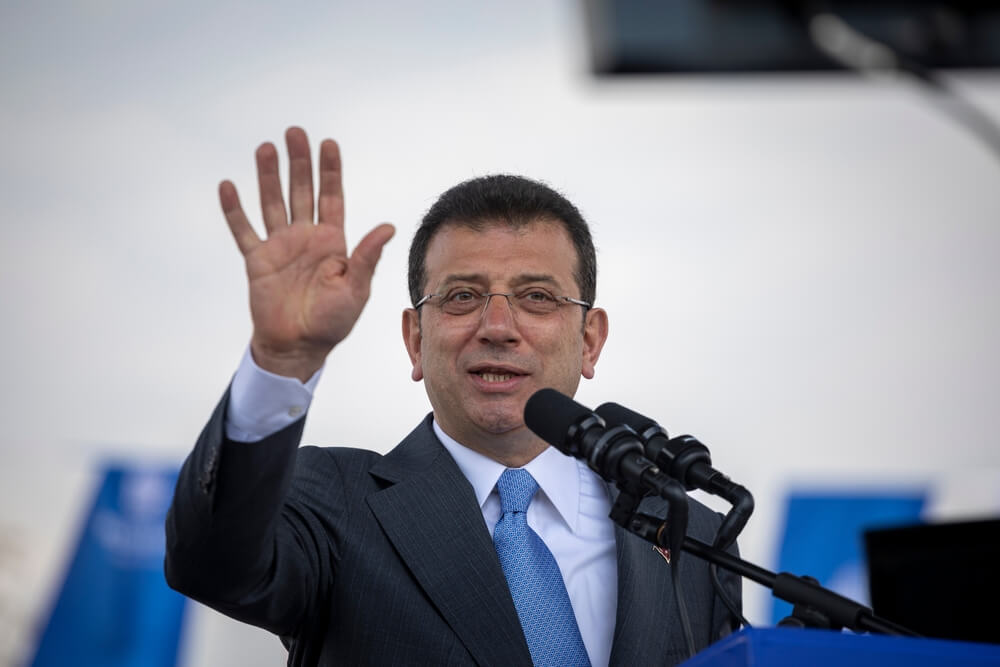 Turkey’s opposition, including Ekrem İmamoğlu and his CHP colleagues, promise greater alignment with the EU
His Istanbul replacement, Nuri Aslan, also said that if elected, their party would move for a swift accession to the EU.
But Turkey’s possible accession has for a long time encountered widespread popular opposition in the EU, especially on the right of the European political spectrum.
During the 2016 Brexit referendum in the UK, the Leave campaign used the prospect of Turkey joining as an argument for exiting the EU.
In recent statements on the crackdown against the opposition, EU leaders and officials still refer to Turkey’s status as a candidate country.
The truth might be, though, that Erdoğan’s heavy-handed policies give the bloc the excuse it needs to hold off on closer ties while still having enough leeway to cooperate where it counts for Brussels.
