As of Tuesday 1 December, the European Union is limiting the number of hybrid cars that can enter its market from certain countries, with a maximum of 86,301 vehicles allowed to arrive from China until the end of February.
The China Chamber of Commerce for Import and Export of Machinery and Electronic Products announced on 26 November that it will issue certificates, without which importers will not be able to clear customs for hybrids of Chinese origin.
The Union wanted to slow the growth of imports from China with quotas, but the same calculation method significantly reduces the scope for factories of European groups in Morocco and Serbia.
Calculated on an annual basis, Morocco will be able to export fewer hybrids to the Union than in the last 12 months, by a slightly higher percentage than China, while Japan, Turkey, the UK and South Korea have received quotas exceeding their previous deliveries.
Dacia and Peugeot also produce the same hybrids in factories in the Union, so they can transfer part of the orders for the European market to plants that are not subject to the quota.
On 24 November, the European Commission published a regulation limiting the import of new hybrids from 1 December 2026 to 18 June 2027.
It is a temporary safeguard measure, which World Trade Organization rules allow when a sudden increase in imports threatens to seriously harm domestic industry.
The Commission opened the investigation on 30 October, following an agreement reached with Beijing on 9 October to curb the growth of China’s hybrid cars exports.
The measure covers plug-in hybrids and conventional hybrids, including mild hybrids, where the electric motor assists the petrol or diesel engine in starting and accelerating the vehicle.
Micro-hybrids, in which electricity is used only for auxiliary functions, such as engine restart, are not restricted and are only monitored by the Commission.
The largest exporters received individual quotas, setting the maximum number of vehicles that may enter the Union from each of those countries. When a quota is filled, imports from that country stop until the next period.
Vehicles that count towards the quota can still benefit from trade agreements with Serbia, Morocco, Mexico, the UK, Japan and South Korea, or from the customs union with Turkey, which reduce or abolish tariffs.
Quotas inhibit the growth of imports from Morocco and Serbia
The Commission took imports from each country in 2025 as the baseline, increased them by slightly more than 15 per cent and recalculated the resulting annual amount for 200 days, which is the duration of the measure. China received 191,780 units, corresponding to about 350,000 vehicles per year.
Given that the Union imported approximately 302,000 hybrids from China in 2025, Beijing can claim that it has preserved room for growth.
Imports from China still reached almost 487,000 vehicles in the 12 months to the end of June 2026, so the quota is 28.1 per cent below that rate.
By choosing 2025 as the starting year, Beijing gained the argument that its exports can continue to grow, and Brussels gained a way to curb the growth that has already occurred in the meantime.
Imports from Morocco rose from 37,771 vehicles in 2025 to 61,259 in the 12 months to the end of June 2026.
Morocco received 23,954 units, or about 43,700 vehicles per year, which is 28.6 per cent less than that rate of deliveries.
Serbia received a total of 19,353 units, of which 8,709 were for the period from December to February, 8,902 for the period from March to May and 1,742 for the first 18 days of June.
This corresponds to about 35,300 vehicles per year, while the Union imported 41,537 hybrid cars from Serbia in the 12 months to the end of June, so the difference is about 15 per cent.
The Serbian city of Kragujevac also manufactures the Fiat Grande Panda, whose mild-hybrid version has a 48-volt system that contributes to the vehicle’s propulsion. The factory belongs to the Stellantis group, which also includes Fiat and Peugeot.
The quotas for Morocco and Serbia are higher than their exports in 2025
The quotas for both countries are higher than their exports in 2025, when Serbia exported 30,515 hybrid cars to the Union, but lower than exports in the last 12 months, because exports from Morocco and Serbia have grown rapidly in the meantime.
Renault in Tangier produces the hybrid Dacia Jogger, a model of its Romanian brand, and the Moroccan Ministry of Industry lists a new version, the Jogger Hybrid 155, and a hybrid Sandero Stepway among the projects for 2026.
In 2024, Dacia expanded production of the Jogger from Mioveni, the city in southern Romania where its main factory is located, to Tangier, and the hybrid Jogger is still produced in Mioveni.
Vehicles from Romania are manufactured in the Union and are not subject to the quota.
In Kenitra, a city on Morocco’s Atlantic coast north of Rabat, Stellantis produces the Peugeot 208 Hybrid, which is also on sale in the Union, but it is not possible to determine from public data how many of these vehicles from Morocco reach the European market.
Stellantis also produces the hybrid 208 in Zaragoza, Spain, so, like Dacia, it has a factory in the Union from which it can deliver the same model without quota restrictions.
Japan and Turkey received more units than in previous deliveries
Japan received 170,889 units, Turkey 126,320, the UK 105,402 and South Korea 67,924. Calculated over the year, these quotas exceed previous deliveries: the Japanese quota by about 21 per cent, the Turkish by 11 per cent, the British by 31 per cent and the South Korean by 25 per cent.
Among the other countries with individual quotas, only Mexico, like China, Morocco and Serbia, received less than the previous pace, and by less than 1 per cent. Units lost by China do not transfer to Japan or any other quota.
Toyota can increase exports from more factories and recapture some of the sales lost to Chinese manufacturers
Japan’s Toyota produces the plug-in Prius in Japan, the C-HR in Sakarya, Turkey, and the hybrid Corolla in Burnaston, UK.
Vehicles from these factories enter three separate national quotas, which Toyota shares with other manufacturers.
All three quotas allow volumes above previous deliveries, so Toyota can increase exports from more factories and recapture some of the sales lost to Chinese manufacturers.
Brussels chose a quota instead of a tariff
In 2024, the Union introduced additional tariffs on electric cars from China, temporarily on 4 July and definitively on 30 October, after concluding that the Chinese state illegally subsidises their production.
These tariffs did not apply to hybrids, so Chinese manufacturers, according to the Commission’s findings, began exporting more hybrids to Europe, some from the same production lines on which they had previously produced electric cars.
European manufacturers also sold more hybrids, but imports grew faster, so their share of the hybrid market fell from 74 per cent in 2025 to 72 per cent in the 12 months to the end of June 2026.
The share of revenue that remained as profit for them fell by 57 per cent compared with 2023, and their factories were operating at only 61 per cent of potential production capacity.
In the first phase of the investigation, the Commission concluded that the European industry was under threat.
Chinese exporters can cut prices so sharply that even high additional tariffs would not prevent imports from increasing
It also found that Chinese exporters can cut prices so sharply that even high additional tariffs would not prevent imports from increasing, so instead of raising duties it capped the number of vehicles allowed to enter the Union.
The Commission compared the prices of 25 imported hybrid models with those of 29 similar models produced in the Union, using a sample of more than 200,000 imported vehicles.
The largest difference was found in smaller SUVs, where imported models were on average about 29 per cent cheaper than European ones. For the largest SUVs, the difference was only about 3 per cent.
The comparison covers imports from several countries, so it does not show how much an individual Chinese model costs.
It can be seen, however, that a buyer who cannot obtain an imported smaller SUV hybrid because of quotas will on average have to pay about 29 per cent more for a similar model from a European factory.
China’s Ministry of Commerce announced on 24 November that it reserves the right to initiate a dispute or request trade compensation before the World Trade Organization, that is, to ask the Union to compensate Chinese exporters for their losses, for example through lower tariffs on other Chinese goods.
Beijing also has a legal argument. When a country protects a domestic industry with a provisional safeguard measure, Article 6 of the Agreement on Safeguards, which is part of the organisation’s rules, provides for higher tariffs, with the amounts collected refunded if the investigation does not ultimately confirm that the industry is threatened.
The Union instead introduced quotas, which do not restore lost sales even if it later turns out that the measure was unnecessary.
BYD’s factory in Hungary becomes significant only with extended protection
BYD, China’s largest manufacturer of electric cars and plug-in hybrids, is building a factory in Szeged, Hungary.
In June, the company’s executive vice-president, Stella Li, announced that production in Szeged would start in the fourth quarter of 2026 and that the factory project in Turkey would be put on hold.
The Turkish government then stated that the investment agreement and commitments remained valid.
The agreement envisaged a factory for electric cars and plug-in hybrids with a total capacity of 150,000 vehicles per year.
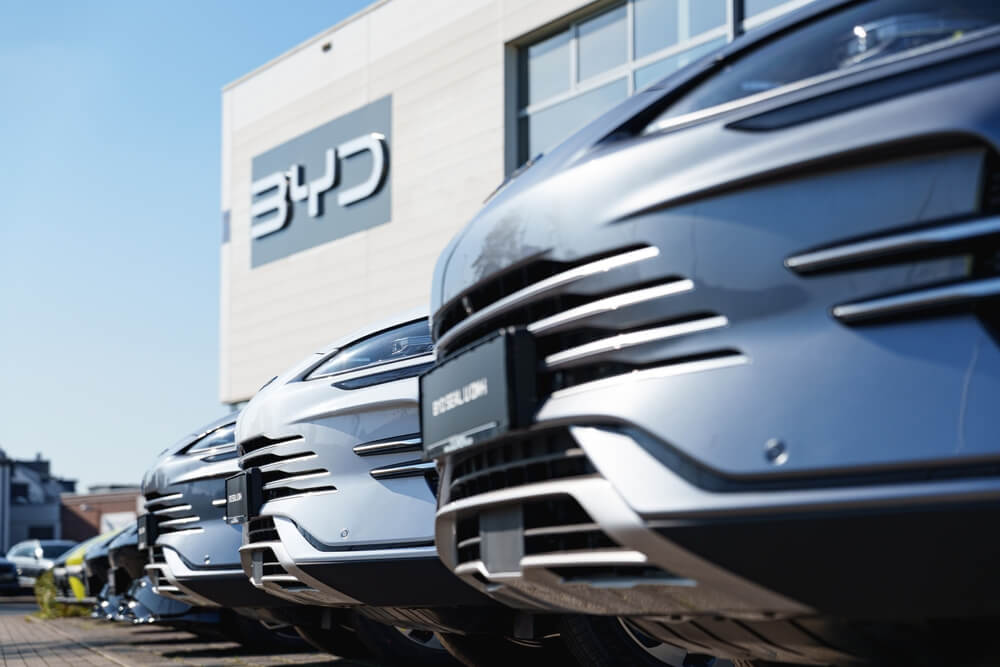 If the quotas become permanent and BYD builds a factory in Turkey, its hybrids would share the Turkish quota
 with Sakarya-based Toyota and Renault, which already produces the hybrid Clio in Bursa.
The Hungarian licence dated 9 October provides for trial assembly of hybrids in Szeged in 2027, and the start of regular deliveries before the current measure expires in June has not been confirmed.
For BYD, hybrid cars production in Hungary would be more important if the Union keeps the quotas even after June, as it would be able to supply the European market from Szeged without restrictions.
Spain’s Ebro and its Chinese partner Chery assemble plug-in hybrids at the former Nissan factory in Barcelona.
The plant is introducing body welding and painting, but the published data do not indicate whether certain models are of Union origin.
According to customs rules, simple assembly of parts is usually not enough for a vehicle to acquire a new origin, so whether these hybrids will fall under the Chinese quota depends on the volume of production in Barcelona.
The measure of success is sales from factories in the Union
The Commission will also monitor imports that are not covered by quotas, including petrol cars, certain types of used cars and trucks of up to five tonnes.
Buyers struggling to find the right hybrid may turn to a petrol car or a second-hand vehicle
Buyers struggling to find the right hybrid may turn to a petrol car or a second-hand vehicle, and manufacturers can change their offerings again, as they did after the 2024 tariffs on electric cars.
Before deciding on a permanent measure, the Commission should separately show sales of hybrids produced in the Union and sales of hybrids of European brands imported from factories outside the Union.
Only in this way can it demonstrate whether the temporary protection shifted orders to factories in the Union or merely changed the countries from which the cars are imported.
