In recent years, Global South countries with abundant endowments of the minerals that power renewable energy systems have sought to leverage the demand generated by the green transition to define a new mining paradigm rooted in justice and equity.
Leaders at the United Nations, the African Union, the Latin American and Caribbean Energy Organization, and the Association of Southeast Asian Nations have called for concerted action to ensure that such mining generates more inclusive growth.
But just as a consensus on how to support a just green transition was starting to form, the AI race went into overdrive.
The technology shares a common starting point: minerals. Huge amounts of copper, aluminum, lithium, cobalt, and other minerals are now also needed for AI infrastructure, particularly data centers.
In the first half of 2026 alone, G7 members announced 195 critical-mineral projects worth €64 billion ($70 billion), and the World Bank has plans to increase its financing for metals and minerals to $19 billion between 2026 and 2030.
UN Secretary-General António Guterres has predicted that AI will push mineral demand even higher than expected and risks introducing competing demand.
So far, however, debates over AI’s environmental and safety risks have neglected to recognize that mining is the first step in the technology’s value chain or to consider the associated risks and opportunities.
While Americans are protesting how much water data centers might use, copper and lithium extraction in some of Chile’s mining regions already consumes two-thirds of the water supply.
Warnings that AI-driven unemployment will create a permanent underclass have overshadowed rising human-rights abuses in mines.
And amid growing fears about weaponized AI applications causing mass death, conflicts over coltan and other AI minerals are killing scores of people in the Democratic Republic of the Congo.
Local refining
As AI drives up demand for minerals, shaping markets and deals, the question is how to tip the scales away from exploitation and toward justice and equity for people in mineral-producing countries.
Part of the answer lies in ensuring that politicians and negotiators at key global forums—whether focused on AI or the energy transition—commit to equitable mining policies.
On this front, the decision on the Just Transition Work Programme recently adopted at the UN Climate Change Conference (COP31) in Antalya is a welcome development, as it explicitly links critical minerals to just energy transitions and recognizes the importance of equitable value chains that promote local value addition.
Expanding refining and processing capacity would help developing countries capture greater benefits from their minerals
Expanding refining and processing capacity would help developing countries capture greater benefits from their minerals.
According to the International Energy Agency, local refining could raise the value of Latin America and the Caribbean’s mineral output by about 45%.
But despite Global South countries’big ambitions for value addition, they still lack the necessary funds and technical know-how.
Forthcoming research from the Natural Resource Governance Institute finds that only one in three value-addition projects in Africa has secured the financing it needs.
Multilateral development banks and mineral-consuming governments can close that gap by financing sound project design and new infrastructure.
Ethiopia can shape a just-transition mechanism
As host of next year’s COP, Ethiopia can shape a just-transition mechanism that helps ensure that mining advances development.
Securing human-rights safeguards for frontline communities, which could involve building on developing countries’ efforts, will be critical to this process. The chair of the African Group of Negotiators on Climate Change has proposed developing a new minerals compact at next year’s COP in partnership with the G20.
That would allow the United Kingdom, which has made AI and debt reform the top priorities for its G20 presidency in 2027, to connect the energy transition and the AI agenda.
Of the more than 200 mining projects announced this year alone, most are shrouded in opacity
It would also enable the UK to advance the investment strategies and targets in the 2025 G20 Critical Minerals Framework, which could shift more wealth and opportunity to mineral-producing countries.
While international agreements matter, mineral deals ultimately determine whether developing countries will secure greater equity in this new boom. Unfortunately, of the more than 200 mining projects announced this year alone, most are shrouded in opacity.
Governments should fully disclose any bilateral or multilateral mineral trade deals they sign, as well as any related contracts with mining companies. Disclosure should extend to end use, too, so that it is clear “whether a mineral ends up in a battery, a missile, or a data center,” as UN Special Rapporteur on Climate Change and Human Rights Elisa Morgera recently argued.
Stronger mining standards
Greater transparency is an important step toward more agency and inclusion in decision-making, which is key to creating more equitable outcomes.
With this information, citizens can assess whether agreements are aligned with current and future development priorities and hold companies and governments accountable for delivering on their promises.
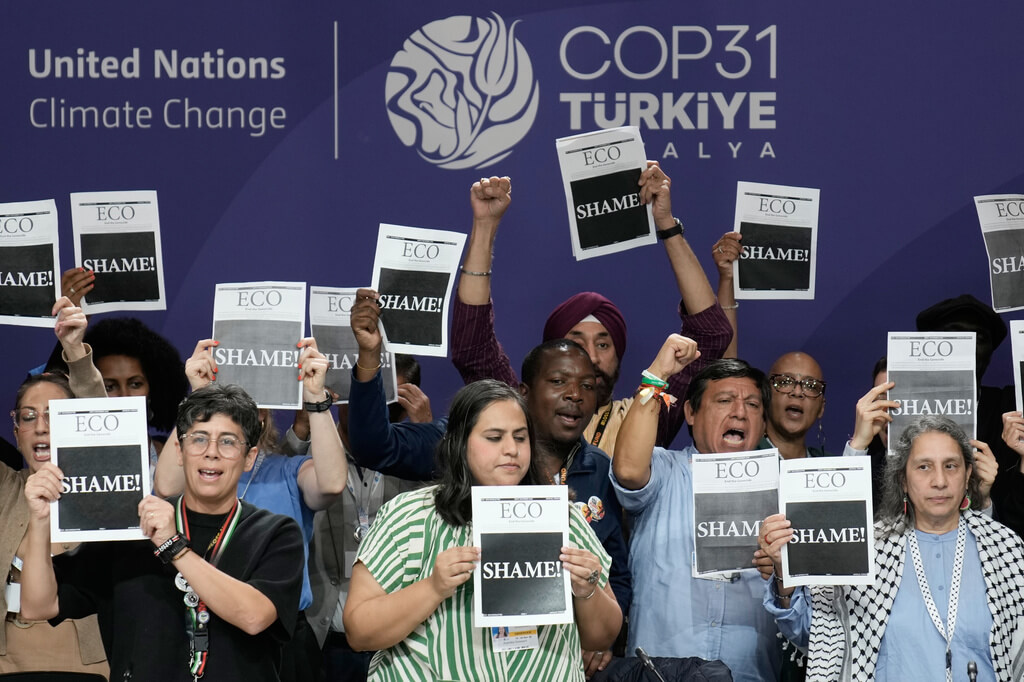 The intense focus on AI offers a chance to advance the equitable, inclusive mining deals, rules, and practices that a just green transition requires
Such transparency is especially important as opportunistic mining companies and their government allies seek to accelerate extraction.
But gutting environmental standards, sidelining local communities, and fast-tracking mining permits can sow conflict, delay production, and even cause projects to be suspended or abandoned.
Governments and firms jockeying for AI minerals should heed calls from investors and the G7 for stronger mining standards, because protecting people and the planet is essential for keeping critical supplies flowing.
The intense focus on AI offers a chance to advance the equitable, inclusive mining deals, rules, and practices that a just green transition requires.
Centering the needs and ambitions of mineral-rich developing countries in the AI debate will help ensure that local people and communities are protected from the risks of this booming demand and share equitably in the value it helps create.
Suneeta Kaimal is President and CEO of the Natural Resource Governance Institute.
