Two months before the new European rules for banks outside the Union come into force, some British and American banks are preparing to continue lending to clients in the EU without having a branch in the Union.
They are relying on an exemption for transactions in which the client has sought credit on their own initiative, without the bank having previously offered it.
At the same time, on 11 November, the European Commission met with the leaders of European banking supervisory institutions to discuss how banks can finance the economy more easily.
Brussels is trying to remove barriers between national banking markets while imposing new conditions on banks that finance European companies from London, New York and other financial centres.
From 11 January 2027, new rules from the sixth Capital Requirements Directive (CRD VI), the European law governing banks, will apply to banks from countries outside the Union.
To grant loans, receive deposits and issue guarantees to clients in the EU, such banks will, subject to prescribed exceptions, be required to have an approved branch or a specially established bank in the Union.
Contracts concluded before 11 July 2026 will remain in force and be carried out under the previous rules.
The impact of the new rules will be felt gradually as new loans are agreed and existing ones are renewed.
It does not matter whether a foreign bank in the EU opens a branch or establishes a separate bank.
A branch of a foreign bank in Luxembourg, for example, legally remains part of that bank, and its licence, except in limited cases, is valid only in Luxembourg.
A foreign banking group can, however, establish a separate bank in the EU and obtain a licence for it. Such a bank can operate in all member states, although its establishment is significantly more expensive.
Rules tailored to large banking groups
The EU has good reasons for common rules, because until the directive began to apply, access for banks from outside the Union depended on national regulations.
In one country they could offer loans directly from abroad, while in another a local licence was required for the same activity.
After Brexit, when British banks lost the right to operate with a single licence throughout the Union, these differences became especially important.
If a foreign bank gets into trouble, EU supervisors need to know what obligations it has to customers in the Union and which of its assets in the Union can be used to satisfy creditors.
The directive divides branches of foreign banks into two categories. The first includes branches with assets of at least five billion euros (about 5.6 billion dollars), branches that receive large amounts of deposits from citizens, and branches of banks from countries where bank supervision does not meet European standards.
These branches must hold funds of at least 2.5 per cent of average liabilities and no less than ten million euros (about 11 million dollars).
All other branches fall into the second category, for which the threshold is 0.5 per cent, but not less than five million euros (about 5.6 million dollars).
This covers the cost of local management, control and reporting. Banks with many clients may accept such requirements, while banks that grant only a few loans in a particular country are unlikely to incur such costs.
Large international banking groups are generally in a stronger position because they already have banks licensed in the EU. Among them are HSBC, NatWest and Goldman Sachs.
The British bank Lloyds has confirmed that its branches in Luxembourg and the Netherlands can continue lending in both countries, while the American regional bank Huntington intends to rely on an exception for services requested by a European client without a prior offer from the bank.
Companies in smaller member states may be at a disadvantage, especially when they need an amount that domestic banks cannot, or do not wish to, provide on their own
Europe’s largest companies are likely to retain a wide range of creditors. Companies in smaller member states may be at a disadvantage, especially when they need an amount that domestic banks cannot, or do not wish to, provide on their own.
It is hardly worthwhile for a foreign bank that only occasionally participates in financing large projects in such a country to open a permanent branch.
With fewer offers, borrowers will find it harder to negotiate interest rates, repayment terms and guarantees.
European banks cannot easily take over all such business because, in terms of market value, they lag behind their largest American competitors.
According to a study by an economist at the International Monetary Fund published in March, during the five years to 2023, companies in the eurozone obtained 43 per cent of the value of syndicated loans from foreign lenders. Syndicated loans are large loans jointly granted to a single borrower by several banks.
Among those lenders are banks that are not covered by the new directive, but the data show how heavily large European companies rely on creditors from other countries.
Banks operating from Britain held about 1.4 trillion dollars in loans, securities and other claims against borrowers in the eurozone at the end of June 2026, according to data from the Bank for International Settlements, which brings together central banks.
It all depends on who contacted the bank first
The most dubious rule is the one that allows a foreign bank to grant a loan without a local branch if an EU client has applied for the loan on their own initiative.
In international banking, this exception is called reverse solicitation. Before that, the bank must not offer or advertise its services to the client, either directly or through an intermediary.
If the client has requested one service, the bank may not offer others on the basis of that contact.
When a loan is agreed between a company and a bank, it is generally clear whether the initiative came from the client. When multiple banks are involved, this is much more difficult to determine.
Suppose a manufacturer is seeking 600 million euros (about 670 million dollars) to finance a new factory. Its main bank can provide only part of the amount and, with the client’s consent, invites several other banks to supply the remainder and share the risk, as in a syndicated loan.
Among the invited institutions may be banks based in London or the US with which the manufacturer has had no previous dealings.
The company has begun looking for funding, but each foreign bank has been approached by its commercial bank acting as the loan organiser.
This raises the question of whether the requirement that the request must come from the client is met.
The first significant cost of the new rules may arise when the company renews the loan and discovers that some of the previous banks no longer participate
In a document published in March, the Association of Foreign Banks in the UK warned that the directive does not provide a sufficiently clear answer for such arrangements.
It argues that the invitation sent by the bank organising the loan, acting under the authority of the company, should be treated as if it were issued by the company itself.
This will be decided by national supervisory authorities. The US Loan Syndications and Trading Association has already prepared forms that banks can use to document that the initiative originated with the client.
The problem continues even after the loan is approved. The company may request an extension of the repayment period, an increase in the amount or a change to other terms of the loan.
An older contract may be protected, but that protection does not automatically carry over to each subsequent amendment.
When the bank organising the syndicated loan sends the request to the other participants, each foreign lender will have to check whether it can agree without additional authorisation.
The first significant cost of the new rules may arise when the company renews the loan and discovers that some of the previous banks no longer participate.
European supervisors face a difficult choice. A signed statement from the client confirming that they requested the loan on their own initiative could easily become a mere formality to circumvent the ban, while requiring each foreign lender to receive a separate invitation directly from the borrower would make international financing more complex and expensive.
National borders that Brussels has not yet removed
The extent to which European banking is still divided by country can be seen in European Commission data.
According to its July report, about 56 per cent of EU banks’ exposure is to their home country, about 21 per cent to other member states and about 22 per cent to countries outside the Union.
Exposure refers to loans and other claims that banks have on clients and business partners.
The European Central Bank estimates that national regulations trap about 230 billion euros (approximately 260 billion dollars) of easily cashable assets in individual member states, which banking groups cannot freely transfer between their banks in different countries.
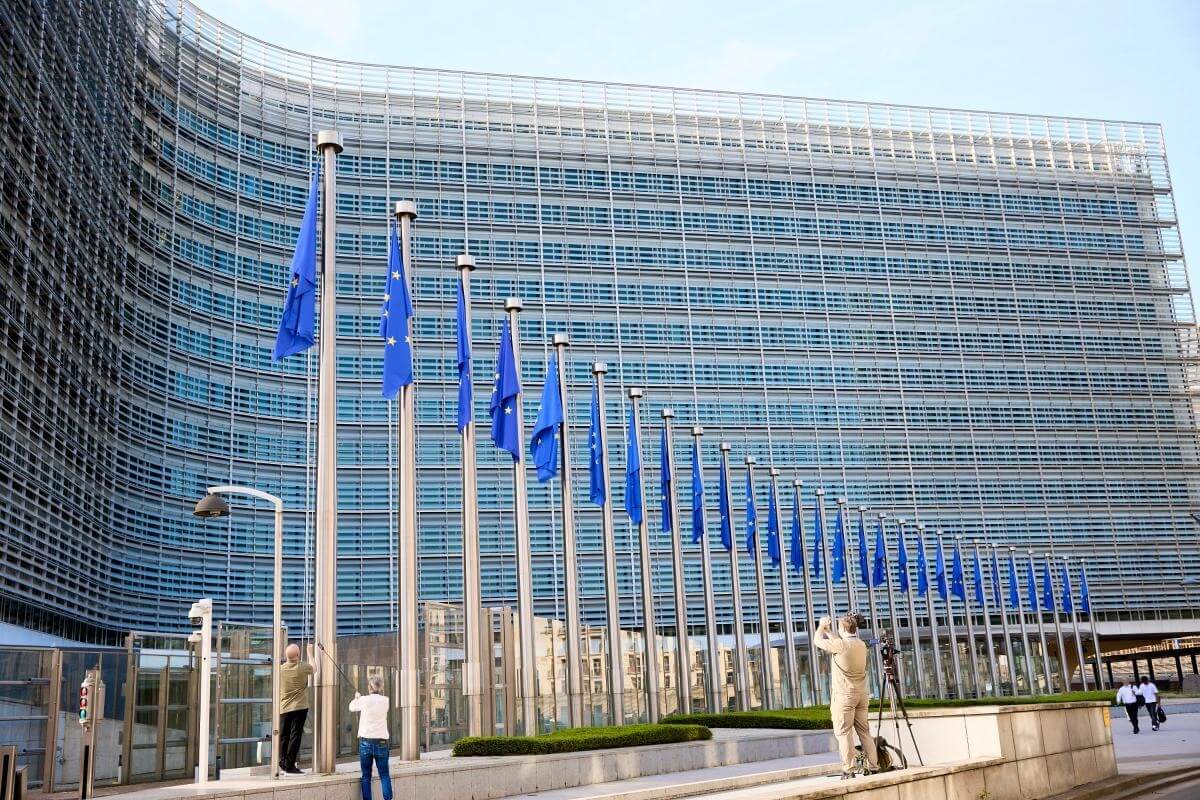 Brussels would impose new national borders on foreign banks, even as it seeks to remove existing ones within the Union
For governments, domestic banks also have political value. They channel citizens’ savings into companies, investments and government debt, and no government willingly gives up influence over its own banking sector.
The Commission is now seeking to enable European banking groups to allocate capital and liquid assets between member states more easily, while still protecting depositors and other creditors.
It has announced legislative proposals to this end for the first quarter of 2027. At the same time, non-EU banks will have to adapt their operations to a regime in which their branch licences still stop at the national border.
CRD VI is a directive, which means that each member state transposes it into its own law and may introduce stricter conditions in certain areas.
The greatest scope for divergence concerns the exception for loans that the client requests without a prior offer from the bank.
In 2027, foreign lenders will most likely avoid syndicated loans in member states where the rules are strictest or least clear, which will hit smaller member states, most dependent on foreign banks, the hardest.
Brussels would thus impose new national borders on foreign banks, even as it seeks to remove existing ones within the Union.
The European Union has the right to require reliable supervision and adequate creditor protection from foreign banks.
If the aim is also to have foreign companies provide financing for European industry, energy and defence, the Commission and the European Banking Authority, the EU body that harmonises banking rules, must publish a joint interpretation of the exception for syndicated loans before the first major loan renewals.
Leaving that issue to different national supervisors would reinforce the fragmentation of the European financial market, which Brussels has been trying to overcome for years.
