Brazil is preparing to issue government debt in Chinese currency for the first time. The planned issue of panda bonds, up to 5 billion yuan (about 735 million dollars), is much more than a technical debt operation in a single foreign market.
It demonstrates how major economies of the Global South are adapting to a financial world where the dollar remains dominant but is no longer the only channel through which serious states wish to finance their needs, companies, and trade.
Brazil is entering the Chinese debt market from a completely different position than most countries that have sought alternative financial sources in recent years.
It is the largest economy in Latin America, with access to international capital markets, stable relations with Western financial institutions, and a strong trade relationship with China.
Therefore, the issuance of panda bonds can be seen as an expansion of financial options rather than a political statement.
Brasília is seeking to open an additional financing channel for the state and for companies doing business with China, taking advantage of the fact that Beijing has been its largest trading partner for years.
Brazilian Finance Minister Dario Durigan told Reuters that the government is preparing for its first issuance of government bonds on the Chinese capital market. These so-called panda bonds are debt securities issued by foreign countries and companies in China, denominated in Chinese currency.
The planned amount of five billion yuan, or about 735 million dollars, would represent the largest initial entry by a foreign state into the Chinese debt market.
After talks with Pan Gongsheng, Governor of the People's Bank of China, in Beijing, Durigan explained that the goal is not only government borrowing but also opening the Chinese capital market to large Brazilian companies.
A test, not a termination
The issuance of Brazilian panda bonds does not alter the dollar’s position in international finance. The dollar remains the primary currency for global financing, international trade, and foreign exchange reserves, while the yuan still has limited international use.
Therefore, the Brazilian move can be seen as opening an additional source of capital rather than attempting to change the existing financial system.
Dario Durigan told Reuters that Brazil wants to "test" China’s sovereign debt market. The aim is to assess borrowing conditions, investor interest, and the possibility of future financing in yuan.
Brasília aims to open the Chinese capital market to large domestic companies already operating with China
At the same time, Brasília aims to open the Chinese capital market to large domestic companies already operating with China. If the state successfully completes the first issuance, it could serve as a reference model for the private sector.
Reuters lists Vale and WEG as potential beneficiaries of future yuan financing. Vale is one of the world’s largest iron ore exporters, while WEG is one of Brazil’s leading industrial companies in electric motors and power equipment.
Both companies already have a strong presence in the Chinese market. Therefore, the possibility of borrowing in yuan is a practical business matter for them rather than a political statement.
The Chinese market as an alternative channel
Panda bonds are not a new instrument, but their political significance is increasing as more countries adopt them. China has been seeking to expand the international use of the yuan for years.
This process is progressing slowly, as confidence in a currency depends on more than just the size of the economy. What is needed is a liquid market, a more open capital account, clear rules, the possibility of freer movement of money, and investor confidence that a political decision will not suddenly alter financial conditions.
Therefore, China’s financial system cannot quickly replace the dollar-based system. However, it can provide a parallel space for countries seeking to reduce their dependence on a single currency, a single group of investors, and a single set of financial conditions.
Brazil is not choosing between Washington and Beijing; it is leveraging competition between financial centres
For Brazil, this is particularly useful at a time when major economies increasingly face high borrowing costs, volatile currencies, and unpredictable international investor sentiment.
Brazil is not choosing between Washington and Beijing; it is leveraging competition between financial centres. This is a more measured, rational, and ultimately more significant story than grand discussions about a new monetary order.
Large middle powers, from Brazil to Indonesia and Saudi Arabia, will increasingly seek to maintain access to Western markets while simultaneously developing additional channels to China, the Gulf, and other sources of capital.
Lula, BRICS and the limits of de-dollarisation
Lula da Silva has significantly deepened relations with China in recent years, but at the same time Brazil is trying to avoid the logic of geopolitical alignment.
Brasília supports a stronger role for the BRICS countries, advocates greater use of national currencies in international trade, and calls for reform of international financial institutions.
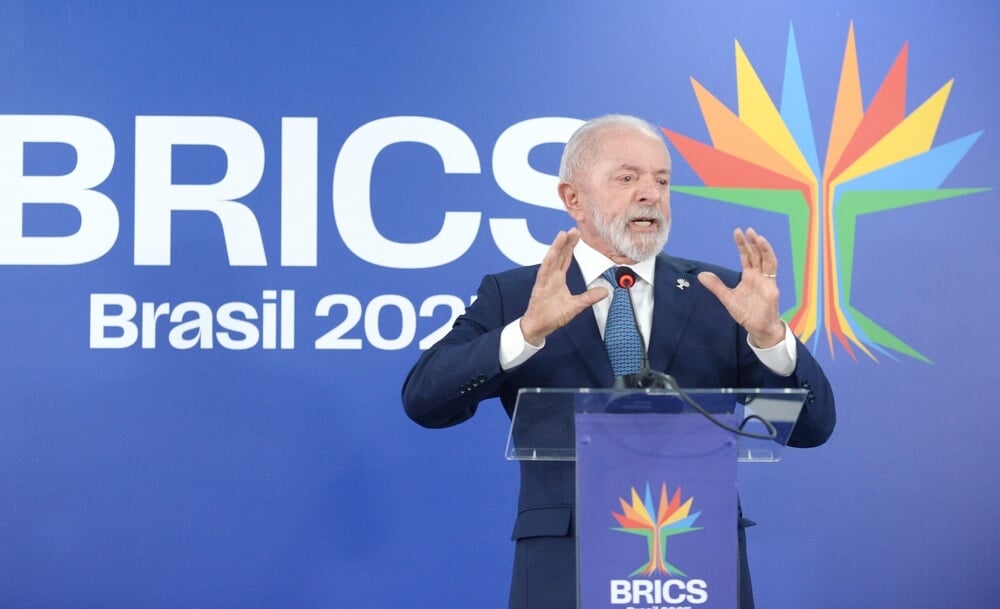 For Brasília, BRICS is an instrument for expanding economic and financial space, not a bloc intended to create an alternative monetary system - Lula da Silva
However, the Brazilian government is careful to avoid giving the impression of an open monetary conflict with the United States.
Dario Durigan told Reuters that there has been no progress on the idea of a common BRICS currency. That assessment perhaps best reflects how Brazil views its own role within the group.
For Brasília, BRICS is an instrument for expanding economic and financial space, not a bloc intended to create an alternative monetary system.
Financial policy between Washington and Beijing
Brazil's panda bond issuance holds significance beyond its financial value. Brazil is the largest economy in Latin America and one of the leading BRICS countries.
When a country of this size enters the Chinese sovereign debt market for the first time, the question is no longer how much money it wants to raise, but what kind of financial strategy it intends to pursue.
In recent years, the major economies of the Global South have increasingly sought to expand their room for manoeuvre between Washington and Beijing.
Brasília is testing how much the Chinese market can serve as an additional pillar in financing the state and the economy
They retain access to Western capital markets but are simultaneously seeking additional sources of financing, investment, and trade partnerships. Brazil is now extending this policy to the government debt market for the first time.
For China, Brazil's entry is important because it demonstrates that its domestic capital market can attract large countries that are not subject to sanctions, are not isolated, and have access to international financial markets.
For Brazil, something else is more important. Brasília is testing how much the Chinese market can serve as an additional pillar in financing the state and the economy.
This is precisely where the broader significance of this development lies. The question is no longer whether a currency will replace the dollar.
A more important question is how many large countries will attempt to use multiple financial centres, currencies, and sources of capital simultaneously. Brazil is among the first to openly test this strategy.
