On 7 November, the Ukrainian president, Volodymyr Zelensky, praised members of Alpha, a special forces unit, for successful operations against Russian forces, and then announced further dismissals in the Security Service of Ukraine (SBU).
A few days earlier, anti-corruption investigators had announced that high-ranking SBU and police officials had allegedly been protecting a criminal network.
Zelensky called their behaviour shameful and unacceptable, and approved a draft law that would reinstate the requirement for all SBU employees to declare their assets.
Zelensky must preserve the service that detects Russian agents, protects state secrets and conducts operations against Russian military targets. The latest investigation shows how dangerous it is when such a service is largely self-governing.
On 4 November, the same day the investigators’ new findings were published, the European Commission warned that Ukraine had not made significant progress in reforming the SBU.
The Commission identified these weaknesses in its annual report on Ukraine’s progress towards EU membership, which covers the period before the arrests in November.
Crime protection for a monthly fee
In Operation Carthage, the National Anti-Corruption Bureau of Ukraine (NABU) and the Specialised Anti-Corruption Prosecutor’s Office (SAPO) uncovered a criminal organisation with at least 12 members. NABU, an independent agency established in 2015 with the support of the EU and the US, investigates corruption by senior officials, and SAPO brings those cases before the courts.
On 5 November, five individuals were served with notices of suspicion, formally making them suspects in Ukrainian criminal proceedings, among them an SBU official and two senior police officers.
Investigators claim that members of the organisation, protected by individuals from the state security services, ran call centres from which they defrauded citizens by phone, sold narcotics, produced counterfeit banknotes and cigarettes, and organised kidnappings and violent assaults.
According to investigative materials released by the Ukrainian branch of Transparency International, the network included at least 52 fraudulent call centres with more than 2,700 operators. Each centre reportedly paid $7,000 a month to avoid police raids.
Investigators suspect that some officials notified the organisers of upcoming operations in advance and searched state databases on their behalf. If proven, this would show that statutory powers and intelligence intended to fight crime were sold to criminals.
Zelensky highlighted the international dimension of the affair
Among the suspects is SBU Major-General Serhiy Duka, the former first deputy head of the Department for the Protection of National Statehood, which is responsible for the state’s counterintelligence.
On 6 November, the court remanded him in custody, with bail set at 65 million hryvnias (approximately $1.43 million).
According to the court report, the prosecutor stated that during the search of Duka’s residence, members of Alpha aimed their weapons at NABU investigators and warned that they had orders to shoot.
Duka denied the charges and argued that he had not obstructed the search, maintaining that the armed men were his official security detail.
The court ruled only on the remand, and the allegations regarding conduct during the search were not examined. Duka described Carthage as retribution for the 2025 raids carried out by the SBU against NABU detectives.
He also stated that members of Alpha were deployed automatically when the alarm on the premises sounded, after which only the head of the SBU had the authority to stand them down. If his account is accurate, responsibility for impeding the investigators reaches the very top of the service.
Zelensky also highlighted the international dimension of the affair. According to the president, an individual linked to the synthetic drug-trafficking syndicate Khimprom is operating in Poland and attempting to expand into Germany, an issue Kyiv has raised with its American partners.
If substantiated, the consequences of collusion between organised crime and corrupt officials within the Ukrainian services will not stop at Ukraine’s borders.
The investigation has already shaken the top ranks of the prosecution
Carthage also had a September phase targeting another criminal organisation that allegedly protected fraudulent call centres and laundered money. According to NABU, the head of a department in the Prosecutor General’s Office took part in it.
The Prosecutor General, Ruslan Kravchenko, resigned on 7 September. In audio recordings released by NABU, a ‘boss’ is mentioned whose patronymic and former public role, according to media reports, match those of Kravchenko. Investigators have not formally named him as a suspect, and he denies any involvement in criminal activity.
Kravchenko left Ukraine on the night of 13–14 September, stating that he was travelling on an official visit to France. From abroad, he released a video claiming to have signed a notice of suspicion against Semen Kryvonos, the director of the NABU.
Anti-corruption bodies described this as an attempt to exert pressure on the investigation, and the Prosecutor General’s Office itself announced that Kryvonos had not yet been formally served with the notice. On 14 September, Zelensky suspended Kravchenko and, the following day, parliament approved his dismissal by 317 votes.
Parliament, backed by Zelensky, passed legislation placing NABU and SAPO under greater supervision by the Prosecutor General
At the conclusion of his official trip, Kravchenko did not return to Ukraine, and on 21 September he resigned from his remaining post in the prosecution service. The Prosecutor General’s Office accepted his resignation the same day.
The previous major conflict between Ukrainian institutions began on 21 July 2025, when the SBU, which investigates criminal conduct by public officials, together with the Prosecutor General’s Office, carried out at least 70 searches involving at least 15 NABU staff members, according to NABU data.
The SBU also arrested a senior NABU manager on suspicion of commercial ties with Russia. On 22 July, parliament, backed by Zelensky, passed legislation placing NABU and SAPO under greater supervision by the Prosecutor General. Public protests and warnings from European partners prompted a reversal within nine days.
On 31 July, parliament restored the agencies’ statutory guarantees of independence, but this did not eliminate the risk that the SBU, through its vetting of NABU personnel with access to state secrets, could obtain details of the bureau’s sensitive inquiries.
Brussels identified the problem before the arrests
In its annual report of 4 November, the European Commission stated that between September 2025 and September 2026 Ukraine had made no significant progress in reforming the SBU.
The Commission urged the service to focus strictly on national security and called for investigations into criminal offences not directly related to these core tasks to be transferred to other law enforcement bodies.
It also recommended establishing an independent oversight body with access to the classified intelligence necessary to verify that the service acts in accordance with the law.
The Commission warned that, in practice, the SBU retains near-total control over wiretapping, while NABU still lacks the autonomous technical capacity to conduct intercepts.
Consequently, investigators tackling high-level corruption are forced to rely on technical assistance from the very service whose officers they are investigating.
After the scandal broke, two ministers resigned, followed by the head of the President’s Office, Andriy Yermak
This reliance creates a serious risk that suspects will be tipped off before inquiries conclude. The Commission also noted complaints from NABU and SAPO about undue pressure from the police and security services.
At the same time, the Commission found that Ukraine’s anti-corruption agencies generally operate independently and effectively. In November 2025, NABU uncovered an alleged bribery scheme involving payments from suppliers to the state nuclear operator, Energoatom.
After the scandal broke, two ministers resigned, followed by the head of the President’s Office, Andriy Yermak, widely regarded as the most influential figure in Zelensky’s inner circle. Anti-corruption investigators demonstrated that they could reach those closest to the president.
Nevertheless, reform of the SBU has stalled for years, even though the agency wields the broadest investigative powers in a country that is in urgent need of independent external oversight.
The president will also have to limit his own influence
Zelensky has valid security reasons to avoid a sudden reorganisation of the SBU. Its personnel uncover Russian intelligence networks, protect state secrets and take part in operations on which the country’s defence depends.
War, however, magnifies the harm that can be done by an official who exploits access to classified information for private gain or who sells it to third parties.
Asset declarations can help expose illicit enrichment, and dismissals can remove senior officers who have lost public trust. For more lasting change, independent bodies must be able to review the actions of the SBU without seeking approval from its leadership, while safeguarding the identities of undercover operatives.
The European Union supports Ukraine’s defence, but in accession negotiations it insists on robust institutions and the rule of law
NABU must also be granted statutory powers to investigate high-level corruption without relying on the very security services whose staff it is investigating.
Under Ukrainian law, the SBU is accountable to the president and subject to parliamentary oversight. The head of the service is appointed by parliament on the president’s nomination, while the heads of key departments are appointed by the president on the recommendation of the SBU chief.
Any restriction of the service’s remit and the introduction of external oversight would also curb opportunities for the political leadership to influence the direction of sensitive investigations.
The European Union supports Ukraine’s defence, but in accession negotiations it insists on robust institutions and the rule of law – areas that are traditionally opened first and concluded last in the talks.
Dismissals will move faster than reform
In the coming weeks, further dismissals in the SBU and the fast-tracking of legislation on asset declarations are highly likely. Considerably greater political resolve will be required to transfer investigative mandates and introduce independent external oversight, but a firm timetable is already in place for autonomous communications interception by NABU.
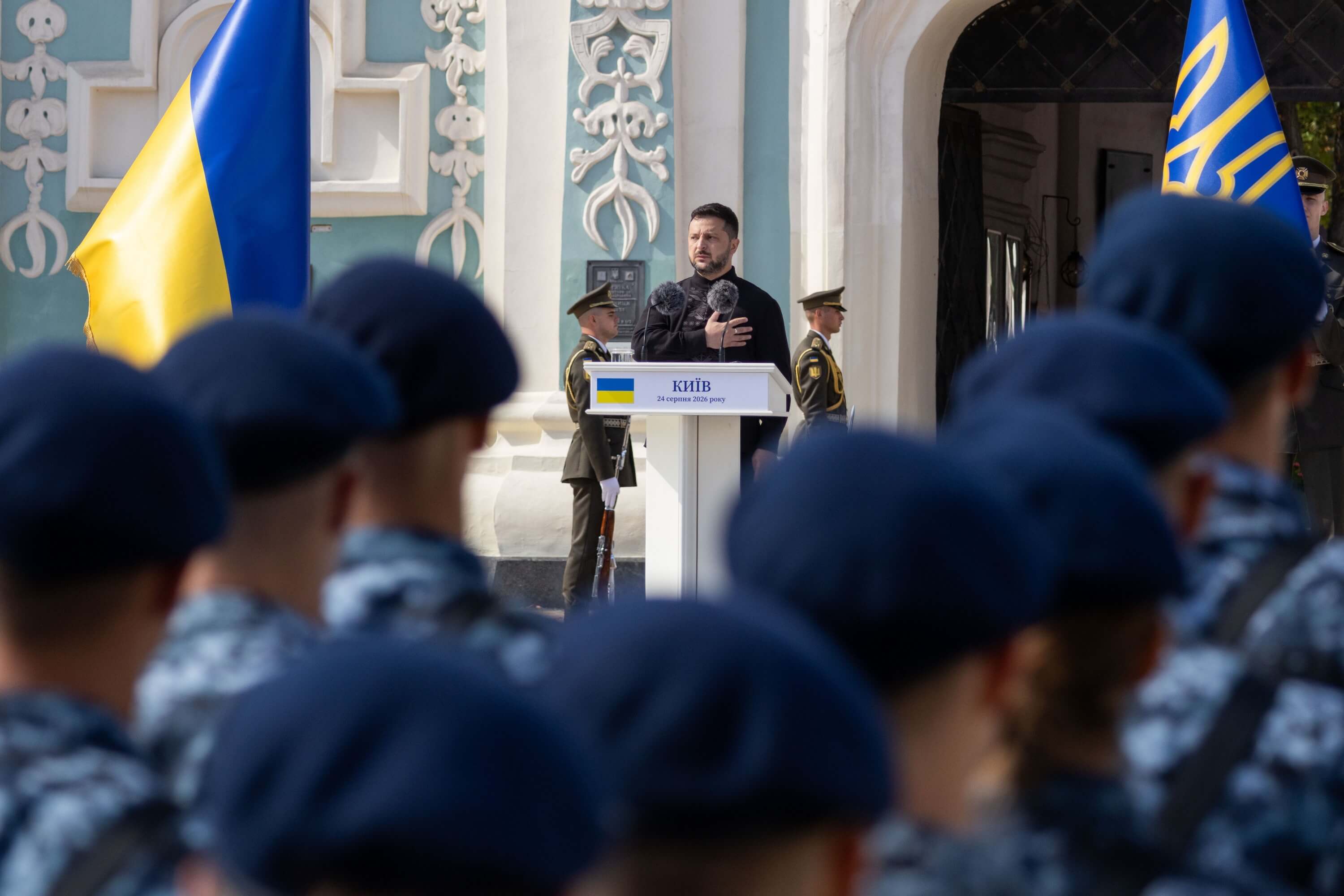 Ukraine will continue to require a strong SBU to counter Russian aggression - Volodymyr Zelennsky
Under a government roadmap adopted in March 2025, NABU is scheduled to have its own independent communications interception system and direct access to intercepted material by the end of December 2026, free from scrutiny by other agencies.
The SBU itself is expected to assist in establishing this capability, despite being the very body whose infrastructure NABU is seeking to leave behind.
By late December, it will become clear whether that system has been delivered or whether NABU remains dependent on other services.
An even sterner test will follow, as parliament and the president must decide whether to curb the SBU’s wide-ranging investigative powers and establish external scrutiny of its operations.
If reform amounts to little more than personnel reshuffles and asset disclosures, structural vulnerabilities will persist, leaving any future NABU inquiry into a powerful agency exposed to institutional retaliation, as occurred in July 2025 and again this September.
Ukraine will continue to require a strong SBU to counter Russian aggression, but the service’s integrity will ultimately depend on the state’s ability to keep its power in check.
