US President Donald Trump and his cronies are eager to normalize relations with Russia in exchange for lucrative oil deals.
In doing so, they are advancing Russian President Vladimir Putin’s strategy of systematically isolating Ukraine by making its defense so costly that popular support for the country in Europe evaporates.
After more than four years of full-scale war, it is abundantly clear that Russia cannot win on the battlefield. Nor can it force Ukraine to surrender through economic or political means.
The Kremlin’s next step was to secure Trump’s assistance. Putin’s goal at the August 2025 summit in Anchorage, Alaska—as evidenced by statements from multiple Russian officials—was to persuade the Trump administration to pressure Ukraine to surrender.
When the Ukrainian government stood up to American pressure, the Kremlin concluded that it needed the Trump administration’s active involvement on Russia’s behalf.
The ongoing discussions about a return of US companies to Russia, led by Trump’s son-in-law Jared Kushner and Trump’s special envoy (and fellow New York real-estate baron) Steve Witkoff, reflect that effort.
Using nebulous promises of fossil-fuel profits “after the end of the war” as a carrot, Putin is seeking to align Trump’s pecuniary interests with Russia’s strategic objectives, giving Trump a reason to declare the war over or, better yet, to force Ukraine to capitulate.
Never mind the years of horrific conflict, untold war crimes, millions of people killed or displaced, and the generational trauma; Trump wants his cut.
What is baffling is that this bribe will not benefit the United States, individual American companies, or business executives.
It may briefly enrich those in Trump’s orbit, but profits are unlikely to last in a country where murder and expropriation are a material business risk.
The cynical expression “maski-show” (borrowed from a 1990s TV show) and the more straightforward term “raiding” describe schemes in which masked, armed individuals storm companies’ headquarters, forge documents, or force ostensibly legal changes in ownership and corporate structure.
System of overlapping criminal schemes
The Trump administration and some American executives fail to understand that, for the Kremlin, agreements and business deals are not opportunities for mutually beneficial cooperation.
They are tools the Russian elite uses to hold the other side to its commitments while discarding its own obligations as soon as doing so becomes profitable.
It is difficult to convey to a Western audience just how corrupt Russian politicians and functionaries are.
Russia’s Byzantine system of overlapping criminal schemes has no real equivalent in the West.
Yet American investors and businesses have repeatedly fallen victim to these practices.
Many Western and East Asian firms operating in Russia have been forced to sell their assets for token prices
Bill Browder and George Soros lost billions of dollars when their Russian assets were taken.
Paul Klebnikov, the editor of Forbes Russia, was murdered outside his office in 2004.
Oil executive Bob Dudley was driven out of the country. And Paul Whelan, a corporate security executive, was jailed in 2018 and spent almost six years in prison before a prisoner swap allowed him to return to the US.
Many Western and East Asian firms operating in Russia have also been forced to sell their assets for token prices.
Others have been unable to repatriate their profits or have been forced to surrender control of their operations.
Carlsberg and Danone were forced to sell their Russian assets at below-market value, and ExxonMobil recorded a $4.6 billion write-down in 2022 after announcing its withdrawal from Russia.
The Kremlin later transferred its stake in the Sakhalin-I oil field to a Rosneft subsidiary, though ExxonMobil has since signed a preliminary agreement aimed at recovering its losses.
Many other companies—including Ford, Nissan, Mazda, Hyundai, Shell, Société Générale, and TotalEnergies—have suffered enormous losses.
The Kremlin wants an end to US sanctions
Far from being an El Dorado of the East, Russia is a country of approximately 143 million people with degraded infrastructure and a stagnant economy propped up by unsustainable government defense spending.
Given low incomes, it is hardly a lucrative market, and local oligarchs or members of the security services can and do “relieve” owners of profitable assets.
This has happened many times already, most notably with the Sakhalin-I and Sakhalin-II oil projects.
If Russia succeeds in bribing the right US officials to take its side, the focus will switch to Europe, which will then come under pressure to abandon Ukraine
Yet the apparent quid pro quo is clear. In exchange for access to Russian oil and gas, the Kremlin wants an end to US sanctions, which it hopes will enable it to continue its war against Ukraine and Europe indefinitely.
If Russia succeeds in bribing the right US officials to take its side, the focus will switch to Europe, which will then come under pressure to abandon Ukraine.
US officials participating in such transactions would likely become international pariahs, potentially making them even more dependent on Russia.
The Kremlin cultivates such relationships. Former German Chancellor Gerhard Schröder and Karin Kneissl, Austria’s former pro-Russia foreign minister, both accepted sinecures at Russian energy companies after leaving political office. They soon found themselves welcome in Moscow and reviled everywhere else.
Europe might face Russia’s aggression alone
Putin’s maniacal obsession with destroying Ukrainian sovereignty and erasing Ukrainian identity will not stop.
But Ukraine has demonstrated its determination to keep fighting, with national polls showing that Ukrainians overwhelmingly reject surrender. Unable to break Ukraine, Putin will turn his aggression against Europe.
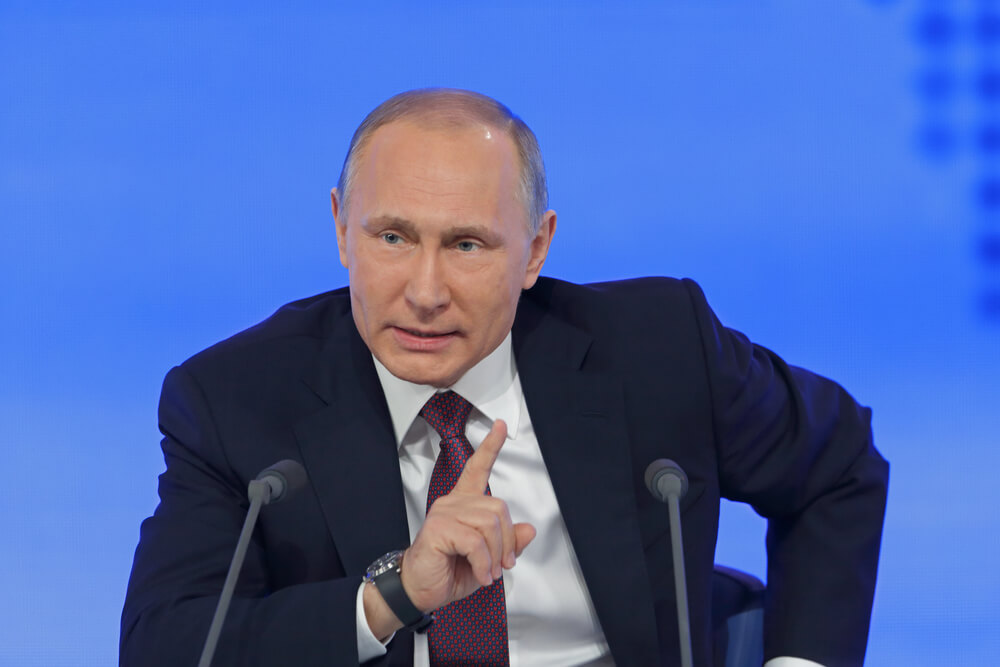 An attack on Europe will give Putin an opportunity to shift the domestic conversation away from his humiliating military defeat
The Kremlin has already sharply increased its hostile activity across Europe, targeting strategic defense infrastructure in Estonia and the Czech Republic, attempting to bring down civilian cargo planes bound for North America, threatening high-ranking government officials, and plotting assassinations of business leaders.
European security agencies and leaders are warning of significant Russian escalation within “months, not years.”
Trump’s betrayal of Ukraine will leave Europe to face Russia’s aggression alone, with the US potentially on the other side.
And even if it fails, an attack on Europe will give Putin additional leverage to demand concessions and an opportunity to shift the domestic conversation away from his humiliating military defeat.
Andrew Kosenko is Assistant Professor of Economics at the School of Management at Marist College.
