On 20 and 21 October, British Typhoon fighters flew alongside French Rafale aircraft over the Mediterranean, rehearsing a nuclear strike without using actual nuclear weapons.
The Ministry of Defence confirmed that this was the Royal Air Force’s (RAF) first participation in the French nuclear deterrence exercise, codenamed Rummy.
For decades, the French Air Force had carried out such operations solely with its own forces; it has now entrusted the protection of its strategic aircraft to British pilots.
In the same week, NATO conducted its Steadfast Noon exercise with 17 countries in Italy, while senior Alliance representatives responsible for nuclear issues met in Helsinki.
European armed forces are now preparing for a nuclear crisis within two separate frameworks: NATO and cooperation with France.
In a real crisis, British fighter aircraft could simultaneously protect French strategic aircraft and take part in NATO operations, with each role decided by different governments.
Six years from offer to joint exercise
In February 2020, Emmanuel Macron offered European partners the opportunity to take part in French nuclear exercises, explaining that France’s vital interests have a European dimension.
Six years passed before foreign aircraft took part in such an exercise for the first time.
In July 2025, through the Northwood Declaration, London and Paris established a joint body for nuclear cooperation and reaffirmed the position first set out in 1995 that it is hard to imagine a threat to the vital interests of one state that would not also affect the other.
In December 2025, British representatives observed the French Operation Poker for the first time.
The French president still decides alone on the use of nuclear weapons
In March this year, Macron presented a policy he termed ‘advanced nuclear deterrence’.
Under this policy, France extends its nuclear protection to European allies by including them in its nuclear exercises and temporarily deploying French aircraft capable of carrying nuclear weapons to their airfields in crisis situations.
He also announced an expansion of the arsenal, which until then comprised fewer than 300 nuclear warheads, but did not specify how many would be added or when.
The French president still decides alone on the use of nuclear weapons and determines when the vital interests of his country are under threat.
Why strategic aircraft matter
French nuclear submarines remain hidden in the ocean so they can retaliate even after a devastating attack on land.
Aircraft, by contrast, can serve as a visible signal to the enemy. Paris can send them on exercises or temporarily deploy them to an allied airfield, and their presence can be publicly acknowledged.
Such operations require fighter protection and in-flight refuelling, which the British and French practised together in October.
The British government itself authorises the use of its aircraft, while only the French president decides on any nuclear strike
French doctrine envisages the possibility of using nuclear weapons once as a warning to an aggressor.
In 2020, Macron explained that such a move would show an adversary that the conflict had changed in nature and offer a last chance to re-establish deterrence.
According to analysis by the French Institute of International Relations, the deployment of Rafale aircraft to allies would be linked to a specific crisis, without the permanent storage of French nuclear weapons in other countries.
When British fighters protect the French formation, London is taking part in the phase of the crisis in which Paris demonstrates its readiness to take a nuclear step.
The British government itself authorises the use of its aircraft, while only the French president decides on any nuclear strike.
Washington demands greater responsibility from Europe
Cooperation is accelerating as US defence priorities shift. The US National Defense Strategy calls on European allies to assume primary responsibility for the continent’s conventional defence, with substantial but more limited US support.
The document does not explicitly mention American extended nuclear deterrence, meaning Washington’s readiness to protect its allies with its nuclear forces.
This omission was highlighted by the US Congressional Research Service, even though Washington has not withdrawn its nuclear commitments to NATO.
American nuclear weapons continue to play a central role in the defence of the Alliance
American nuclear weapons continue to play a central role in the defence of the Alliance, and Macron and German Chancellor Friedrich Merz emphasized in a March declaration that their cooperation complements NATO.
European governments still want to be able to act if Washington decides to limit its involvement in a future crisis, and France offers them access to exercises and specific forms of military cooperation.
Germany was already flying with French strategic aircraft
Germany began joint flights with French strategic aircraft in July, before Britain joined the exercise.
On 16 July, two nuclear-capable French Rafales and two German Eurofighters carried out mid-air refuelling and other manoeuvres before landing at Germany’s Nörvenich air base.
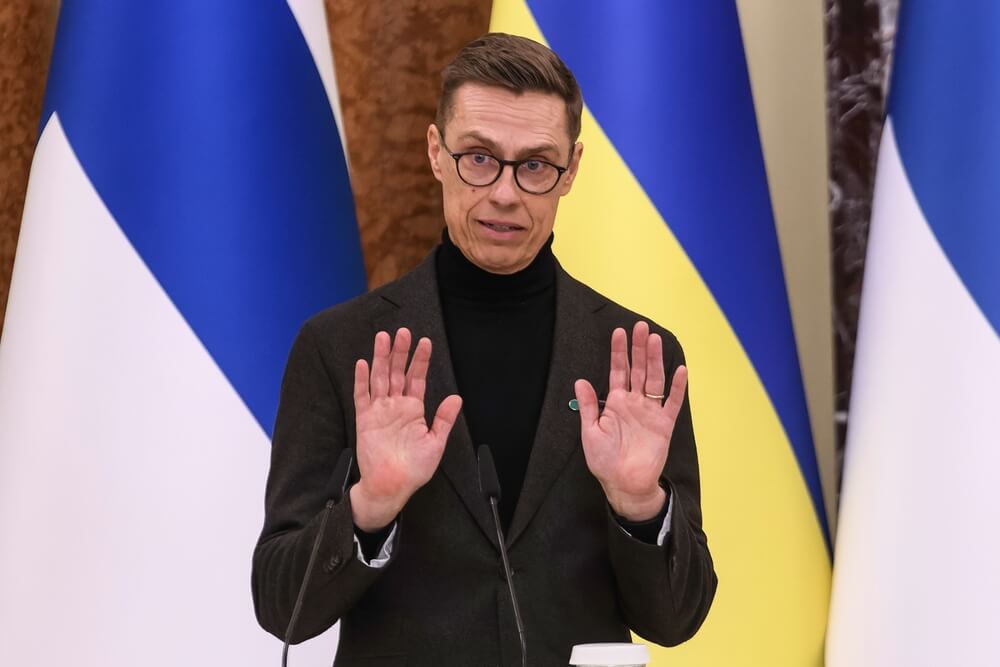 Finnish President Alexander Stubb announced that, in peacetime, Helsinki does not intend to host nuclear weapons on its territory
The next day, Merz announced that German conventional forces would take part in the French nuclear exercise until the end of 2026.
The agreement does not stipulate that German aircraft will carry French nuclear weapons.
In March, Macron named eight partners ready to hold talks on advanced deterrence. In addition to Britain and Germany, he mentioned Poland, the Netherlands, Belgium, Greece, Sweden and Denmark.
Later, Norway joined, and in September Finland became the tenth country in the initiative.
Each country decides for itself what its participation involves. Finnish President Alexander Stubb announced that, in peacetime, Helsinki does not intend to host nuclear weapons on its territory, and the Finnish government emphasises that cooperation with Paris does not automatically entail French nuclear protection.
Britain in three different nuclear arrangements
The Royal Air Force retired its last WE.177 nuclear bombs in 1998, so Britain’s nuclear deterrent now relies on Trident missile submarines, which London procures and maintains in cooperation with the US. The warheads and the decision to use them remain British.
London has also decided to buy twelve American F-35A fighters for future participation in NATO missions with American nuclear bombs, which remain under Washington’s control.
Britain is involved in three nuclear arrangements with different rules
Britain is thus involved in three nuclear arrangements with different rules: through its own submarines, a future role in NATO nuclear air missions, and the protection of French strategic aircraft.
It has the right to decide on the use of nuclear weapons only in the first of these.
The political cost of opening allied airfields
An airfield used by French strategic aircraft in a crisis could become the target of an enemy strike.
The host country would have to decide whether to receive these aircraft and accept the risk their presence would entail.
The governments currently in discussions with Paris differ in how willing they are to relinquish control of their bases.
Moscow warned that it could use its entire arsenal, including nuclear weapons, to defend Kaliningrad
At the end of September, Moscow warned that it could use its entire arsenal, including nuclear weapons, to defend Kaliningrad.
According to analysis by the Polish Centre for Eastern Studies, Russia is trying to use these threats to deter NATO members from strengthening the eastern flank and to weaken support for Ukraine.
For any government considering the deployment of French strategic aircraft, such messages carry immediate political weight, because in a crisis the issue of airfield protection would arise alongside the possibility of a Russian response.
Macron is running out of time to strengthen cooperation
Macron cannot stand for a third consecutive term, and France’s presidential election is scheduled for 18 April and 2 May 2027.
The National Rally is currently polling at roughly one-third of the vote in the first round.
In March, Marine Le Pen and Jordan Bardella described joint military exercises and industrial partnerships with allies as legitimate, but rejected joint decision-making on nuclear weapons and financing arrangements that would condition their use.
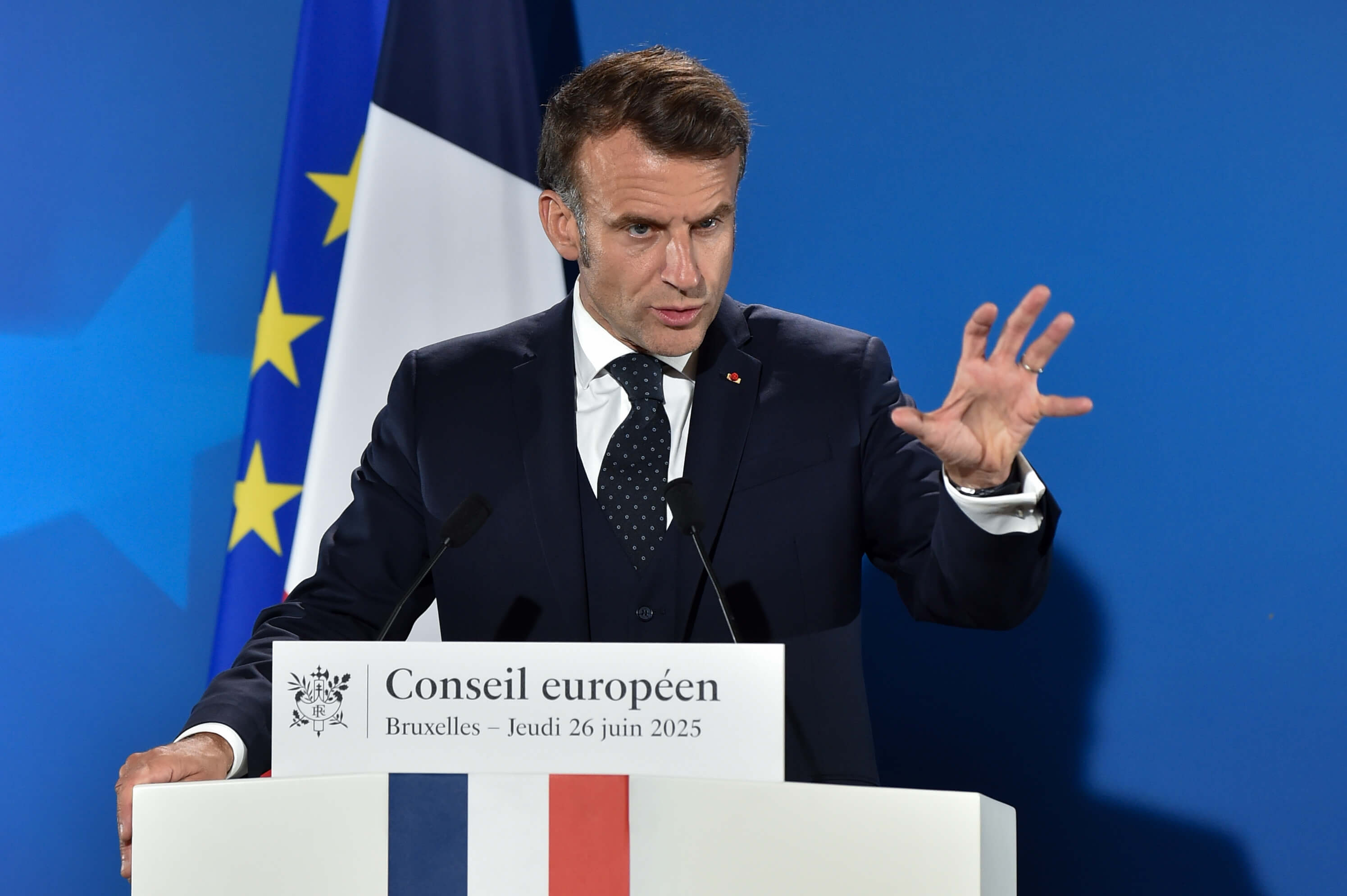 Macron’s idea of advanced deterrence has been criticised as the deployment of French nuclear assets in Europe, with claims that it primarily serves political promotion
.
A victory for the National Rally’s candidate could preserve joint exercises but halt the temporary deployment of French strategic aircraft to allies.
Joint exercises with the UK and Germany will continue until the election. A joint European nuclear command will not be established during this period, as Paris refuses to share the decision to use its nuclear weapons.
Governments that send aircraft to joint exercises today should establish written rules on the use of allied airfields, the protection of French strategic aircraft, emergency consultations, and the withdrawal of support before the French election.
Agreements with sufficiently clear commitments would increase the political cost of withdrawal for the future French president, although they could not deprive them of the right to change their country’s nuclear policy.
Without such agreements, the president-elect in May 2027 could maintain the joint exercises and withdraw the offer to deploy strategic aircraft to allies at significantly lower cost.
This offer is the most important change Macron has sought to introduce to Europe’s nuclear deterrent.
